
Recently while perusing markets via Duotrope, I found the Canadian journal Ditch. I’m happy to report that they selected two of the poems I submitted and have published them today. Ditch also is promoting women poets with a section called Girls Night Out. I hope you’ll take a look around Ditch, the poetry that matters site.
Category Archives: writing life
Three by Five and Jerome Joseph Gentes Part II
VAH: Welcome back to Three by Five and Part II with Jerome Joseph Gentes. 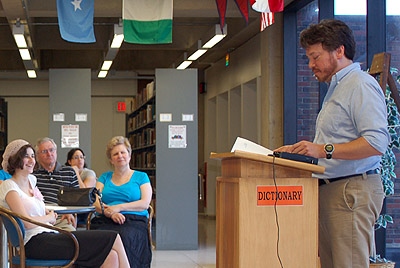
Jerome, you talked about your first story earlier and a poem and story “sealing your fate” in college. Would you expand a bit on when you knew you were a writer and how you came to that understanding?
JJG: The year of the spaghetti story, my fifth-grade teacher, Mrs. Sullivan, also encouraged me to write my earliest poems. In fourth grade I’d done some imitations of Frost, in a unit on poetry that I remember mostly for my first encounter with Poe’s “Eldorado” and Frost’s “Stopping by Woods On a Snowy Evening.” But Mrs. Sullivan went out of her way to get me to write more, to write longer, and write….oh, I guess I would say bigger. To write more honestly. The scale of what I wrote in response to her encouragements and her attentions evolved, and I’d like to think it deepened. I remember writing my first love poem, a generic one, to no one in particular, and yet somehow actually meaning everything I put down on the paper. Mrs. Sullivan was married to an English professor at San Jose State, and showed him my poems, and got some actual feedback for me. I don’t remember any of it, and sadly, no longer have access to that juvenilia, except in memory. That year I also wrote more plays—playlets, really, not full-length pieces—than in any other year I can remember.
VAH: Your experience echoes my own – including long ago first feedback. So many times I’ve wished I still had access to those early pages and the feedback.
What would be your best advice for emerging writers?
JJG: Don’t do The Artist’s Way. Forge your own! And keep your juvenilia! Seriously, if you’re truly sincere about writing, you have to see and hear. Do and be and play. And read. Read, read, read. Keep reading. Then, only then, in whatever time is left when you’re not doing all of those things, should you start to create and make. If you’ve done those other things before you start to create and make, what you create and make may actually be worth keeping, and tending to, and perhaps by then it will be more than mere juvenilia. I’m of the ilk that believes that not everyone who wants to be a writer can be. I also don’t think that you’re a writer just because you say you are, or that because you write, you’re a writer. That may sound harsh, but it’s because I’ve seen so many would-be writers or writers who wanted to be worthy of the identity or the calling abandon their desire to write or had that desire abandon them. I’ve known good, even great and published writers, who’ve had this happen.
VAH: Writing is more than the muse…
Jerome – The MFA? You have one, has that helped your career development or progress and do you recommend the MFA as worthwhile?
JJG: I have an MFA in writing from Columbia, which I’m frankly still paying for, in actual as well as figurative ways. The experience I gained while I was there, the personal and professional connections forged, however, while costly in terms of dollars and time, have been invaluable in terms of life and living. I continue to benefit from my connection to my mentors and peers from Dodge Hall. I feel lucky that I got my MFA when it was a relatively uncommon thing to do. For anyone considering an MFA now, however, I recommend careful, extensive consideration. There are so many more MFA programs now that I often equate it to a culinary degree: anyone can get a culinary degree, but not everyone who can or does will use it, and not everyone needs one in order to cook. They just need to cook. And eat. And so on.
VAH: I might be borrowing that comparison next time I’m asked about the MFA!
Do you have a favorite conference or writing retreat/seminar and what made it worthwhile for?
JJG: Vermont Studio Center in Johnson was a synergetic experience for me, largely because there were visual artists as well as writers of all genres there. I’d never been so close to the making of visual art before, and it energized me more than I can say. Not to mention that I was there in August, which, in contrast to the heat and humidity of New York City, was the perfect month to be there.
VAH: If you weren’t writing, what would you be doing?
JJG: I’d probably be a photographer. Or a visual artist.
VAH: Makes me wonder what a hybrid visual/poetic Gentes piece would look like.
Return for more in August with poet, playwright and perhaps photographer Jerome Joseph Gentes on days with a three in the date.
Read Introducing Jerome Joseph Gentes. Read Part I.
Find Jerome on the web: Twitter. Website. LinkedIn.
Filed under writing life
Three by Five Presents: Jerome Joseph Gentes Part I
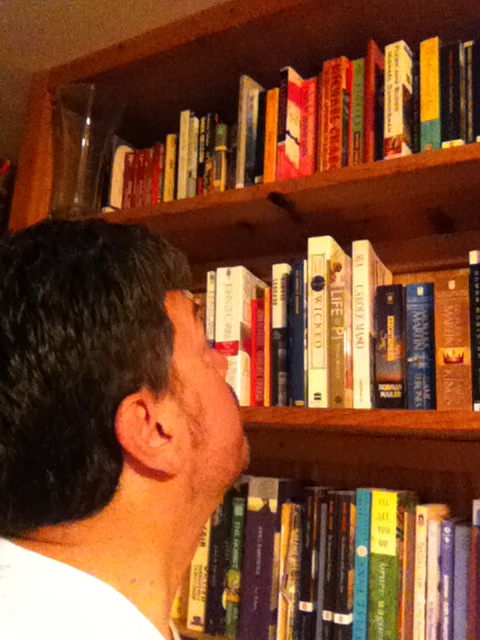 Jerome Joseph Gentes is a professional and creative writer who lives in Berkeley, California. He works in all genres and was a 2012 Pushcart Prize nominee (Poetry). He taught at Niagara University and Medaille College and with Just Buffalo Literary Center/Writing with Light from 2007-2011. He is presenting at this year’s International Research Society for Children’s Literature Conference (The Netherlands), and has previously presented at the Alliance for the Study of Adoption and Culture (Claremont Colleges), Colgate University, and San Francisco State. Developmental readings of his play Hold Your Piece took place in June 2013 with The Playwrights’ Center of San Francisco, and in August 2012 at Buffalo United Artists (Buffalo, NY). He collaborated on the revue Show Me Yours with New Musical Theater of San Francisco and was part of Found Poetry Review’s 2013 Pulitzer Remix project for National Poetry Month.
VAH: Jerome, welcome to Three by Five. Congratulations on your 2012 Pushcart nomination. Let’s start with why writing?
JJG: I was born a liar. Just ask my mother. Born a make-believer, a let’s-pretend-er – let’s-play-er. I really have no choice in the matter of whether to write or not. None. Writing is genuinely more natural to me than breathing. I often have a hard time physically breathing. I never have a hard time writing. As for revising, that’s another story.
VAH: You’re not the first writer here to say that about revision! What was your first story about?
JJG: It was about being a bowl of spaghetti, some point-of-view exercise in Mrs. Sullivan’s fifth grade class at Forest Hill Elementary in San Jose, CA. I copped this cartoonish, Chef Boy-ar-dee accent for my narrator’s voice, and was self-conscious enough to know that a) I was “stealing” that from some Disney flick or such, that b) was going to get away with it, and that c) the sense of “rightness” I felt before, during, through, and after was important.
My next stories, in high school, were shameless imitations of schlocky pulp and bestselling authors like Irwin Shaw. But in sophomore year of college, a poem called “Marathon” and a story called “The Deadsea Café” reaffirmed everything I’d done so far and sealed my fate.
VAH: Do you have a favorite literary character?
JJG: Joan Caucus, from Doonesbury. Hands down. Would love to have dinner with her, though I tend to find comic strip meals a bit two-dimensional. First runner-up, Miss Elizabeth Bennett, from Pride and Prejudice. Second runner-up, Ignatius J. Reilly from A Confederacy of Dunces.
VAH: That’s quite a contrast. Fitting, I think for a poet playwright. If you were stranded on deserted island a la Tom Hanks in Castaway, what book or series of books would you want with you and why?
JJG: 40: A Doonesbury Retrospective, because Garry Trudeau’s astonishing body of work is about being human and laughing at and about being human and the sound of my laughter on that deserted island would surely be a welcome change from the sound of the waves and the palm fronds rattling in the trade winds.
VAH: Dooesbury is the only comic I still consistency read in the funnies. What would you say was your biggest influence with your development as a writer?
JJG: While my mind went right to the personal, and the many, many extraordinary teachers and mentors I had over the years, looking at the question more closely, I’d have to say the liturgy of the Roman Catholic Church. It’s a script, of course, and one that’s executed rather strictly each time it’s performed. As a boy I therefore appreciated any and all variations from it—formal as well as incidental—that I detected from week to week, season to season as the liturgical calendar turned. I also learned to listen for the vocal shifts in tone and rhythm that signaled that a homily was wrapping up; I learned to appreciate the difference between celebrants who were oratorically gifted and those who were so deprived, and everything in between. As an older child, I got to be an altar boy, and play a specialized role in the performance and utterance of that script. As an adolescent, I then began to analyze and argue with both the script and its performance. And to resist it. As an adult, however, I’ve come around to appreciating its role in my development. J.D. McClatchy once said that poets who’d been raised Catholic might have a leg up on aspects of voice, tone and rhythm that are important for poetry and prosody. Which I also think are important for prose style.
VAH: That’s a complex and very different response than this question usually garners. If I’d known of that quote while at St. Mary’s for my MFA, I might have spent some time in the chapel listening.
More Jerome Joseph Gentes later in the month, on days that contain a three.
Filed under writing life
Reflection on a Week Immersed with Writers #NVWC13
A week ago I was driving home from St. Helena and the community of writers that is the Napa Valley Writers Conference. I was sorry to leave and eager to return home to my family. The drive went quickly with another poet I was dropping at the Oakland Airport. We talked poetry, about our different workshops and then swapped war stories. When we said goodbye at the airport curb he told me he was glad another veteran had been there because he hadn’t been sure how he’d be received. I understood, I hadn’t been sure how I’d be received either, lesbian, feminist, conservatively liberal, retired military war veteran that I am.
 Attending this conference was raising the stakes for my identity as a writer and poet. While I have the validation of a Master of Fine Arts degree (in nonfiction), I have not done much work in poetry for oh, several decades. Since February I’ve been on a quest to grow as a poet. Two incidents inspired this choice. Participating with the poetry track of workshops at the San Francisco Writers Conference where I learned from Andy Jones and Brad Henderson of the University of California, Davis, University Writing Program, and Joan Gelfand from the SF Bay Area; poets who are always at the conference and who produced an amazing collection of poetry workshops and events. This year, there was someone new to the conference, Camille T. Dungy. I had an amazing conversation with Camille after one session which led to enjoying lunch together and more conversation. I
 was inspired to dive deeper into the craft. (In specific, I challenged her on the seemingly ‘inaccessibility’ of contemporary poetry for anyone outside of academia.) Soon after, I was at AWP and catching up with Eloise Healy, I mentioned I was thinking of another MFA, in poetry. Eloise recommended before investing in (going into debt with) another MFA, try some poetry workshops at conferences. I took her advice, which led me to Napa. Where surprise, the scheduled workshop leader for the group I was assigned was unable to attend. Camille T. Dungy was the replacement. Now that’s karma.
Camille gave her students nuggets of craft that I hungrily took and laid in as part of my foundation when crafting or revising work. One of the first was this quote from Elizabeth Bishop, “A metaphor needs to touch in at least three places and two must be in the real world.” This had immediate and profound impact as I created new work and revised previous work. Suddenly, I discovered where detail was vital and in  doing so, my words became expansive and immersive where before they had merely been reporting. In the very first craft talk which happened to be delivered by Camille, I gained one of the most important and influential nuggets of the week – Create a pattern, reward the pattern, disrupt the pattern, return to the pattern or as Camille voiced this – Expectation – Reward, Expectation – Reward, Expectation – Expectation – Surprise! Expectation – Reward. This has become the keystone that most affected my development last week and now as I continue to write poetry. This formula can be applied to form, meter, sound, imagery – so many layers.
A true gift of the week was hearing poets and fiction writers read from their work. The poets read first every evening, the fiction writers second. This schedule supportive for the poets, some who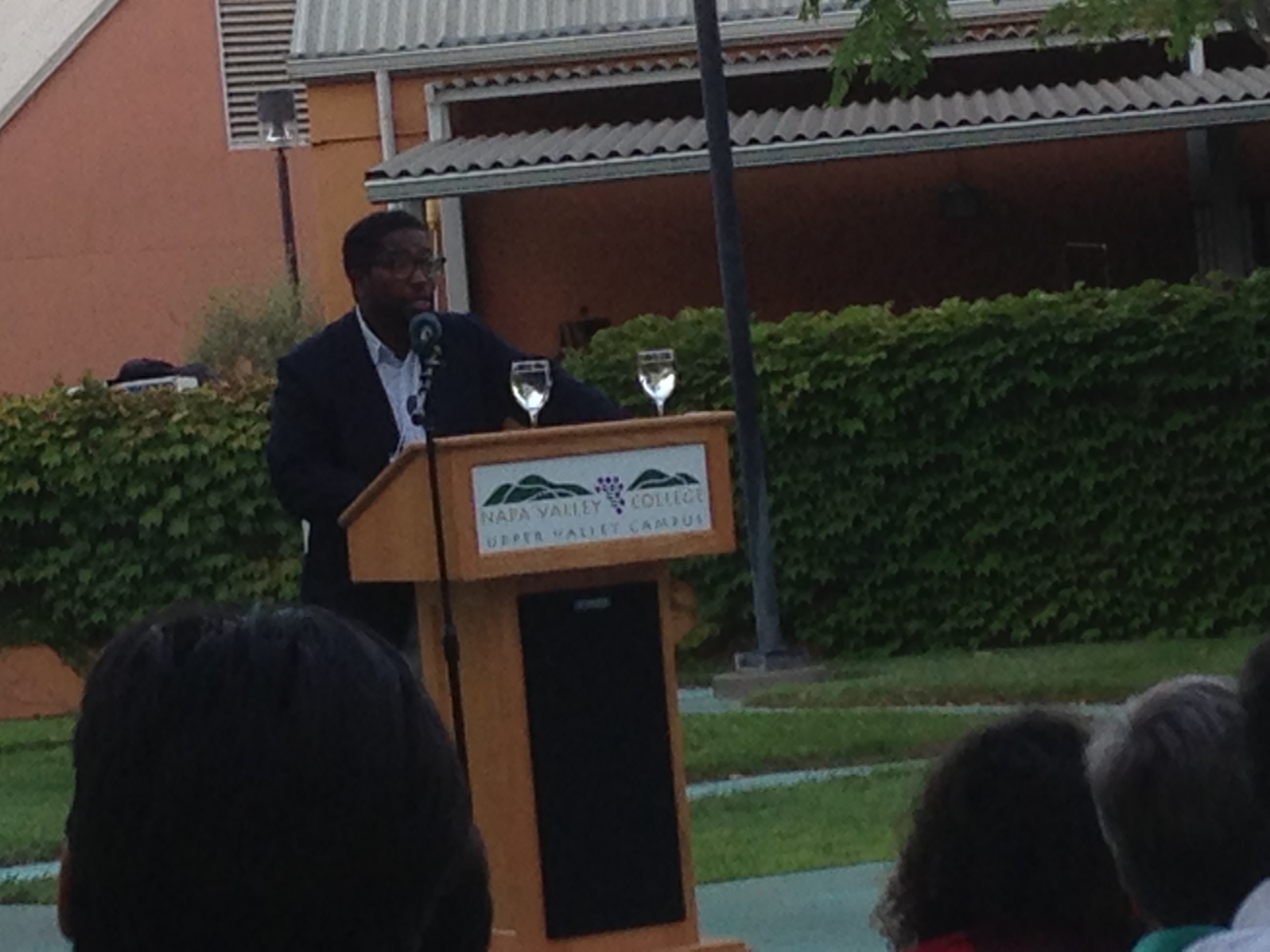
skipped the second reading to scamper back to their rooms and complete the new poem creation that was done daily. (Those slacker fiction writers who concentrated on revision while we poets created a new poem each day;) The poetry readings were vast with depth and emotion and the magic of words come alive. The two that have had the most lasting affect were Linda Gregerson and Camille Dungy. Both delivered their poems with authentic presence, drama, and life. Camille’s poem of the watch over her grandmother as she died and the passing of her namesake over the bed brings tears to my eyes even now as I remember the imagery brought to bear with Camille’s voice in my memory. Linda’s recounting of a young girl’s self harm was dazzling in its courage bringing to bay what is so often hidden by those that cut and denied by those that know of the cutting. The readings were more than just listening to masters display their craft – each reading was itself a master class in bringing words on the page to life in that moment the writer engages audience in physical time and place. We
 write in isolation, yet we read and share the product of our inspiration in community.
One of the unexpected chunks of learning I’ve returned home with include alternate workshop methods. Unexpected. I didn’t anticipate learning about how to conduct workshop. I thought I’d adapt to whatever workshop method was used likely based in that prevalent method where the writer is a silent fly on the way (admittedly, a method I despise as disrespectful and often abusive). In Camille’s group, we experienced three distinct workshop techniques, each one respectful of the writing and the writer, each one providing feedback for reinforcement as well as revision. A strong thread throughout the week was internalizing what our peers provided to enhance our own self revision process. Taking the surface value – what a peer says to help improve a piece of writing, then internalizing for a second level of effect to self apply that bit of analysis (not the result but the means) which deepens self capability to look at and determine why and where some aspect of the work needs revision or change. I didn’t expect this drilling into and workshop leader deconstruction of what different aspects of the process of “workshop” provides so that I could internalize the practice. This was certainly not part and parcel of my two years of MFA workshop. Here, I was learning how to write better poems. I was learning how to critique with additional tools. And, I was learning how to not only be a peer in a workshop but tools for when I too, eventually become a workshop leader.
The setting at the St. Helena campus of Napa Valley College was peaceful and enveloping. The surrounding countryside breathtaking. Tuition includes breakfast and lunch created by the resident culinary academy and each meal a treat. Breakfast was amazing with fresh from the nest hard boiled eggs and oatmeal I wish I could cook like that at home. Lunch was a global culinary voyage and while not always what my palate was accustomed to, always worth the journey. I was grateful for the community housing scholarship, placing me in the home of one of the program supporters in the community.  Returning each night to my room overlooking the pass between two hills with the vineyard vines blanketing the slopes was rejuvenating. The conference staff running the behind the scenes created a seamless experience. (Shout out to Nan, Iris, and Patrick, and the others whose names I missed.)
Each day was chock full of opportunity – workshop, poetry and fiction craft talk, a panel discussion (first book, self publishing were two) break for dinner than the nightly reading. Starting at 9 in the morning and ending at almost 9 at night, somewhere in between the poets would produce a new poem for the next morning’s workshop. Midway through the week, I was invited to join a small group of poets gathering to write offsite – this was a huge departure from normality for me. First, it meant giving up my bit of access to the onsite computer lab where I could work and print, which I couldn’t do back at my room (the one disadvantage to community housing – no printing). Second, it would require I be social, more social than workshop participation called for, which as an introvert can be challenging. (Yes, I am so an introvert.) Third, well, I don’t really like working in small groups like that, I’m basically a hermit. I went anyway. And that was my second best decision about the conference I made (the initial being decision to attend in the first place). That little gathering of 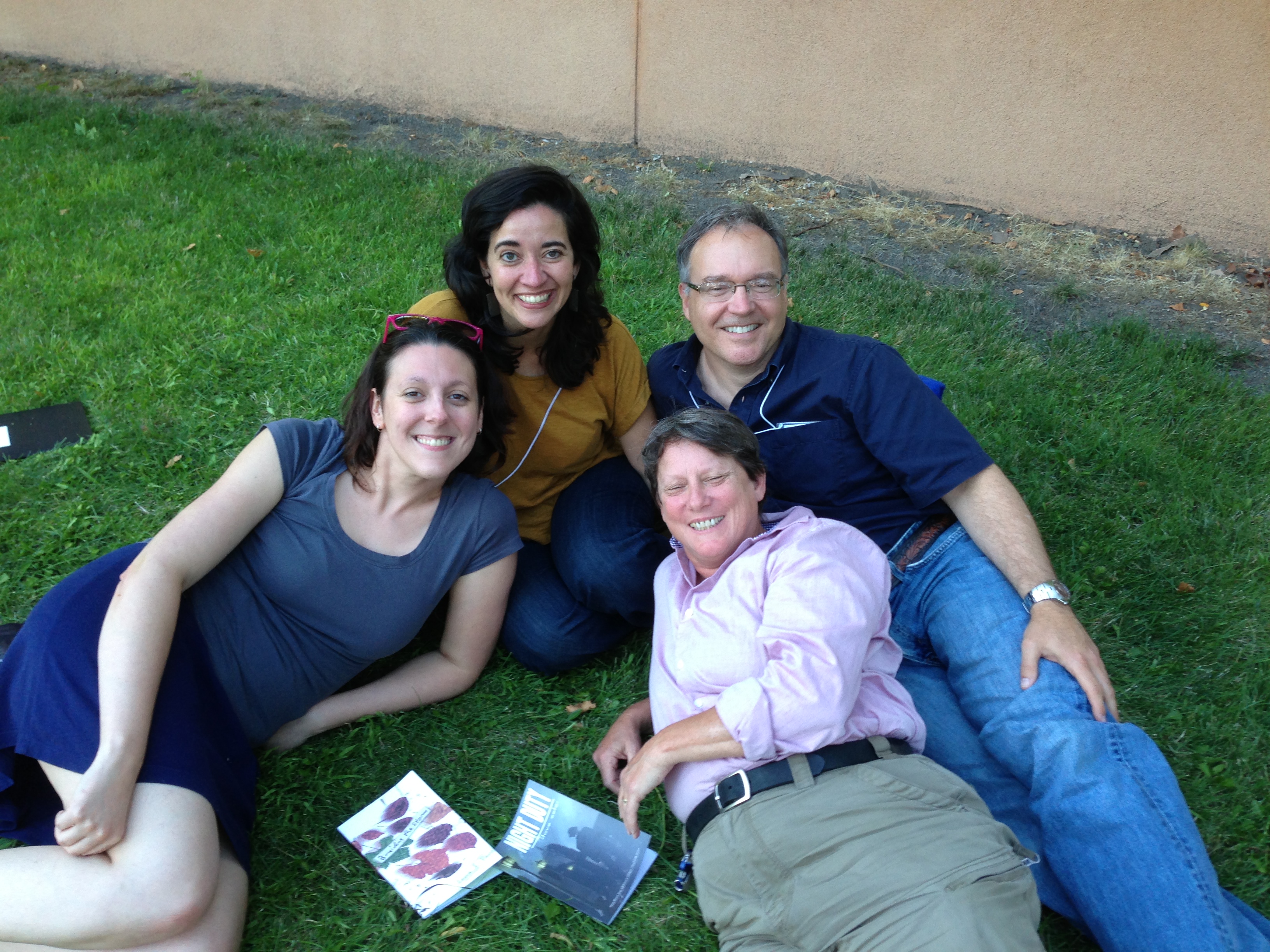 poets from three different workshops resulted in newly crafted friendships I would not have otherwise formed. On the last evening we stayed long after everyone else left the grounds and had our
 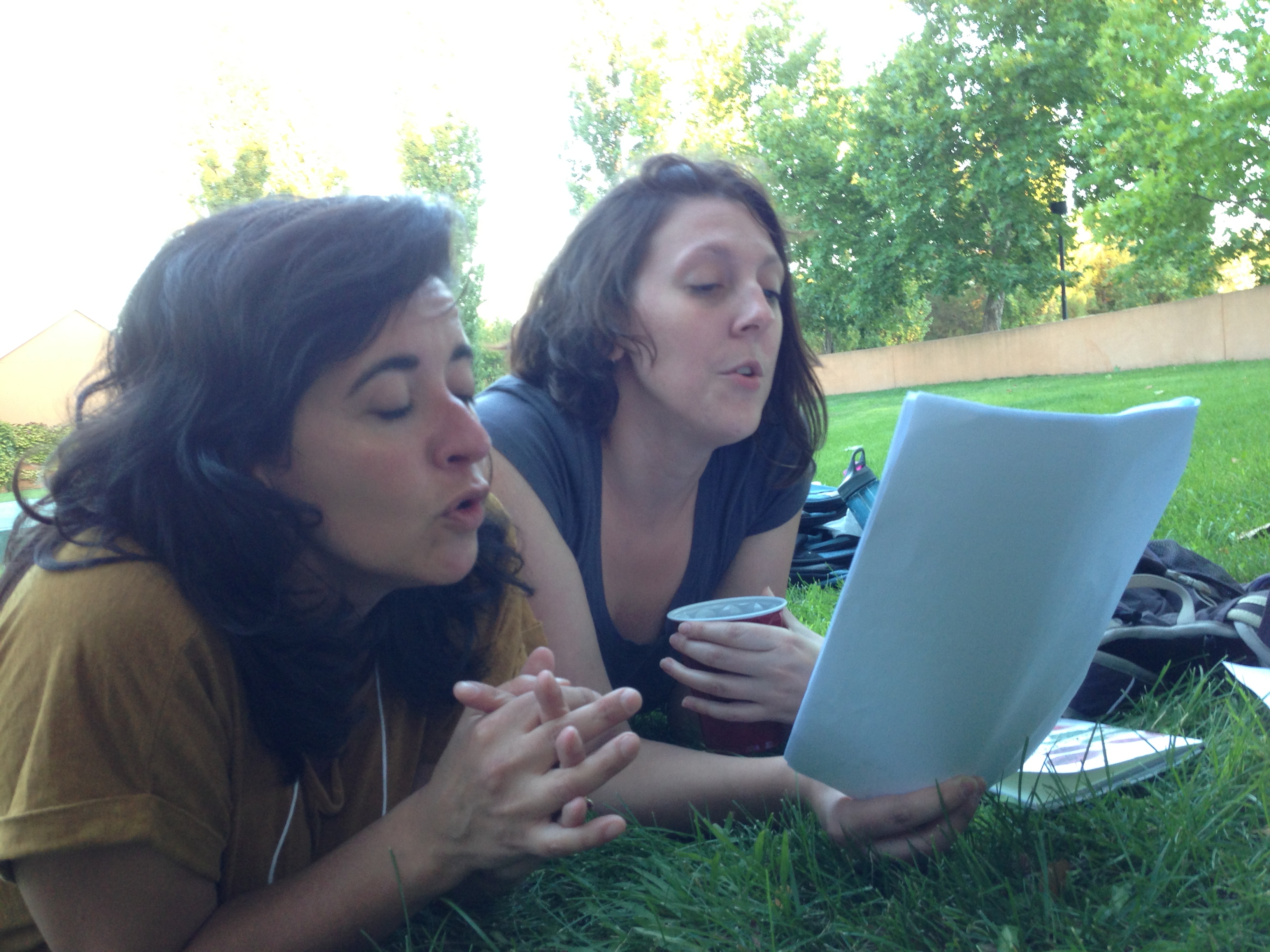 own little round robin reading (and yes, we all still had work to produce for the final day). We had found our cohort, as one poet exclaimed. And we left the conference with plans to meet up again, serendipity having brought together four poets who all lived close enough to each other to form a new writing group, we now call The Poet’s Cohort.
A highlight of the week was the participant reading on Thursday afternoon. Each reader had two minutes and the timers were brutal calling time. It was a reflection of mutual respect and community cohesion that when the time was called, any reader that was still reading cooperatively stopped. No time enforcement procedures required. There were about 47 poets who read and half that many fiction writers. I truly enjoyed hearing all the different excepts of fiction, a few had me on the edge of my seat – no mean task with only 2 minutes, or about a page worth to read. There was some amazing poetry, some read from published books other from work created in the week. Very few instructors attended, and that was a letdown. Most of the participants were there it seemed, and that was fun.
 My week in Napa was a grand investment and indulgence. Indulgence as it meant my full time, works outside the house, wife had to concurrently wrangle our two small children (ages 1 and 4) and we had the financial burden of a week of childcare for the littlest while she was at work. Investment truly as my understanding and application of the craft of poetry is already returning dividends. Since returning home, I’ve submitted to four different markets with six poems and a chapbook out for consideration. I decided to apply for a poetry fellowship next year and the idea of another MFA, this one in poetry, is at the moment off the radar. Eloise was on to something, recommending conference workshops and the opportunity they bring. I’m reading the craft books recommended and written by the workshop leaders, already applying new tools as I craft, create and revise, revise, revise.
I worked hard that conference week. I created four new poems and received useful feedback for revision on a fifth. I was among peers and role models and felt part of the greater community we together formed. In this week since the conference, I felt adrift those first few days, bereft even from the now lost companionship and daily immersion in a small island of words and wordsmiths. I am inspired though, to continue the hard work and looking forward to a return to that bucolic valley and community of writers. Two quotes I’ll close with – you decide where they will take you.
“Interesting writing engages the world around us.” Camille T. Dungy.
“The poem kidnaps awareness.” Jane Hirshfield.
Filed under writing life
Napa Valley Writers Conference – Reading
Towards the end of the conference, the participants read. Interestingly, twice the number of poets read than fiction writers. We each had two minutes and the time keepers were brutal with enforcement with quite a few readers out of time mid word. I read a poem written during the conference. All the work written during the conference I focused towards the Other Mommy collection I’m working on which is about my experience, thoughts, and poetic reflection as the non-biological mom in a same gender family. The poem is Nature Nurture, Genetic Code. (Turn up the sound, as it didn’t record well.)
Filed under writing life
Introducing Jerome Joseph Gentes
This month, Three by Five presents Jerome Joseph Gentes.
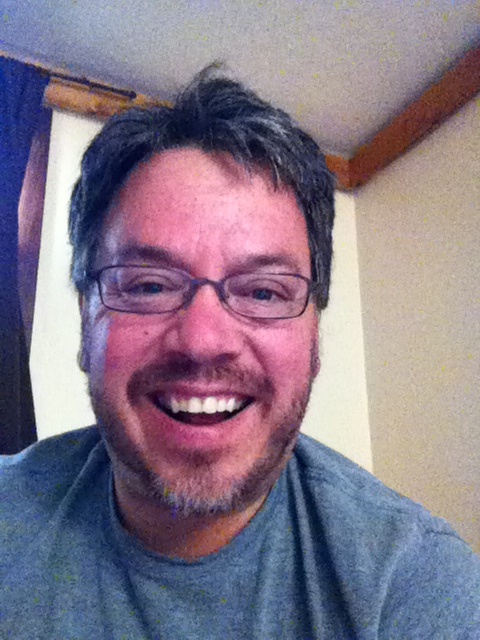 Jerome Joseph Gentes is a professional and creative writer who lives in Berkeley, California. He works in all genres and was a 2012 Pushcart Prize nominee (Poetry). He taught at Niagara University and Medaille College and with Just Buffalo Literary Center/Writing with Light from 2007-2011. He is presenting at this year’s International Research Society for Children’s Literature Conference (The Netherlands), and has previously presented at the Alliance for the Study of Adoption and Culture (Claremont Colleges), Colgate University, and San Francisco State. Developmental readings of his play Hold Your Piece took place in June 2013 with The Playwrights’ Center of San Francisco, and in August 2012 at Buffalo United Artists (Buffalo, NY). He collaborated on the revue Show Me Yours with New Musical Theater of San Francisco and was part of Found Poetry Review’s 2013 Pulitzer Remix project for National Poetry Month.
A current work in progress is Hold Your Piece which is in development mode. It’s a full-length play about a gay man, his best friend, and the affects of marriage equality on both him and their relationship. Jerome is hoping to do a staged reading in the fall or early 2014 at the latest. He is also researching another project, which may lead him into a new medium.
Find Jerome on the web: Twitter. Website. LinkedIn.
A sampling of Jerome’s work: In Verbatim Poetry, and Online Literary Journal Rougarou.
For more, return on the days of the month with a three in them.
Filed under writing life
Post Napa Valley Writers Conference
The 2013 Napa Valley Writers Conference has concluded. A beautiful venue deep in the California Napa Valley wine country.  Exceptional faculty and participants from all over the country and even some international attendees. Poetry and Fiction with five intense days. Delicious mostly vegetarian breakfast and lunch meals prepared by the Napa Valley College Culinary school. Since I attended for poetry, I won’t attempt to speak to the fiction experience. For the poets though – WOW! This is very much a working conference – poets produce new work daily. Days are long with the first craft class at 9 am and the nightly readings ending about 8:45 pm. In between is an hour for lunch (provided) and a couple hours for dinner (on your own). The rest of the time is chock full with craft, workshop, more craft and panels. Every night was a faculty poet and fiction author reading.
For me, this conference provided great transformation in my journey as a poet. While the pace was brutal, the workshops were not. Camille T. Dungy was my workshop leader and by far, this was the best workshop experience I’ve had to date. Each day a little different with variations on the workshop process. Highly adaptable, Camille easily switched up or changed up her plan for the day based upon the needs as presented by the students and the progress we were making. Her prompts were demanding and the poetry birthed from them provided us with insight and innovation into our craft. Respect for the writer, the writing and the process was always evident.
I particularly enjoyed and appreciated when she called me out on my own workshop critique pet peeve. “We don’t say like or don’t like…” given that is a fundamental in my own book, No Red Pen: Writers, Writing Groups & Critique, there was a certain irony to her holding us to that standard and having to remind me mid-workshop.
This is a conference I can highly recommend. I will be applying to return next summer.
Filed under writing life
Sarah Bracey White Part IV
Welcome back to the final installment with Poet Sarah Bracey White. In part IV there’s a little bit more of the writing life and a few interesting facts Sarah shares with us. 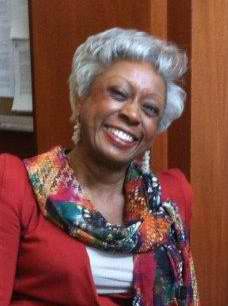
VAH: Sarah, the blank page stares back at you, what gets you over writers block?
SBW: Usually I have so many things percolating on my mental back burner that when I get a chance to sit down at the computer, I don’t have time for writer’s block. I also visualize page after page flying out of my printer as I print out the completed work.
VAH: Percolating is an excellent image. That’s how I think about ideas swimming around in my brain also. Now, the brass tacks of the writing life – what do you do in order to keep up with what you send out and results of your submissions?
SBW: I wish I were more organized about submissions. I print out the cover letter and put it in a folder marked “submissions.” When CavanKerry Press called me to say that they had selected my book for publication from all the submissions they received during their open call, I had to ask them what book had I submitted to them. The Managing Editor laughed at me. It had been six months since I submitted and I assumed that I’d been rejected once again.
VAH: That’s a great writing story. Let’s move away from writing a bit. What little known fact about you will amaze and/or amuse?
SBW: I’m a gardener who’s afraid of worms and I always wanted to be a back up dancer for Tina Turner.
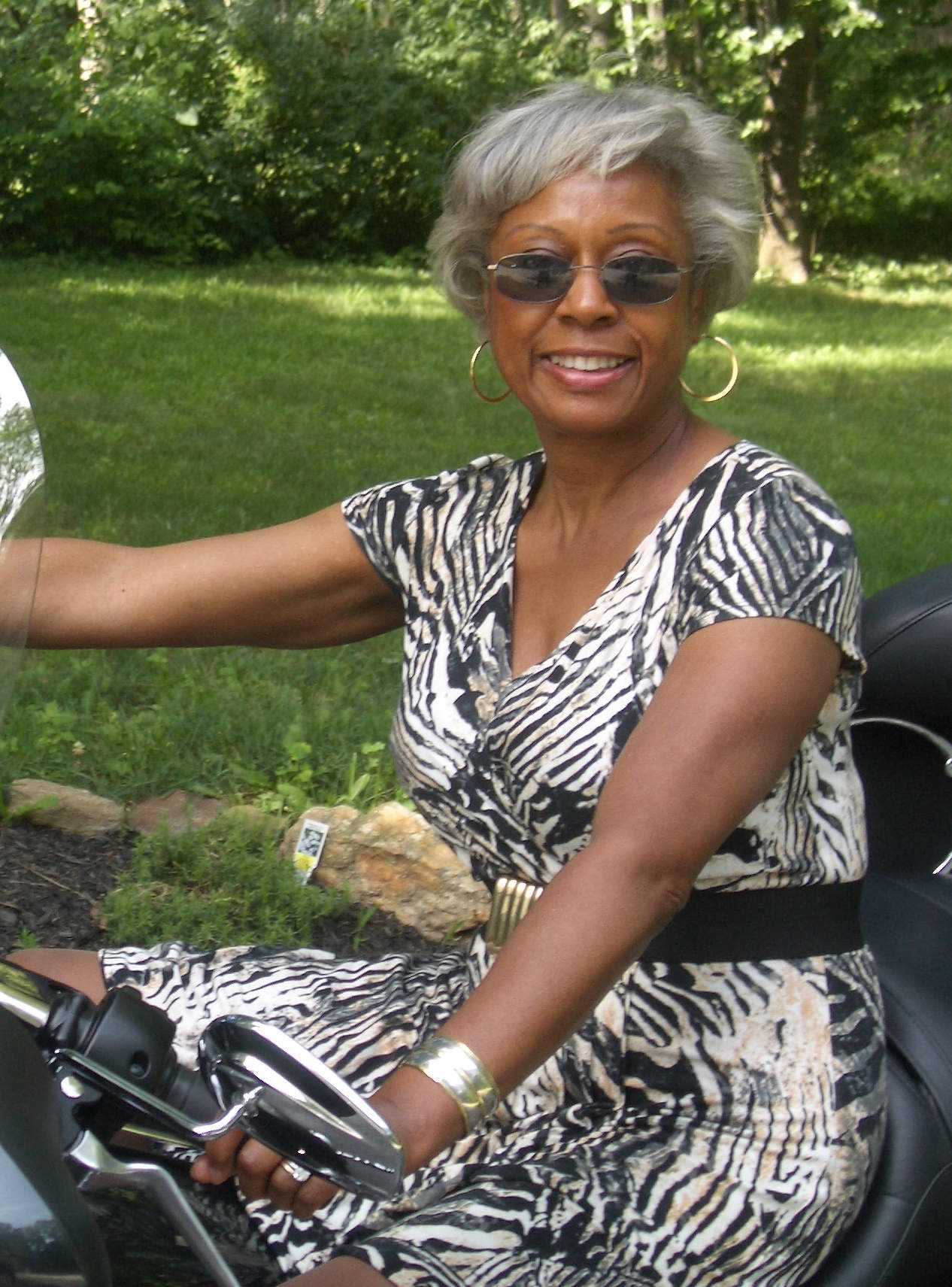
VAH: When I first saw your photo, I thought of Tina Turner. How fun. What is your favorite, inspiring quote and why it works for you?
SBW: “Live as if there’s no tomorrow; but plan for one just in case.” I wrote that quote because the promise of writing success is far-fetched, but the joy of writing fulfills me. Thus, I do both things, and thrive.
VAH: What are three random non-writing related facts about you?
SBW: I’ve taught firefighting. I’m a good ballroom dancer and cook. I’m very spiritual.
VAH: I think we could add a whole ‘nother series of interview questions off those three. We’re going to leave the readers wondering!
It’s your last meal – what would you eat?
SBW: A Maryland Crab Imperial appetizer, baked butterfly shrimp, macaroni and cheese, corn muffins, coleslaw, root beer soda, and banana pudding for dessert.
VAH: And why?
SBW: It would be my last meal because I was embarking on a life in an alternate universe where food and other physical things don’t exist.
VAH: Sounds like a story percolating. Thank you Sarah for taking the time to participate in Three by Five. Readers, below are some links to Sarah’s work and Sarah on the web.
Fiction: The Wanderlust
Interview in Lohud.com January 7, 2013
Memoir: Primary Lessons at CavanKerry Press
Dreaming In Color Living in Black and White, Page 39 Sarah Bracey White
Filed under writing life
Napa Valley Writers Conference, Here I Come!
Tomorrow morning, I depart for Napa Valley and the Napa Valley Writers Conference. One week of immersion in the writing life, writing community, and writing. I’ll be studying with Camille T. Dungy. I’m excited as I had the opportunity to attend a workshop at the last San Francisco Writers Conference where Camille was one of the presenters and that was both enjoyable and I gained some valuable insights.
I’m still fundraising for expenses related to attending this conference. Please visit WriteVickiWrite to find out more.
Filed under writing life
Sarah Bracey White Part III
Welcome back to the third installment with author Sarah Bracey White, Poet and Essayist.
 VAH: This question is one asked often, especially by those who are not writers. Sarah, what helped you know you were a writer? When did it all begin?
SBW: I honed my storytelling skills as a 12 year old letter writer with a pen pal in South Dakota and a boyfriend in New Rochelle who both waited anxiously for my missives. Nothing like an interested audience to make you know that you’re good at something and try to be better.
VAH: And what would be your best advice for emerging writers?
SBW: Read, learn the craft of writing and be prepared for the onslaught of rejections that will precede any success you may experience. And find a supportive writing group. Mine did an “intervention” when I considered giving up because nobody seemed interested in publishing my work. Thank God they did. Otherwise, I would never have made it to the place where I’m getting my memoir published.
VAH: Sounds like the “intervention” could be its own story. Writing community – Do you have a favorite conference or writing retreat/seminar and if so, why is that a favorite?
SBW: No. But I do belong to a writers’ group that for over 25 years has sustained, browbeat, and kept me writing when it seemed like a futile endeavor.
VAH: I know a few writers that have the benefit of a long time writers’ group – that’s a tremendous support. Sarah, are you a full time writer? And what is the day or night job that sustains you so you may write?
SBW: I am an arts consultant to a Westchester, NY town of 83,000 people. I curate exhibits by local artists in public buildings, manage a writing program for young children I designed the program as I would have wanted when I was a young writer, sponsor a poetry contest for poets of all ages, manage a group of poets who take poetry into under served places like hospitals, assisted living facilities, nursing homes, prisons, etc. I also edit several publications and write grants to fund all my programs. The job challenges my creative side and feeds my love of people, which in turn fuels my writing.
Sarah’s interview wraps up on the 30th.
Filed under writing life




 Vicki Hudson