Tag Archives: writing

Three by Five Welcomes Back Trish Hopkinson with Three by Five Part IV

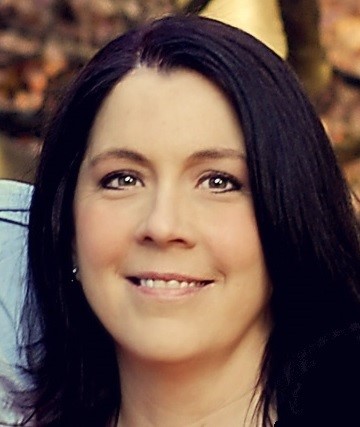
 Today wraps up the conversation with Poet Trish Hopkinson.
TH1VAH: What words of wisdom do you have for the emerging writer?

TH: The same I’ve been told by so many writers and professors—read more, write more. Beyond that, I like to share any other writing tips I come across and typically post them on my poetry blog.

VAH: What part does social media play in your writing career?

TH: It plays a much larger part than I originally expected. I follow the blogs and Facebook pages of lit mags and journals I like most, stay in touch with literary organizations, learn about opportunities from other poets and writers, post my publication successes, share poetry and other writing tips, promote fellow poets, and otherwise use my blog to support poetry and writing.

VAH: Do you belong to writing or author organizations and what benefit have you found in doing so?

TH: I am a member of the League of Utah Writers. So far, I’ve had too many conflicts to attend their meetings and gatherings, but I plan to attend their conference later this year and they have been supportive of work.

VAH: Do you have any favorite online sites or blogs that you find useful or interesting?

TH: Many! My favorite for inspiration and learning about new things is Brainpickings. They are constantly putting out new articles on a wide variety of topics. I also have several listed on my blog under Writing Resources, but my favorites are probably ErikaDreifus.com, The Review Review, and Winning Writers.

VAH: What was your writing education (formal or informal, structured or self-developed, etc.) and what were the pros and cons of your experiences?

TH: I was a nontraditional college student and spent several years taking one class at a time to gradually work toward my Bachelor of Science degree in English with a Creative Writing emphasis. Once my children got older I was able to take up to three classes at a time and finally graduated in December 2013. I’m now just staying active in continuing that education by writing, reading, and learning whenever I can—I call it a personal MFA. I may, at some point, discover I need a more formal community to continue progressing as a writer, but for now, I take an occasional workshop class online with Rooster Moans, go to a weekly open mic, and stay in touch with as many poets and writers as I can to build my writing community. Getting my undergrad really gave me all the tools I needed to continue learning and developing as a writer on my own. I don’t think I would have been able to learn all my education provided nearly as quickly on my own and I met some incredible writers and friends along the way.

VAH: Writing conferences, retreats, seminars – any favorites and why?

TH: I’d like to attend a writing conference at least once a year, but since this was my first year out of school, I haven’t had a chance to do so. I will likely check out everything I can locally before travelling to go to others.

Thanks so very much Trish for participating with Three by Five. For more of her published work, visit her publication list.

Bonus question: Three random, non-writing facts about you?

TH: I am a beer connoisseur, I have run two half marathons, and I volunteer at the Sundance Film Festival, 2015 will be my second year.

Provo, Utah poet Trish Hopkinson contributes to the writing community with her blog where she shares interesting writing tips, articles, calls for submissions (no fee only), and other info to help promote writing and poetry in general. She has always loved words—in fact, her mother tells everyone she was born with a pen in her hand. She has two chapbooks Emissions and Pieced Into Treetops and has been published in several anthologies and journals, including The Found Poetry ReviewChagrin River Review, and Reconnaissance Magazine. She is a project manager by profession and resides in Utah with her handsome husband and their two outstanding children. You can follow her poetry adventures online at her website, or Facebook or visit her on Linkedin.

Three by Five interviews publish on days that end in 3!

2 Comments

Filed under writing life

Three by Five Welcomes Back Trish Hopkinson with Three by Five Part III


TH4Today’s installment of January’s Three by Five conversation with Poet Trish Hopkinson is about the writing life.

VAH: Are you a full-time writer?

TH: I have a full-time job as a project manager for a software company. I’ve been with the company for over 15 years and I love what I do, but writing poetry is a necessity for me. I just am not happy unless I make time for it.

VAH: What gets you writing?

TH: I collect writing prompts, but I rarely refer back to them. I almost always have something in mind or on a list that I want to write, and since I have limited time available to actually do the writing, I’m usually ready to go when I do sit down to write.

VAH: I’ve got a whole book of prompts and ideas and even have them land in my email box. Like you, I rarely refer back to them. What is your “process” when working on a new piece of writing?

TH: Once I have a topic, I start composing the first lines and edit as I go. Once I have the first draft done, I’ll go back and do the first revision immediately—look for better word choices to add alliteration, assonance, and/or consonance; take out all the line breaks and then put in new line breaks, etc. If I do get stuck mid-poem, I’ll look for a form to help me move it along, such as a villanelle or a sonnet.

VAH: Do you have a submission system or plan?

TH: My process for submitting has really evolved over the last year. Essentially, I rely on Duotrope to track most submissions, I put deadlines in my Outlook calendar, and I keep a spreadsheet of the poems I want to submit, have submitted, and whether or not they’ve already been published and where. Since my time is limited, it’s important to me to be as efficient as possible. I have templates for cover letters and several bios of different lengths to help the submission process go more quickly.

VAH: Duotrope has been very helpful for me. I found I’m able to keep better track of where I’ve sent a piece that has gone out numerous times and not yet found a home. I’m trying a spreadsheet this year, after years of a pen and notebook tracker as well as Duotrope. What does your typical writing day include?

TH: I usually try to spend a few hours a few days a week. I get the urgent stuff out of the way first—submissions with deadlines and blog posts. If I am writing something new for a submission, I make sure to give myself at least a couple of weeks to write and revise before the deadline. If I have an idea for poem, sometimes I just have to stop everything else that I’m doing and get it written.


More Trish Hopkinson later in the month. Till then, enjoy this poem – Footnote to a Footnote via the Chagrin River Review.

Bonus question: What is a little known fact about you that will amaze and/or amuse?

TH: I’m a Deadhead. I love the Grateful Dead and used to go to concerts whenever I could before Jerry Garcia died.

Provo, Utah poet Trish Hopkinson contributes to the writing community with her blog where she shares interesting writing tips, articles, calls for submissions (no fee only), and other info to help promote writing and poetry in general. She has always loved words—in fact, her mother tells everyone she was born with a pen in her hand. She has two chapbooks Emissions and Pieced Into Treetops and has been published in several anthologies and journals, including The Found Poetry ReviewChagrin River Review, and Reconnaissance Magazine. She is a project manager by profession and resides in Utah with her handsome husband and their two outstanding children. You can follow her poetry adventures online at her website, or Facebook or visit her on Linkedin.

Three by Five interviews publish on days that end in 3!

2 Comments

Filed under writing life

Emerging Writer Prize Runner-up Announced

Runner-up and Honorable Mention for the 2015 Victoria A. Hudson Emerging Writer Prize goes to:

Caroline Zarlengo Sposto

“I write because writing is the final thing I want to do.”

Caroline Sposto began writing poetry, fiction, and creative non-fiction in earnest four years ago when her daughters went off to college. Her work has since been published in The Saturday Evening Post, Family Circle Magazine, and an assortment of literary magazines and anthologies in the U.S., the U.K and Canada. She is a Memphis correspondent forBroadwayworld.com, and Poetry Editor of the Humor in Americablog. In 2011, she was chosen to participate in the Moss Workshop in Fiction at the University of Memphis with author Richard Bausch. In 2013, she won second place in The Great American Think-off––an amateur philosophy competition that culminates in a public debate in New York Mills, Minnesota. In 2014, she was chosen to spend the summer as a writer in residence at the Helene Wurlitzer Foundation in Taos, New Mexico. She feels grateful a wistful turning point in life became a happy adventure!

Leave a comment

Filed under writing life

Three by Five – On Deck Winter and Spring

Three by Five has some interesting writers on tap for the rest of winter and into spring. This month continues with Poet Trish Hopkinson. In February, the 2015 Emerging Writer Prize winner. In March, there’s Texas poet Laurie Kolp. In April it’s Texas poet Ronnie K. Stephens. In May, Canadian poet and novelist Mariah E. Wilson. June brings Canadian poet Carol A. Stephen. Summer and fall will bring other intriguing writers for your discovery.

And as always, if you’re an emerging writer, published author or contributing member of the writing community you’re invited to participate with Three by Five.

1 Comment

Filed under writing life

Get Paid for Writing!

No, not the bright, shiny, scam spam that often lands in your mailbox – both virtual and physical.

Typically, emerging writers send out reams of work and their only payment is seeing their name beneath the work when an editor selects the by-product of their blood, sweat, and tears for publication. In the current data driven, information economy, content is viewed as a right to the consumer and 21st century culture has created an expectation for free access. But free access won’t pay the bills and creative content was the work product of someone, somewhere. So I am happy to share with you this post from Trish Hopkinson with a compilation of markets for submitting creative work and low and behold, get paid for it! Paying  Calls for Submission – Poetry, Prose, Art, etc.

1 Comment

Filed under writing life

J. C. Augustine Wetta wins Dr. Ellen Taliaferro Scholarship to SFWC15

From Barbara Santos, of the San Francisco Writers Conference – “The winner of the Dr. Ellen Taliaferro Scholarship for the 2015 San Francisco Writers Conference is J. C. Augustine Wetta, a Benedictine monk. He submitted a beautifully written story with a Gift of the Magi twist at the end. Both Ellen (Dr. T) and I fell in love with the writing and story which we both admitted had us laughing and crying. The Dr. T Scholarship is for memoir writers who use forgiveness to move on with their lives after adversity or illness.”

Congratulations to J. C. Augustine Wetta! Augustine also entered the Victoria A. Hudson Emerging Writer Prize and was a strong contender, having been selected in the top nine of 37 total entries. With selection for Dr. T’s scholarship, this talented writer is no longer in consideration for the Emerging Writers Prize. Congratulations Augustine! I’m looking forward to meeting you next month at the Conference!

1 Comment

Filed under writing life

And Then There Were Nine

Entries have been further winnowed down to nine semi-finalists for the Emerging Writer Prize.

Congratulations in no particular order to:

Susan Karr

Tonissa Saul

Kristen Falso-Capaldi

J.C. Augustine Wetta

Ali McCart

Eric Maus

Phylise Smith

David Fong

Caroline Zarlengo Sposto

Each writer’s response to the prompt Why I write… brought a spontaneous laugh, a tear, or a sense of resonance that invited me to get to know that writer more. Each response held up as better crafted when compared with others that made it past the preliminary round. The next phase includes reading the writing samples and weighing both their craft in responding to the prompt and the sample of their writing in their chosen genre.

Leave a comment

Filed under writing life

2014 in Review – A Blog’s Life

The WordPress.com stats helper monkeys prepared a 2014 annual report for this blog.

Here’s an excerpt:

A New York City subway train holds 1,200 people. This blog was viewed about 3,900 times in 2014. If it were a NYC subway train, it would take about 3 trips to carry that many people.

Click here to see the complete report.

Leave a comment

Filed under writing life

Indie Author J.M. Gregoire

Indie author J.M. Gregoire is featured in this month’s Three by Five interview series.

 Author Pic 4

VAH: Starting off – Why do you write?

JMG: I write because if I don’t, the voices never go away.  LOL!  I have a lot of story ideas, or at least bits of story ideas and characters voices, floating around in my head.  Nothing feels better than getting them out of my head.  Wow….that makes me sound like a bit of a schizo, doesn’t it?  Let me try it from another approach – I read a lot.  Whenever I am reading, I will read a sentence, or even sometimes just one single word, and it triggers something in me.  The idea for the first book in my Demon Legacy series was triggered by a word that I read in a Buffy the Vampire Slayer novel – The Sons of Entropy, Book Three of the Gatekeeper Trilogy by Christopher Golden and Nancy Holder.  The word was ‘entropy’.  Although my book has nothing to do with the content of that book, the one word spun the idea behind what has turned into an entire series for me.  The same thing happens to me when I listen to music.  The Demon Legacy short story Suffering (Demon Legacy #1.5) was inspired by the Seether song Take Me Away.  That song is so morose, and there are four lines in the lyrics which shaped the entire story.  The problem is this happens quite regularly.  I have notebooks all over the place with everything from actual plot ideas to just a simple one-liner of dialog.  My brain doesn’t know when to shut off.

VAH: What about your first story?

JMG: My first story was about witches actually.  When I started writing the first book in the Demon Legacy series, Dez was named Jade, and she was a witch, not a demon hybrid.  I was DEEP into my love of vampire fiction then, and I started writing what was to be a vampire romance with some urban fantasy action.  I made it about 100 pages in and the book got shelved.  When I pulled it back out 5 years later, I about choked.  I hated the story.  It had a few good ideas, but it was so clipped and rushed, and nothing about it felt organic anymore.  I attacked it with a red pen and started a complete and total rewrite.  It was so “bare bones”, the first 4 pages of the original book became the first 25 pages of the new book.  The female lead got a new name and species change, vampires got pushed to the background, and it became an urban fantasy novel with a romantic story line hidden below the surface.  I love what it became, and maybe someday I will go back to writing more focused on witches, but for now, I will stick to my demons.

VAH: Revision makes all the difference. Who is your favorite literary character?
JMG: Oh, really?  I have to choose?  Can I name a few?  I will name a few.  LOL Let’s see…

The Priest from The Count of Monte Cristo.  He was so sweet and clever.  When you hear his back story, and how he ended up in Chateau D’if, you just want to reach into the book and give him a big hug.  The way he coaches Edmond through his own betrayals rather than just saying “I figured it out, here’s the answer,” I kind of loved him for that.  I cried so hard when (spoilers!!!) he died.  So sad!  If you’ve never read it, it’s one of the best revenge stories ever written!

Jericho Barrons from Karen Marie Moning’s Fever series.  Barrons, oh Barrons!  I love this character so much!  He has lines of dialog that literally just give me goose bumps.  He’s cocky to the eleven-thousandth degree, a stone cold killer with a barely-there conscience, and you just know that being in the same room with him would absolutely melt your brain.  Every time I read him (read the series 5 or 6 times, listened to the audiobooks at least 10), I just fall for him all over again.  Karen must have so much fun writing that character.  I can’t even imagine having that personality living in my head.  And he nails the reason I love him so much perfectly in one of the books!  He and Fiona are in an argument about Mac being at BB&B, and he tells Fiona that she made the mistake of falling for the man she thought he could be, his potential, and that was her mistake.  That’s the moment you realize Barrons is not the Bad Good Guy (the good guy who does things that are sometimes a little shady), he’s the Good Bad Guy (the bad guy that slips up once in a while and gives the illusion that he cares).  I knew right then because I was obsessed with finding the moment he would redeem himself and show that he really was a good man.  It felt like he was giving that speech to me, the reader.  I actually fell in love with this character so much that the first time I spoke with Phil Gigante on the phone (the narrator for Barrons in the audiobooks), I was SHAKING and tripping over my own words.  That voice has one image in my mind – Barrons.  Now that Phil and I are friends, it’s easy to talk to him, but MAN did I struggle on that first phone call!  My favorite Barrons’ line of all time:  “God said let there be light.  I said ‘say please.’”  ßThat was a goose bumps moment in the book.

Charley Davidson from the series of the same name by Darynda Jones.  Charley is, by far, one of my favorite female leads.  Darynda has given her this absolutely hilarious personality, complete with a sarcasm coping mechanism in high stress situations.  She’s so much fun to read!

Honestly, I could easily go on and on with this question.  I could never pick just one character as my favorite.  I love too many of them for too many reasons.

VAH: Imagine you are stuck on a deserted island. What book or series of books would you want with you?

JMG: Hmmm, I would need a whole series so I would have plenty to read.  That would probably be a toss-up between the Fever series by Karen Marie Moning and the Night Huntress/Night Huntress World/Night Prince series by Jeaniene Frost.  Urban Fantasy / Paranormal Romance is not only my favorite genre to write, but also my favorite genre to read.  In my eyes, those two ladies are the QUEENS of UF/PNR.  They have both created these great worlds which are both bad ass and terrifying.  Although they are absolutely nothing alike, I feel they are the same caliber of writing.  Just incredible.  I was so sad to see the Night Huntress series come to an end, and I will feel the same way when Karen wraps up the Fever world.

VAH: Let’s wrap up this segment with this – what has been the biggest influence on your development as a writer?

JMG: The biggest influence on my writing is all the authors I love to read.  There are sooooooo many, all for different reasons.  Anne Rice for her romantic style even when there’s no romance involved.  When reading one of her stories, you can tell she loves writing it as much as you love reading it.  Stephen King because he just has this way with words which can scare the crap out of you with nothing more than words on a page.  He’s an unmatched master with his craft.  Jeaniene Frost for her ability to mix urban fantasy with just the right amount of humor to make you laugh out loud while in the middle of reading an on-the-edge-of-your-seat tense situation.  I love and admire all sorts of writers, all for different reasons.  Could you imagine the resulting book if we put them all into some kind of melding machine and made one super-being of a writer?  He or she would take over the world!

Leave a comment

Filed under writing life

3 x 5 Hosts Martin Elwell Part I

Welcome Martin Elwell, a New Hampshire based poet and editor to November’s edition of Three by Five.martin elwell headshot

VAH:  Martin, what would you say has been the biggest influence on your development as a writer?

ME: I’ve had a few people who really helped me develop, and I’ve read several books that put me on a new or improved path in writing, but I’m going to go out on a limb and say that Twitter was the number one influence on my development as a writer. By connecting with a variety of writers, literary magazines and institutions on Twitter, I’ve seen more of what my peers are doing in the art world. I’ve been challenged to think about where I fit in, and I’ve been pushed to participate in a more active way. Every day, someone shares a blog post, article, poem or image that spins my wheels in a new direction. For example, just following someone like Don Share on Twitter for a week is an educational experience. More tangibly, I learned about The Found Poetry Review on Twitter. They published one of my poems, I participated in their Pulitzer Remix project for National Poetry Month in 2013, and now I’m their News & Resources editor. You don’t need to live in New York City to get in touch with people doing exciting things in poetry. Twitter is the new New York City for poets.

VAH: That’s an interesting way to think about Twitter. Making it so much more than a social media keep in touch tool.

Martin, as a writer, when did you know that was you?

ME: I spent a lot of time trying to make up short stories as a child. Fortunately, I didn’t save any of them. When I got to college, I took a class titled 16th Century Verse, and I started writing formal poetry from there. After a class on the Beat Generation my senior year, I started writing more personal poetry. After graduation, poetry stuck with me, and I found myself writing fairly regularly. I realized that it would be a lifelong pursuit in my early 20s when I started looking forward to getting home from work so that I could write.

VAH:  What is your best advice for emerging writers?

ME: Build relationships with people doing things that you like, admire, envy, enjoy, can relate to, etc. The writing world is crowded, and everybody wants a bit of success. You can learn a lot from how others navigate their own projects, publications, readings, etc. On top of being crowded, the writing world can be lonely. Having a community whether online or local, will keep you engaged, motivated and fueled to move your own work forward.

VAH: In reference to moving your work forward – what are your thoughts on studying writing? How has a MFA contributed to your progress or development? Do you recommend the MFA as worthwhile?

ME: I have an MFA in from Lesley University. My experience was slightly different, in that the Lesley program is low-residency, and I worked full time throughout the program. Outside of the residency period, the majority of work is done on your own with a mentor. I had three different mentors at Lesley: Thomas Sayers Ellis, Don Share and Janet Sylvester. If you know any of these folks, you may know that they are vastly different from each other in craft and teaching style. My experiences at Lesley pushed me out of my comfort zone and into new and different territories based on each of my mentor’s personalities, likes, dislikes, beliefs and assignments. I didn’t learn a formula for writing, as some believe the MFA experience provides. Instead, I was challenged to define myself as a writer among the different priorities of my mentors.

Most importantly, at Lesley, I learned how to think about my writing critically. Before getting my MFA, I was finished with a poem when I stopped writing the first or second draft. I had very little understanding of the potential for poems beyond the initial stages. I learned how to build upon and bring forward the best moments in my work, while cutting away the unnecessary material surrounding those moments. Poems that I would have previously discarded found themselves at the top of the pile once I honed my approach to revision. I believe revision is the hardest part of writing, and learning new approaches to critiquing and refining your own work is a huge benefit of the MFA environment.

Do you need an MFA to succeed? No. Did it help me improve? Absolutely.

VAH: Your comment on revision is an excellent metric for the difference between someone that writes poetry and one that is a poet. I think when emerging writers understand the value of revision and its necessity, they’ve turned an important corner in the development of their writing careers.

You mentioned writing can be lonely, do you have a favorite writing conference, retreat, or seminar?

ME: I’m a bit of an introvert, so the idea of large seminars or conferences is a somewhat stressful for me. I’ve been to the Mass Poetry Festival once and AWP once, and I enjoyed both. My favorite parts are the readings and the book fairs. I get a lot of energy to write when I read and hear what others have done. My favorite retreats and seminars are small workshops with friends where the environment is casual and the candor is high.

Thank you Martin Elwell for your participation in Three by Five. More from Martin on days that end in three in November. Enjoy a few of his poems in the online journal Convergence. Follow Martin on twitter.

Leave a comment

Filed under writing life