Tag Archives: writing life

Three by Five Author – J. M. Gregoire Part 3

Author Pic 4

 J. M. Gregoire

VAH: So, who is your biggest fan?

JMG: That’s a seriously tough call.  I am lucky to have my own standing army of super-supportive family and friends cheering me on through the journey of being a writer.  The dedication in The Devil You Know took me FOREVER to write.  I was a hot mess, writing through a curtain of streaming tears by the time I was done.  Publishing is a tough industry to be an indie in, and I can say I have never once felt alone.  I am so frikkin lucky to have all the people I do supporting me.  I could never possibly say thank you enough for everything they have given me.  To have the people you care about supporting you in something you devote yourself to is a pretty incredible feeling.  Art, in any form, is about putting yourself out there, as naked as you could possibly get, in front of the whole world.  To know that I have this LEGION of people who have my back, and who will stand there beside me, hand-in-hand, the whole way…..ugh, I just don’t have words.  If you all are reading this (and you know who you are), thank you and I ain’t got nothin’ but love for ya’!  Shout out to my minions!!!!!  REPRESENT!!!!!!

 VAH: What about who is your favorite author?

JMG: If I had to pick just one, it would be Stephen King.  My love of horror and thrillers all started with him.

When I was 11 or 12 years old, my school held what they called a “read-in” – we spent one school week just reading.  You could bring blankets, and pillows, and you could chill in PJ’s for the day, and the whole point was just to read.  Get ubercomfy and read.  My mom was a huge Stephen King nut when I was growing up, and she was in a SK Book of the Month club type thing in which she got a new hardcover of his every month.  She had the hardcover, uncut version of The Stand (if you’ve ever seen this book, you know it’s a BEHEMOTH of a book), and in a flight of optimistic fancy, I decided I wanted to read it.  I started reading very young and had burned through my entire library so my mom said “go for it.”

The first day of the read-in comes around, and I go to school toting my mom’s copy of The Stand.  All was just peachy until my teacher saw what I was reading.  She sent me to the principal’s office and called my mom at work.  When they told her what I was reading, she just said “Yeah, and where do you think she got it?!”  They gave me the book back, and I went back to my blankets and read for a week.  Of course, I didn’t even come CLOSE to finishing it but that day was the start of my love for him.

He’s the one author I probably wouldn’t be able to speak to if I were to meet him.  I have a serious inferiority complex with this man.  I would like to be as good as him one day, but I will be perfectly happy settling for the title of #1 Fangirl for the rest of my life.  He’s just a master in the field of writing, and a teency bit of a god in my eyes.  LOL  A total rock star.  I have this big wooden cabinet at home with glass doors on the front of it.  Inside is my Stephen King/Anne Rice collection of hardcovers.  Those are the prized possessions in my library.  He’s the King of horror and she’s the Queen of vamp fiction.

 VAH: What does your typical writing day include?

JMG: Coffee.  Lots and LOTS of coffee.   LOL!  I don’t really get full writing days.  I am either at work during the day or I have my kids with me on the weekends.  It does happen once in a great while, but it is a rarity.  On the momentous occasions when I do get a writing day to myself, There are two directions my day can go:

Direction #1)  I drag myself out of bed and go get some coffee.  Take a hot shower to wake up a bit.  Throw on some footie pajamas (Yes, I am 34 years old and I still wear footie pajamas – black ones with Jack Skellington all over them.   What of it?  Growing up is for the birds.) and wrap myself in one of the 50 different fleece throw blankets I have kicking around my house.  Then I plant myself in front of the desk, open up the laptop, and start writing.

There is this epic battle that happens approximately every 40 minutes or so between the angel on my left shoulder telling me to keep writing and the devil on my right shoulder saying she bets there are some uberhot pictures of Ian Somerhalder on Pinterest that I NEED to see.  This battle will go on all day and who wins is in direct correlation to how much coffee I have ingested.

For my lunch break (if I remember to take one), I get myself some grub and probably watch an episode of Doctor Who (sooooo addicted).  Each episode is about 45-46 minutes long without commercials.  At the 20 minute mark, I start psyching myself up to get back to writing.  If I don’t do that, I will realize 4 episodes later that I haven’t gotten CRAP for writing done.

Direction #2)  Wake up at 4am with a brilliant story idea, start drinking coffee, and start writing.  After I have lost count of the number of times I have refilled my coffee and screamed at my computer at least twice due to a plot turn I wasn’t expecting or planning on, I look up and realize it is past 10pm and I have NO CLUE where the day went.

When I write, I either have to talk myself into it or hang on for dear life while it happens to me.  It’s two very different extremes.

 VAH: Thoughts on the writing community – what writing or author organizations do you belong to and where online do you frequent for community, online conversing, networking or commiserating? Do you have some favorite online sites?

JMG: It’s all about Facebook and Twitter for me.  I have tried connecting with other authors on different sites and it just hasn’t worked for me.  Reddit looked promising but their site design SUCKS.  They need something that refreshes instead of a static forum platform.  It’s great if you sit there pressing F5 every 3 minutes.  LOL!  I also tried connecting with writers on Goodreads, but there’s just too much salesmanship on there.

On Facebook and Twitter, I have connected with so many great authors.  It works out really well for me.  I have a very active Facebook fan page where I like to spend a lot of my time talking with readers, picking their brains on everything from books to music to movies to hot boys.  LOL  We have fun chatting it up on my fan page.

There are also a TON of indie author “support” groups on Facebook.  Forewarning:  A lot of the have 1000 – 2000 members and it’s just book link spam all day long.  No one says anything except “buy my book”.  However, there are a lot of good groups on there.  You just have to ask around to find the right ones.

Twitter is where I do my nerd stalking and also where I connect with a lot of bloggers and authors.  My Twitter account is run by me personally, and I use it for both my book blog and me as an author.  My tweets are just me and whatever posts automatically from all my blogs (I have several).  I have made lots of great blogger connections on there and TONS of great author connections!

The nerd stalking is all about my own nerdy obsessions.  There are some people on this planet that I find brilliant and I love to admire them from afar.  “Afar” being on Twitter, 140 characters at a time.

Some of my favorite peeps to follow are:

@Nerdist – Chris Hardwick from Nerdist Industries, The Talking Dead, The Nerdist Podcast

@ThatKevinSmith – Kevin Smith – I IDOLIZE THIS MAN AS AN ARTIST.  Writer, Director, Actor, Podcaster (Hollywood Babble-On, Plus One, and Fatman on Batman are my favorites!)

@WorldCon, @BookExpoAmerica, @NY_Comic_Con, @AADConvention, @Comic_Con, @DragonCon, and @WonderCon – All the big cons around the US

@Jesus_M_Christ, @TheTweetOfGod, @Lord_Voldemort7, @DepressedDarth, and @DeathStarPR – Some of the funniest satire on Twitter

@wnbamerica – World Book Night (everyone should totally get involved!!!)

@NathanFillion – Nathan Fillion BECAUSE HE’S AMAZING!!!

@TorBooks – Tor Books is one of my favorite publishers of good dark urban fantasy

I am not a part of any author organizations.  Not that I have anything against them, I think I am just not ready to add another something to my plate at the moment.  LOL!

 VAH: Traditional or independent publishing? Or a little of both? What choices have you made and why did you go the way you have?

JMG: That’s a tough question.  It totally depends on who you are as a person.  I would LOVE to have the man power of a marketing team behind me, but that’s the only reason I would want to get in bed with a publisher.  I love being indie.  It’s freedom and I genuinely love that.

That being said, if a publisher came to me tomorrow and said “sell me your series for $1,000,000,” I can’t say I wouldn’t take it, but it would be some long hard thinking before I made that decision.

I think both are equals in the world of publishing as far as validity goes.  I think things are much easier as a traditionally published author, but the sacrifice most trads have to make is in artistic control and that means a LOT to me.

VAH: What is your best bit of advice to save another writer some anxiety or heartache?

JMG: Anxiety – Don’t self-impose deadlines.  There’s no reason for it.  Take your time and do it right.

Heartache – If you are unable to develop a thick skin, and some people aren’t able to do that, it’s probably a good idea to just not read reviews of your book, good or bad.  Just forget about them and focus on writing.  You may read a hundred stellar reviews, and all it takes is one real craptastic review to put you in a month-long bad mood.  It’s not worth it.  It’s discouraging and makes focusing on moving forward that much more difficult.

Author Information

J.M. Gregoire was born and raised in New Hampshire, USA, and despite her abhorrence for any season that dares to drop to a temperature below seventy degrees, she still currently resides there with her two children and her two cats. Always a passionate reader, her love of urban fantasy books eventually morphed into a love of writing them. She is currently working on the Demon Legacy series, and has a spin off series, the Killer Instinct series, coming soon.

Visit J.M. Gregoire’s social media or online: Website / BlogFacebookTwitterGoodreadsPinterestInstagram.

Check out The Demon Legacy Series and The Killer Instinct Series.


Leave a comment

Filed under writing life

December’s Three by Five Author – J. M. Gregoire – Part 2

Author Pic 2J. M. Gregoire Part 2

Continuing the conversation with independent author J. M. Gregoire:

VAH: When did you decide you were a writer?

JMG: I have always written, as far back as I can remember, but the day I considered myself a writer for the first time was after I read the first review of Burning, the short story prequel to my Demon Legacy series.  That was the day I realized that I may actually have something.  Up until that point, although I enjoyed doing it, writing was just a form of art to me.  The problem with art is it’s very personal.  You create something out of nothing, and you love it to the core with every fiber of your being, but that doesn’t mean the rest of the world is going to think anything of it.  I have a poem I wrote years ago, and I still it love to this day.  When I read it, it transports me back to a certain point in time and I adore that feeling.  However, I would never consider calling myself a poet.  That just happened to be the art which came out on that particular day.  Poetry is all about intense emotion and very often, it’s born of a sadness of some sort.  I don’t have that in me.  I am too much of an optimist.  However, I have always been a storyteller.  When I started to create the Demon Legacy world, I still wasn’t convinced I was a writer. It took someone else calling me a writer for me to realize it.  Now I feel it in everything I do.

 VAH: As an independently published author what is your best advice for emerging writers?

JMG: First, read a lot and write every day even if you only write a few sentences.  Not to compare your work to others, but to learn from other styles.  Reading lots of different styles will help you develop your own unique style.

Second, be humble and accept constructive criticism when you ask for it.  If you ask for someone’s opinion, and you’re only asking so someone will pat you on the back and tell you how good and smart you are, you’re going to be very angry and highly disappointed when they actually come back with suggestions.  This is something which some authors never learn, and it’s the worst mistake of their career.

Third, NEVER STOP BEING A FAN.  The second you stop getting stupid excited about writing, not just your own, is the day it starts to become a chore.  Get out and meet the authors you have fangirled or fanboyed over for years.  Get so excited and nervous that your stomach turns.  When you stop getting that feeling, I guarantee you will miss it like you’ve never missed anything in your life.  Admiring another author feels just as good as being admired.  I think a lot of writers forget to keep being a nerd for writing and I find that very sad.

Fourth, learn the ropes of publishing a book BEFORE you hit publish.  Use betas.  Use editors.  Use proofreaders.  Have a cover professionally made by someone who knows what they’re doing.  Polish your book until you think it can’t possibly shine any brighter.  THEN PUBLISH.  There’s absolutely no reason to rush the process.

VAH: What are your thoughts on studying writing?

JMG: I don’t have a MFA in writing.  I don’t think you need one to be a writer.  However, it certainly couldn’t hurt.  I can honestly say I don’t know a single reader who goes out and checks the collegiate history of an author before or after they’ve read one of their books.  I think if you’re a writer, you’re a writer.  It’s not something which can be taught, simply because creativity is either in you or it’s not.  That being said, I feel studying writing is good for a writer in the technical sense.  Higher learning is always a good thing.  I think it is just a matter of how you apply it.  Now, in my genre (urban fantasy and paranormal romance), it’s not “necessary” to have a masters in writing as the genre itself tends to be written in a way which sounds more like one person telling another person a story in every day conversation.  Twist that same line of thinking into something like literary fiction and you’ll probably find the majority of LitFic authors are in possession of some sort of writing degree.  Not to point fingers or anything, but there’s a reason a lot of LitFic authors look down on genre fiction authors.  I look at it this way – everyone from all different walks of life love to read and the reader themselves shouldn’t need a degree to be able to enjoy reading a book.  I think that is the mindset which most genre fiction is written from.  So, is it worthwhile? Of course!!  Is it necessary to be a successful writer?   I think that depends on the tone and genre of your writing.

VAH: Do you have a favorite conference or writing retreat/seminar?

JMG:  I have only done a few cons so far, but the one I am really excited about is The Novel Experience Event in Las Vegas in April 2015.  That one is going to have 500 authors and 5 days of fun!  I can’t wait!

 VAH: Are you a full-time writer and if not, what is the job that sustains you so you may write?

JMG: Unfortunately, I am not a full-time writer yet.  For now, my day job is working at a major financial services company.  I answer internal employee Help Desk calls all day.  It may sound tedious, but I love it.  I am able to drink all the coffee my body can handle, and most of the time, I am strapped into my iPod with either a podcast playing or an audiobook playing.  For someone who loves audiobooks, and I totally do (narrators are rock stars in my world), it’s a dream job.  It’s low stress and I am able to write all day long between calls.  Plus, I have a group of “fans” at work that follow my writing which is kind of fun.

Author Information

J.M. Gregoire was born and raised in New Hampshire, USA, and despite her abhorrence for any season that dares to drop to a temperature below seventy degrees, she still currently resides there with her two children and her two cats. Always a passionate reader, her love of urban fantasy books eventually morphed into a love of writing them. She is currently working on the Demon Legacy series, and has a spin off series, the Killer Instinct series, coming soon.

Visit J.M. Gregoire’s social media or online: Website / BlogFacebookTwitterGoodreadsPinterestInstagram.

Check out The Demon Legacy Series and The Killer Instinct Series.
 

Leave a comment

Filed under writing life

December’s Three by Five Author – J. M. Gregoire

Author Pic 1Introducing author  J.M. Gregoire featured in December on Three by Five.

J.M. Gregoire was born and raised in New Hampshire, USA, and despite her abhorrence for any season that dares to drop to a temperature below seventy degrees, she still currently resides there with her two children and her two cats. Always a passionate reader, her love of urban fantasy books eventually morphed into a love of writing them. She is currently working on the Demon Legacy series, and has a spin off series, the Killer Instinct series, coming soon.

Visit J.M. Gregoire’s social media or online: Website / BlogFacebookTwitterGoodreadsPinterestInstagram.

Check out The Demon Legacy Series and The Killer Instinct Series.


Leave a comment

Filed under writing life

Poet Martin Elwell – Three by Five Interview Part 2

elwell 2Today Three by Five welcomes back Martin Elwell.

VAH: What’s your full time job – writing, or something else that sustains you so you can write?

ME: I worked in the insurance industry for 13 years before recently leaving to start my own business as a fitness and wellness coach. While I was working in insurance, I had a lot of professional success juxtaposed with a lot of personal unhappiness. The most fulfilling part of my job was watching my employees succeed. The least fulfilling part of my job was the amount of time and creative energy required to do it well and navigate the politics. The pay was nice, but I found myself in an endless cycle of earning and consuming. I hit bottom at a depressed 320 pounds in September of 2009.

Between 2009 and 2011, I embarked on a weight loss journey that totally flipped my life upside-down. I started running and strength training, I moved back to New Hampshire from Illinois, I got divorced and I lost half of my body-weight. 160 pounds later, I was still working in Insurance leading a team of analysts in Portsmouth, NH, but I had my eye on a new life.

I married my wife, Jenn, in May of 2011, and we downsized and simplified our lives to make room for the things we wanted most. In 2012, I left my insurance career. After a lot of travel and exploration, Jenn and I founded Destination Fitness (http://myfitnessdestination.com). Our goal is to make a modest living by helping others find fitness, prioritize themselves and their health and enjoy life a little bit more.

VAH: Thanks for sharing your story of transformation. Stories like that give hope that life can be so much more than drudgery of work.

One of my least favorite aspects of the work of writing is when I can’t get the words out to the page. When the blank page stares back at you, what gets you past writer’s block?

ME:   In my experience, the best way to get past writer’s block is to give up on quality for a little while. For me, writer’s block comes out of the desire to write something excellent on the first pass. Obsessing over the words will only slow down and possibly hinder your writing. Good or bad, you can always change, improve or delete a passage later. I think it’s best to just let yourself free-write without judgment. There’s usually some gem to be mined through that process.

VAH: Brass tacks of the writing life – what do you do so you can keep up with what you send out and results of your submissions?

ME: Two words – Microsoft Excel. Once an analyst, always an analyst. It’s actually a pretty simple document. I have a tab for open submissions, a tab for accepted submissions and a tab for rejected submissions. If I really wanted to geek-out and chart my progress, I would put them all on the same tab so that I could pivot the data, but it’s really not that complex. I submit sporadically. Sometimes I have a good feeling about a press or magazine where my work will fit well, and sometimes I shoot for the moon. So far, shooting for the moon typically means rejection. When I’ve gotten lucky, it’s come in the form of serendipitous timing and saying ‘yes’ to a chance opportunity.

VAH: That’s a pretty simple question on the surface but it’s become interesting to me the variety of methods writers use to keep track of what they send out.

Let’s talk a moment about what you’re your favorites. Do you have a favorite poem or story?

ME:  I think I’d have to go with The Sunflower Sutra by Allen Ginsberg. I have an audio track of him reading it, and it is a poem that elevates me beyond whatever troubles or worries may be going on in my day-to-day life. I especially love the last stanza, the “sermon.” You can read the entire poem at the poetry foundation’s site.

VAH: Do you have a favorite author and why?

ME: Definitely Jack Kerouac. I love to travel, and I love road trips. I also love the way that Kerouac saw the world around him, digested it and put it down into words. I don’t love everything Kerouac has ever done. I can do without his drunken ramblings and the posthumous pieces dug out of the attic by someone looking to take advantage of his persistent fame. I’ll take the lost, introspective, self-conscious, Buddhist Kerouac of The Dharma Bums any day.

Thanks Martin! The conclusion to a conversation with Martin Elwell on Three by Five will post on November 23rd. Until then, enjoy this poem by Martin Elwell – Excel Poem.

Martin Elwell’s Twitter.

Blog: Words Per Gallon.

Leave a comment

Filed under writing life

3 x 5 Hosts Martin Elwell Part I

Welcome Martin Elwell, a New Hampshire based poet and editor to November’s edition of Three by Five.martin elwell headshot

VAH:  Martin, what would you say has been the biggest influence on your development as a writer?

ME: I’ve had a few people who really helped me develop, and I’ve read several books that put me on a new or improved path in writing, but I’m going to go out on a limb and say that Twitter was the number one influence on my development as a writer. By connecting with a variety of writers, literary magazines and institutions on Twitter, I’ve seen more of what my peers are doing in the art world. I’ve been challenged to think about where I fit in, and I’ve been pushed to participate in a more active way. Every day, someone shares a blog post, article, poem or image that spins my wheels in a new direction. For example, just following someone like Don Share on Twitter for a week is an educational experience. More tangibly, I learned about The Found Poetry Review on Twitter. They published one of my poems, I participated in their Pulitzer Remix project for National Poetry Month in 2013, and now I’m their News & Resources editor. You don’t need to live in New York City to get in touch with people doing exciting things in poetry. Twitter is the new New York City for poets.

VAH: That’s an interesting way to think about Twitter. Making it so much more than a social media keep in touch tool.

Martin, as a writer, when did you know that was you?

ME: I spent a lot of time trying to make up short stories as a child. Fortunately, I didn’t save any of them. When I got to college, I took a class titled 16th Century Verse, and I started writing formal poetry from there. After a class on the Beat Generation my senior year, I started writing more personal poetry. After graduation, poetry stuck with me, and I found myself writing fairly regularly. I realized that it would be a lifelong pursuit in my early 20s when I started looking forward to getting home from work so that I could write.

VAH:  What is your best advice for emerging writers?

ME: Build relationships with people doing things that you like, admire, envy, enjoy, can relate to, etc. The writing world is crowded, and everybody wants a bit of success. You can learn a lot from how others navigate their own projects, publications, readings, etc. On top of being crowded, the writing world can be lonely. Having a community whether online or local, will keep you engaged, motivated and fueled to move your own work forward.

VAH: In reference to moving your work forward – what are your thoughts on studying writing? How has a MFA contributed to your progress or development? Do you recommend the MFA as worthwhile?

ME: I have an MFA in from Lesley University. My experience was slightly different, in that the Lesley program is low-residency, and I worked full time throughout the program. Outside of the residency period, the majority of work is done on your own with a mentor. I had three different mentors at Lesley: Thomas Sayers Ellis, Don Share and Janet Sylvester. If you know any of these folks, you may know that they are vastly different from each other in craft and teaching style. My experiences at Lesley pushed me out of my comfort zone and into new and different territories based on each of my mentor’s personalities, likes, dislikes, beliefs and assignments. I didn’t learn a formula for writing, as some believe the MFA experience provides. Instead, I was challenged to define myself as a writer among the different priorities of my mentors.

Most importantly, at Lesley, I learned how to think about my writing critically. Before getting my MFA, I was finished with a poem when I stopped writing the first or second draft. I had very little understanding of the potential for poems beyond the initial stages. I learned how to build upon and bring forward the best moments in my work, while cutting away the unnecessary material surrounding those moments. Poems that I would have previously discarded found themselves at the top of the pile once I honed my approach to revision. I believe revision is the hardest part of writing, and learning new approaches to critiquing and refining your own work is a huge benefit of the MFA environment.

Do you need an MFA to succeed? No. Did it help me improve? Absolutely.

VAH: Your comment on revision is an excellent metric for the difference between someone that writes poetry and one that is a poet. I think when emerging writers understand the value of revision and its necessity, they’ve turned an important corner in the development of their writing careers.

You mentioned writing can be lonely, do you have a favorite writing conference, retreat, or seminar?

ME: I’m a bit of an introvert, so the idea of large seminars or conferences is a somewhat stressful for me. I’ve been to the Mass Poetry Festival once and AWP once, and I enjoyed both. My favorite parts are the readings and the book fairs. I get a lot of energy to write when I read and hear what others have done. My favorite retreats and seminars are small workshops with friends where the environment is casual and the candor is high.

Thank you Martin Elwell for your participation in Three by Five. More from Martin on days that end in three in November. Enjoy a few of his poems in the online journal Convergence. Follow Martin on twitter.

Leave a comment

Filed under writing life

In November – Poet Martin Elwell

elwell 3In November, Three by Five will host New Hampshire based Poet and Editor Martin Elwell. His poems have appeared in Extract(s), The Found Poetry Review, Empty Mirror Magazine of the Arts and other places. He co-edited Bearers of Distance, an anthology of poems by runners from Eastern Point Press, and he is News & Resources Editor for The Found Poetry Review.

Enjoy a sampling of his work to whet your poetry whistle at Empty Mirror.

Find Martin on Twitter @MartyElwell.

Read more of his work and  follow his travels at Words Per Gallon.

Leave a comment

Filed under writing life

John Byrne Barry – Mill Valley Author

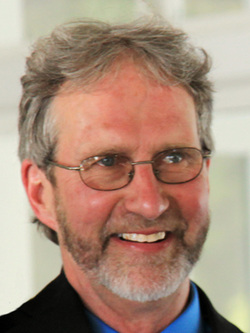
Today we finish up our conversation with John Byrne Barry.JB headshot

VAH: John, what does your typical writing day include?

JBB: For more than a decade, when I commuted from Berkeley to a full-time job in San Francisco, I woke up every workday morning at 6 and wrote for at least an hour before making breakfast and catching the bus to work. I wrote in the evening and now and then took time off and cranked all day or all week. But the norm was first thing in the morning, when dreamland hadn’t yet been buried away for the day. I wrote at least half of Bones in the Wash in those early morning sessions.

Now that I’m working at home and no longer commuting to a full-time job, I’m not as disciplined about my morning habit, but as often as I can, I devote my first hour of the day to writing fiction. For some reason, I am able to tap into my imagination better in the morning than any other time. I can edit or design in the evening, and sometimes I will generate new material, but it doesn’t flow like it does in the morning.

I have recently been going on Wednesday afternoon to a meetup writers drop in at the Mill Valley Library where we write for an hour and then share what we read. I’ve only been about five times, and the first few times, I read something I had written before I showed up, but then the past two times, I wrote some new scenes for my upcoming novel and they weren’t bad. When I’m focused, I can sometimes write two or three pages of good solid prose in an hour. I just can’t sustain that over a day or a week. Maybe someday.

VAH: What are your thoughts on the writing community? Are there any writing or author organizations you belong to or online that you frequent for community, online conversing, networking or commiserating? Any favorite online sites?

JBB: I had the very good fortune of being part of a novel writing group that last for ten years, and was extremely helpful. They read and critiqued my first novel and my second, and they were insightful and tough without being discouraging. (Well, sometimes they were.)

They were tough enough that I was at first surprised by the positive responses to my novel from new readers. Because these new readers were looking to enjoy the book, not critique it. Or because I fixed enough of the problems that the book really was a good deal better.

I was part of a theater group in the 1980s — the Plutonium Players, a.k.a. Ladies Against Women — and I wrote or co-wrote a lot of our skits and plays and monologues. We were young and talented and full of ego (present company not excepted) — when others critiqued my work, I felt like I was being put down. It wasn’t “here’s how you can make this better,” it was “you suck, why did you come to us with this crap?” That’s an exaggeration, but let’s just say that the novel writing group of the 21st  Century was better at giving me feedback that would help make my book better without denigrating me.

I have been exploring Meetups and various other critique groups, including one called 16 Eyes that grew out of the Berkeley Writers Club, but I’ve only been a handful of times yet. There’s also a Writers’ Drop In at the Mill Valley Library that I’ve been going to. Usually, there are three or four of us. We write for an hour and then some of us share what we’ve written.

I definitely want and need readers. People talk about a community of readers. I don’t really have one, as much as I have a bunch of friends and readers who are not necessarily part of a community.

I don’t know why I’m not participating more in online communities. Too often, it seems like the only thing people are saying is buy my book.

I love going to Why Are There Words, a monthly reading series in an art gallery in Sausalito.

VAH: What are your thoughts on traditional or independent publishing? Or a little of both? What choices have you made and why did you go the way you have?

JBB: I wrote my first novel, Wasted, a “green noir” murder mystery set in the world of garbage and recycling in Berkeley, and I tried to get it published in the traditional way. I rewrote it a dozen times, and in 2003 and 2004, submitted it to about 60 agents. I got about eight nibbles, two wanted to see the whole manuscript, and one, I was convinced was going to take it. But she didn’t.

Once I was far enough along in my second novel, I decided I needed to self-publish, partly because I was concerned that once again, I wouldn’t find an agent, but also because I had this delusion that the book, which is set during the 2008 presidential election, would be ready in time for the 2012 election. It wasn’t, but by then I had committed myself to self-publishing.

The process was time-consuming, but I ended up with a product I was proud of, and response has been heartening. I have 24 positive reviews and plenty more readers who told me they liked it, but I haven’t been able to get them to write a review. Sales have been disappointing. I know I need to do more marketing, but even when I have done a flurry of it, it hasn’t resulted in many sales. That hasn’t stopped me from writing a new book or reworking Wasted to independently publish this fall.

VAH: Best bit of advice to save another writer some anxiety or heartache?

JBB: If you’re not comfortable with solitude, find something else to do. Or else make sure you build in social connections into your schedule. There are days I have nothing scheduled but writing, and I don’t care for those days. But if I have a walk with a friend as part of the day, or a meeting, then I’m more comfortable with the solitude.

VAH: What’s next for you? Do you have a work in progress you can tell us about? (Include any links related you’d like to share.)

JBB: I am working on two projects. One is publishing Wasted, which is now in the home stretch. I have advance reader copies available in trade paperback and ebook format and I will happily send them to anyone who promises to write an honest review. You can contact me at johnbyrnebarry@gmail.com. You can also find out more on my website.

The other project is a new novel, working title Edgewater, about a man whose father has cancer and dementia and demands his son help him end his life. I’ve written about a third of my first draft and I’ve excited about where it’s going, but I haven’t mapped it all out yet. You can read the first chapter.

VAH: Thank you John for an interesting conversation this month!

Thank you for joining us for another month of author interviews, this month with John Byrne Barry.

Leave a comment

Filed under writing life

John Byrne Barry Part 3 at Three by Five

Today is part three of the author interview with John Byrne Barry.

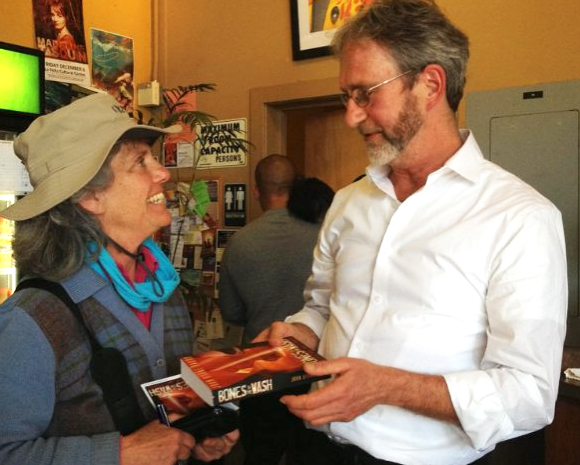
VAH: John, what books or authors keep you up at night (because you can’t put them down)?JB at book reading

JBB: What I love the most is finding a book that races along like, say the Da Vinci Code or the Firm, which both kept my up past my bedtime, but is populated by three-dimensional characters and is reality-based. (They weren’t.) The sweet spot where literary novels and plot-driven beach books overlap. I mentioned John LeCarre as my desert island author, though he can be ponderous. I like Scott Turow for the compelling plots combined with complex characters. Other authors I enjoy are David Mitchell, Barbara Kingsolver, Pat Conroy, Jeffrey Eugenides.

VAH: Are you a finish the book once you’ve started kind of reader or leave it for another if don’t like the book sort of reader?

JBB: I put books down all the time. If it doesn’t grab me, I find another one. Unfortunately that sometimes means that the books I finish are those plot-driven beach-reading best-seller types, which sometimes don’t leave me with much to ponder. And sometimes I won’t finish books that I know are important and profound. Here’s a partial list of books I never finished: Anna Karanena, Gravity’s Rainbow, Poisonwood Bible. And those are only the ones I can think of off the top of my head. Earlier this year, I started Michael Chabon’s Telegraph Avenue, but couldn’t get into it. A friend said he loved it. So sometimes I’m too impatient for things to get moving. Hopefully that helps me as a writer get to the heart of things faster.

VAH: The blank page stares back at you, what gets you over writers block?

JBB: I don’t get writer’s block anymore. If I don’t have a clear direction of what I should be writing, I talk to myself. On the page. “OK, I’ve finished a pretty good draft of Chapter 2, and Lamar’s dilemma is clear. So now I have to figure out how to introduce his sister Andrea. The reader is not going to like her at first — she’s surly, self-absorbed, and impatient with everyone else. So how do I get the reader to care about her?”

I participated in NaNoWriMo (National Novel Writing Month) in 2007 and “won” in the sense that I wrote more than 50,000 words that November. (No prize except that sense of accomplishment.) I wrote the first draft of what I then called Turquoise Trail, and which turned into Bones in the Wash. With a goal of 50,000 words in a month, I didn’t have time to map out where I was going, so I would write a scene or two, then if I didn’t know where I was going, I would talk to myself, essentially making the narrator of the novel, the furiously typing me, part of the novel. I included the talking to myself part. So I’ve gotten used to that. Many days at work, instead of making a list, I would open up a document and start talking to myself until that turned into the equivalent of a list. A game plan for the day, the week, the project. It’s what the author John Barth used to call “tuning his piano.” You don’t just sit down and play. You have to warm up first.

The downside of not having writer’s block is there’s a lot of chaff to separate from the wheat.

My experience, however, has been that once I’m warmed up and I know what I’m doing, I am capable, now and then, of writing a page or two or even three of solid, almost final draft prose. Sometimes the editing is as simple as cutting the first couple paragraphs or pages, the tuning part.

VAH: I’ve done something similar when I’m not sure where to go by asking myself what comes next or what could happen next and then balancing that with is that believable or how would that be possible? Then working through the details of an action the character is doing – almost like storyboarding in my head before it goes on the page.

VAH: How about some brass tacks of the writing life – what do you do in order to keep up with what you send out and results of your submissions?

JBB: I’ve tried all the organizational systems, from index cards to google spreadsheets to those big fat daily calendars. I’m not good at that part of things, but I do make a lot of lists and build in a lot of redundancy, so I do stay on track of the important things.

Probably the most effective system I have is I open a google doc each month for notes. My current one is called September 2014. And sometimes I’ll also have additional ones like Bones September 2014. At the top I make lists, and I try to track them every day or two. And then at the end of the month, I copy that list into the next month, right at the top. When I do accomplish something, I don’t delete it right away. I add a strikethrough to it. More satisfying to see a list of items crossed off than deleted.

VAH: I’ve used a similar system using a highlighter. Bright yellow bands of accomplishment on the to do list. John, tell us, What little known fact about you will amaze and/or amuse Three by Five’s readers?

JBB: I have exercised every day for the past 44 months (as of September 2014). Most days, I walk, but I also bicycle or lift weights. You can read about that on my blog.

VAH: Do you have a favorite, inspiring quote and why it works for you?

JBB: “In the midst of winter, I found within me an invincible summer.” Albert Camus.

I like it because I aspire not only to find that invincible summer, but to seek it. The world we live in is an amazing place, and there are all sorts of horrible things going on every day, so it’s a challenge to look to the light instead of the dark.

VAH: Finally, Three random non-writing related facts about you?

JBB: I once performed on the same stage as the Grateful Dead. At one time, I had two consecutive girlfriends whose previous boyfriend had become a woman. I was an altar boy, a paper boy, and a patrol boy.

VAH: Thank you John Byrne Barry, for participating with Three by Five! We’ll end this month’s interview with a couple bonus questions at the end of the month.

JB headshot

johnbyrnebarry.com

bonesinthewash.com

https://twitter.com/johnbyrnebarry

https://www.facebook.com/bonesinthewash

John Byrne Barry wrote his first book length project in fifth grade at Kilmer School in Chicago — a 140-page book on dinosaurs. One dinosaur per page. Lots of white space. He’s been writing ever since — newspaper and magazine stories, plays and skits, reports and tweets. He’s even written “advice columns” — “Question the Authority” about environmental issues, and “Lazy Organic Gardener.”

In, 2013, he published his first novel, Bones in the Wash: Politics is Tough. Family is Tougher. Set in New Mexico during the 2008 presidential campaign, it’s one part political thriller, one part family soap, and one part murder mystery. Coming out later this fall is Wasted, a “green noir” mystery set in the world of garbage and recycling in Berkeley.

He lives in Mill Valley, California with his wife and family.

Introducing John Byrne BarryPart I. Part II.


Leave a comment

Filed under writing life

Projects in the Shadow

IMG_7061Some of the projects I’m working on are anthologies which I’m finding is a slow process dependent upon submissions from interested others. Then there are my own collections of essay and poetry that I slug away upon. New ideas come and go, are duly recorded into the idea notebook for later consideration. Short term submission deadlines distract me and some projects slide into the shadow until my attention cycles back upon them. I work best under a deadline. Deadlines keep projects on the radar and in the light of effort, not in the shadow of out of mind. A new book comes in for review, the calendar rolls around to Emerging Writer Prize time, I go to a conference and return with a score of new markets to consider…I’m a bit unfocused or perhaps just not focused on writing at the moment. The literary life is feeling a bit battering at the moment. I’ll get back to it, I’m sure, soon. Excuse me while I distract myself with Warlords of Draenor‘s pre-expansion patch. Now there’s a time sink if there ever was one.

Leave a comment

Filed under writing life

Three by Five Presents John Byrne Barry Part 2

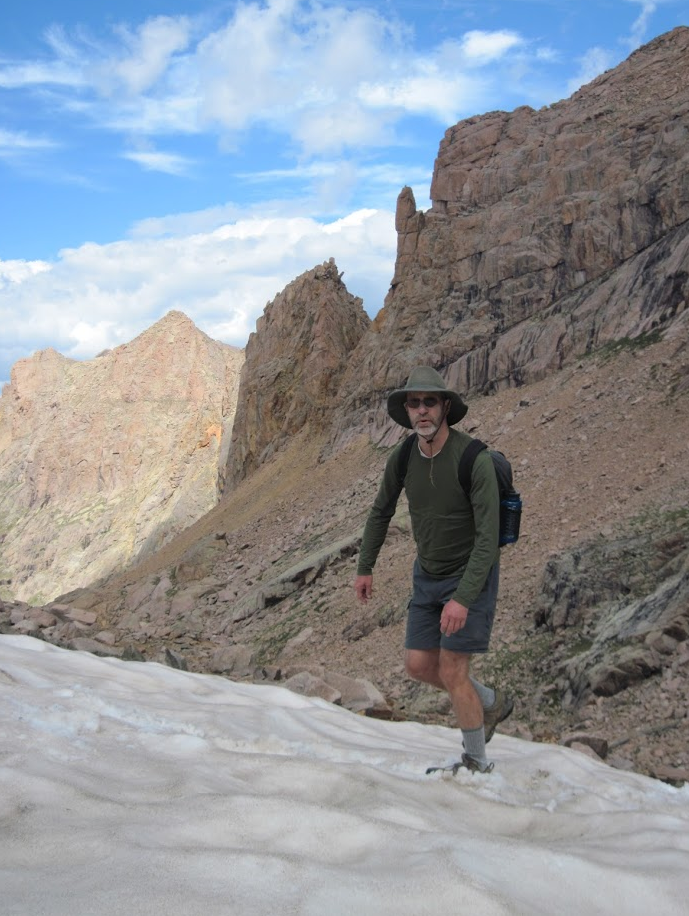
VAH: John, when did you know you were a writer and when did you realize you were?John Barry in Weminche Wilderness, Colorado

JBB: I’ve never just been a writer, so I’m not sure I ever came to that realization — I’ve been a graphic designer for almost as long, and for many years at my Sierra Club job, that was my greatest calling, perhaps because there were so many other who fancied themselves writers, but few who were designers.

When I was married for the first time, I put on my marriage certificate that I was a playwright, which I was at the time, but mostly I said that because it was better than saying I was unemployed.

Now that I’ve written and published a novel, I am more comfortable saying I’m a writer, but there’s still a part of me that thinks I’m an imposter.

VAH: I think that’s a process we all go through, that sense of really, truly being a writer and a small sense that questions the validity of claiming that! Which brings me to ask, what is your best advice for emerging writers?

JBB: I’m not the first to say this, but I can vouch for its veracity. Keep doing it. Keep practicing. There’s this concept popularized by Malcolm Gladwell that you need to put in 10,000 hours to get good at anything that’s difficult, and I have put in the hours. I remember twenty years ago, when I wrote a couple cover stories for the East Bay Express, one on garbage and recycling, another on collectives, how much my early drafts were tangled up like spaghetti because I was trying to weave together so many strands. I pulled out my hair turning those bloated early drafts into a story that was smooth and clear enough to publish. I have an easier time with those kind of structural challenges, and I think I just got better with practice. I only wish I had been more disciplined when I was younger. I wasn’t a bad writer, but I was not as focused as I needed to be, and I didn’t write as much as I do now because it was more like torture. I was lazy.

It’s not that I don’t still struggle. Taming the wild plots of Bones in the Wash was arguably the hardest work I’ve ever done, but it’s more fun now. I have more confidence because I’ve done it. I hope I keep getting better.

VAH: Getting better with practice. What are your thoughts on studying writing?

JBB: I looked into the MFA program at USF and was intrigued, but there are a lot of ways to learn these days. I was part of a novel writing critique group for more than ten years — they read at least two drafts of Bones in the Wash and my first novel, Wasted. I would have had to get five MFAs to equal that level of attention to my work.

VAH: What are you thoughts on writing conferences. Do you have a favorite?

JBB: I’ve only been to one, the San Francisco Writers’ Conference earlier this year, and I quite enjoyed it, especially the craft sessions. There was so much on the publishing and promotion process and I know that’s important, and I need to do more of it, but that part got old fast. It’s not that everyone says the same thing, but it seems that way.

VAH: What about writing full time?

JBB: I have been a writer for decades, but usually more than a writer. Mostly that was because my jobs demanded it. I needed to do design as well, or editing, or training, or leading teams, or managing projects. Mostly, that was a good thing because, even though writing is probably my strongest skill, it’s a solitary venture and that solitude can get old. When I first started writing novels, more than fifteen years ago, while I had a full-time job, I used to joke that if someone said here’s a pot of money, go and write your novel full time, I couldn’t have done it. Wouldn’t have wanted to do it. Now, maybe, but I would prefer to have more variety in my life.

The other thing I learned, by being part of a complicated organization, with thousands of volunteers and hundreds of staff, was that strategic thinking was more valued than writing. It wasn’t enough to write, I had to figure out what needed to be written, and for what audience. For a number of years, I managed other writers and editors, some of whom were pretty good with words, and one thing that happened all too often is that one of them would take a draft that had been handed to us and copy edit it when what needed to be done was to go back to the author and say, what is it you’re trying to do here? If something is ill-conceived in the first place, copy editing is not going to help.

VAH: That seems a good lesson – if the story isn’t well put together, no amount of editing will improve upon the story.

Thanks John! Coming up towards the end for the month – more from John Byrne Barry. Join Three by Five again, on days that end in 3.

Leave a comment

Filed under writing life