Tag Archives: Three by Five

John Byrne Barry Part 3 at Three by Five

Today is part three of the author interview with John Byrne Barry.

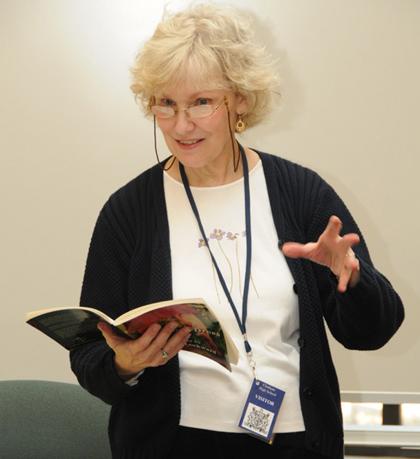
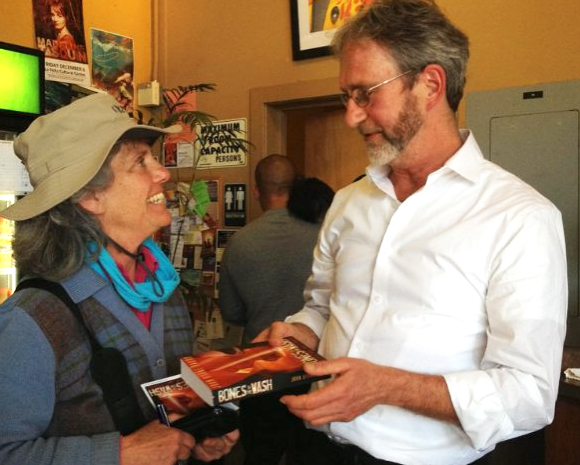
VAH: John, what books or authors keep you up at night (because you can’t put them down)?JB at book reading
JBB: What I love the most is finding a book that races along like, say the Da Vinci Code or the Firm, which both kept my up past my bedtime, but is populated by three-dimensional characters and is reality-based. (They weren’t.) The sweet spot where literary novels and plot-driven beach books overlap. I mentioned John LeCarre as my desert island author, though he can be ponderous. I like Scott Turow for the compelling plots combined with complex characters. Other authors I enjoy are David Mitchell, Barbara Kingsolver, Pat Conroy, Jeffrey Eugenides.

VAH: Are you a finish the book once you’ve started kind of reader or leave it for another if don’t like the book sort of reader?

JBB: I put books down all the time. If it doesn’t grab me, I find another one. Unfortunately that sometimes means that the books I finish are those plot-driven beach-reading best-seller types, which sometimes don’t leave me with much to ponder. And sometimes I won’t finish books that I know are important and profound. Here’s a partial list of books I never finished: Anna Karanena, Gravity’s Rainbow, Poisonwood Bible. And those are only the ones I can think of off the top of my head. Earlier this year, I started Michael Chabon’s Telegraph Avenue, but couldn’t get into it. A friend said he loved it. So sometimes I’m too impatient for things to get moving. Hopefully that helps me as a writer get to the heart of things faster.

VAH: The blank page stares back at you, what gets you over writers block?

JBB: I don’t get writer’s block anymore. If I don’t have a clear direction of what I should be writing, I talk to myself. On the page. “OK, I’ve finished a pretty good draft of Chapter 2, and Lamar’s dilemma is clear. So now I have to figure out how to introduce his sister Andrea. The reader is not going to like her at first — she’s surly, self-absorbed, and impatient with everyone else. So how do I get the reader to care about her?”

I participated in NaNoWriMo (National Novel Writing Month) in 2007 and “won” in the sense that I wrote more than 50,000 words that November. (No prize except that sense of accomplishment.) I wrote the first draft of what I then called Turquoise Trail, and which turned into Bones in the Wash. With a goal of 50,000 words in a month, I didn’t have time to map out where I was going, so I would write a scene or two, then if I didn’t know where I was going, I would talk to myself, essentially making the narrator of the novel, the furiously typing me, part of the novel. I included the talking to myself part. So I’ve gotten used to that. Many days at work, instead of making a list, I would open up a document and start talking to myself until that turned into the equivalent of a list. A game plan for the day, the week, the project. It’s what the author John Barth used to call “tuning his piano.” You don’t just sit down and play. You have to warm up first.

The downside of not having writer’s block is there’s a lot of chaff to separate from the wheat.

My experience, however, has been that once I’m warmed up and I know what I’m doing, I am capable, now and then, of writing a page or two or even three of solid, almost final draft prose. Sometimes the editing is as simple as cutting the first couple paragraphs or pages, the tuning part.

VAH: I’ve done something similar when I’m not sure where to go by asking myself what comes next or what could happen next and then balancing that with is that believable or how would that be possible? Then working through the details of an action the character is doing – almost like storyboarding in my head before it goes on the page.

VAH: How about some brass tacks of the writing life – what do you do in order to keep up with what you send out and results of your submissions?

JBB: I’ve tried all the organizational systems, from index cards to google spreadsheets to those big fat daily calendars. I’m not good at that part of things, but I do make a lot of lists and build in a lot of redundancy, so I do stay on track of the important things.

Probably the most effective system I have is I open a google doc each month for notes. My current one is called September 2014. And sometimes I’ll also have additional ones like Bones September 2014. At the top I make lists, and I try to track them every day or two. And then at the end of the month, I copy that list into the next month, right at the top. When I do accomplish something, I don’t delete it right away. I add a strikethrough to it. More satisfying to see a list of items crossed off than deleted.

VAH: I’ve used a similar system using a highlighter. Bright yellow bands of accomplishment on the to do list. John, tell us, What little known fact about you will amaze and/or amuse Three by Five’s readers?

JBB: I have exercised every day for the past 44 months (as of September 2014). Most days, I walk, but I also bicycle or lift weights. You can read about that on my blog.

VAH: Do you have a favorite, inspiring quote and why it works for you?

JBB: “In the midst of winter, I found within me an invincible summer.” Albert Camus.

I like it because I aspire not only to find that invincible summer, but to seek it. The world we live in is an amazing place, and there are all sorts of horrible things going on every day, so it’s a challenge to look to the light instead of the dark.

VAH: Finally, Three random non-writing related facts about you?

JBB: I once performed on the same stage as the Grateful Dead. At one time, I had two consecutive girlfriends whose previous boyfriend had become a woman. I was an altar boy, a paper boy, and a patrol boy.

VAH: Thank you John Byrne Barry, for participating with Three by Five! We’ll end this month’s interview with a couple bonus questions at the end of the month.
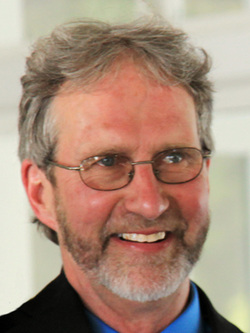
JB headshot

johnbyrnebarry.com

bonesinthewash.com

https://twitter.com/johnbyrnebarry

https://www.facebook.com/bonesinthewash

John Byrne Barry wrote his first book length project in fifth grade at Kilmer School in Chicago — a 140-page book on dinosaurs. One dinosaur per page. Lots of white space. He’s been writing ever since — newspaper and magazine stories, plays and skits, reports and tweets. He’s even written “advice columns” — “Question the Authority” about environmental issues, and “Lazy Organic Gardener.”

In, 2013, he published his first novel, Bones in the Wash: Politics is Tough. Family is Tougher. Set in New Mexico during the 2008 presidential campaign, it’s one part political thriller, one part family soap, and one part murder mystery. Coming out later this fall is Wasted, a “green noir” mystery set in the world of garbage and recycling in Berkeley.

He lives in Mill Valley, California with his wife and family.

Introducing John Byrne BarryPart I. Part II.


Leave a comment

Filed under writing life

Three by Five Presents John Byrne Barry Part 2

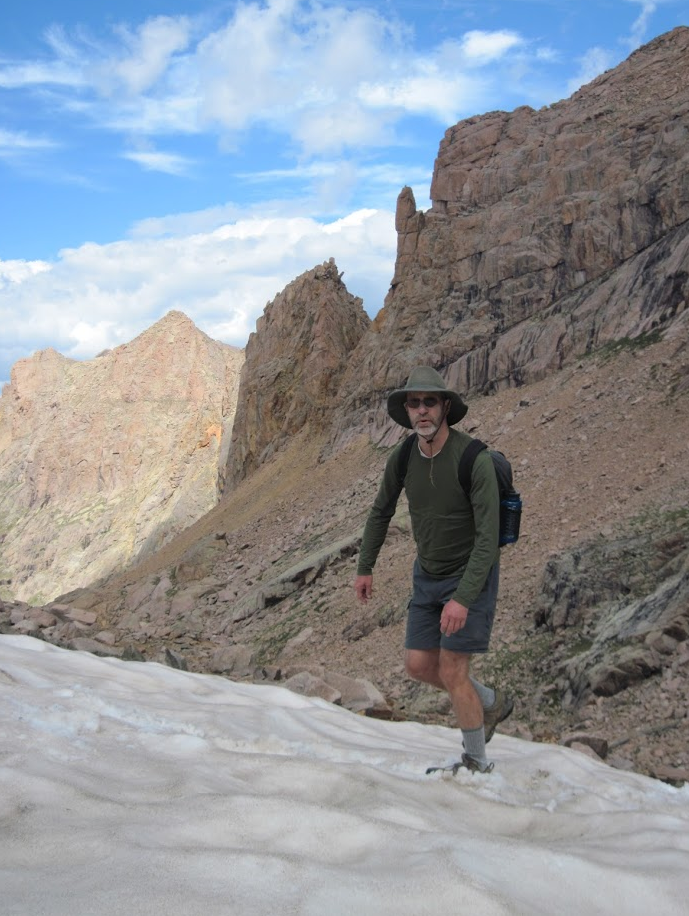
VAH: John, when did you know you were a writer and when did you realize you were?John Barry in Weminche Wilderness, Colorado

JBB: I’ve never just been a writer, so I’m not sure I ever came to that realization — I’ve been a graphic designer for almost as long, and for many years at my Sierra Club job, that was my greatest calling, perhaps because there were so many other who fancied themselves writers, but few who were designers.

When I was married for the first time, I put on my marriage certificate that I was a playwright, which I was at the time, but mostly I said that because it was better than saying I was unemployed.

Now that I’ve written and published a novel, I am more comfortable saying I’m a writer, but there’s still a part of me that thinks I’m an imposter.

VAH: I think that’s a process we all go through, that sense of really, truly being a writer and a small sense that questions the validity of claiming that! Which brings me to ask, what is your best advice for emerging writers?

JBB: I’m not the first to say this, but I can vouch for its veracity. Keep doing it. Keep practicing. There’s this concept popularized by Malcolm Gladwell that you need to put in 10,000 hours to get good at anything that’s difficult, and I have put in the hours. I remember twenty years ago, when I wrote a couple cover stories for the East Bay Express, one on garbage and recycling, another on collectives, how much my early drafts were tangled up like spaghetti because I was trying to weave together so many strands. I pulled out my hair turning those bloated early drafts into a story that was smooth and clear enough to publish. I have an easier time with those kind of structural challenges, and I think I just got better with practice. I only wish I had been more disciplined when I was younger. I wasn’t a bad writer, but I was not as focused as I needed to be, and I didn’t write as much as I do now because it was more like torture. I was lazy.

It’s not that I don’t still struggle. Taming the wild plots of Bones in the Wash was arguably the hardest work I’ve ever done, but it’s more fun now. I have more confidence because I’ve done it. I hope I keep getting better.

VAH: Getting better with practice. What are your thoughts on studying writing?

JBB: I looked into the MFA program at USF and was intrigued, but there are a lot of ways to learn these days. I was part of a novel writing critique group for more than ten years — they read at least two drafts of Bones in the Wash and my first novel, Wasted. I would have had to get five MFAs to equal that level of attention to my work.

VAH: What are you thoughts on writing conferences. Do you have a favorite?

JBB: I’ve only been to one, the San Francisco Writers’ Conference earlier this year, and I quite enjoyed it, especially the craft sessions. There was so much on the publishing and promotion process and I know that’s important, and I need to do more of it, but that part got old fast. It’s not that everyone says the same thing, but it seems that way.

VAH: What about writing full time?

JBB: I have been a writer for decades, but usually more than a writer. Mostly that was because my jobs demanded it. I needed to do design as well, or editing, or training, or leading teams, or managing projects. Mostly, that was a good thing because, even though writing is probably my strongest skill, it’s a solitary venture and that solitude can get old. When I first started writing novels, more than fifteen years ago, while I had a full-time job, I used to joke that if someone said here’s a pot of money, go and write your novel full time, I couldn’t have done it. Wouldn’t have wanted to do it. Now, maybe, but I would prefer to have more variety in my life.

The other thing I learned, by being part of a complicated organization, with thousands of volunteers and hundreds of staff, was that strategic thinking was more valued than writing. It wasn’t enough to write, I had to figure out what needed to be written, and for what audience. For a number of years, I managed other writers and editors, some of whom were pretty good with words, and one thing that happened all too often is that one of them would take a draft that had been handed to us and copy edit it when what needed to be done was to go back to the author and say, what is it you’re trying to do here? If something is ill-conceived in the first place, copy editing is not going to help.

VAH: That seems a good lesson – if the story isn’t well put together, no amount of editing will improve upon the story.

Thanks John! Coming up towards the end for the month – more from John Byrne Barry. Join Three by Five again, on days that end in 3.

Leave a comment

Filed under writing life

John Byrne Barry

VAH: Welcome Novelist John Byrne Barry to the Three by Five Author and other Interesting People Interview series! The burning first question is always – why do you write?

JBB: I write to answer questions. No, really. Sometimes the question is as simple as “What am I going to do today?” As for why I write novels, well, those questions aren’t that different. More like “What should I do with my life?” “How can I contribute to the world?”

Those are not rhetorical questions. One of the themes that I explore, consciously some of the time, is how to do the right thing. While I wanted “Bones in the Wash” to be a fun fast-paced political thriller and family drama, under all the action, I wanted to answer that question. The protagonist, ambitious Albuquerque Mayor Tomas Zamara, does believe in doing the right thing. But as he says, “politics is like playing football on a muddy field. If you don’t get dirty, you’re not giving your all.”

Does that give you a pass on doing the right thing? No, it doesn’t. It makes it harder.

I’m writing some non-fiction now, a conservation assessment of the Russian Far East, and there too, I’m answering a question. Here we have this vast expanse of pristine ecosystems, home to polar bears, tigers, and six species of Pacific salmon, and there we have a corrupt and undemocratic Russian government. Why should anyone invest time or money to protect these unparalleled natural treasures? (The answer gets more challenging every day that President Putin is in the news for incursions into the Ukraine, even though the Russian Far East is 5,000 miles away.)

I also write to make the world more interesting. Back in 2004, when I first worked on a presidential campaign, going door-to-door and phonebanking for John Kerry in three working-class suburbs south of Milwaukee, I made a commitment to write and post a blog entry every night. The work was tedious. Too many calls. Too many doors. Not enough meaningful interactions. (It was a swing state and so many people were so inundated with ads, mailers, calls, and so on.) But I had to write something every night, so I paid more attention, keeping my eyes and ears peeled for some interesting anecdote or conversation. It added a dimension to what otherwise were long and flat days.

VAH: I’d say that one of the joys of writing is being able to fully explore all the possible answers to the many questions we encounter in our lives.

Do you remember what your first story was about?

JBB: My memory is fuzzy, but I know that sometime in fifth or sixth grade history class, I wrote—probably with others, but I don’t remember—some satirical skits about Betsy Ross and the making of the American flag. At that time, I don’t think I had listened to Stan Freberg, who did comedy records parodying American history, but when I discovered him in college, I realized I had done things in the same vein. I believe the skits were well received, but whether that’s because they were good or because the rest of history class was dull I can’t say.

VAH: What about a favorite literary character?

JBB: One of my favorite books is All the Kings Men, a fictional account of Louisiana’s charismatic governor Huey Long, represented in the book as Willie Stark. He’s a fascinating character, but it is the book’s narrator, his aide Jack Burden, a former newspaper man, who is my favorite character. Perhaps it’s because of what I mentioned above, that the compelling moral question for me, as a reader and a writer, is how to do the right thing. Willy didn’t sweat that question.

Willie knew you never needed to make up lies about opponents. Here’s what he said to Jack as he told him to find dirt on an old family friend, now a judge: “Man is conceived in sin and born in corruption and he passeth from the stink of the didie to the stench of the shroud. There is always something.”

Jack found the something. For better and worse, however, Jack had a moral compass, and so he struggled with indecision, with betrayal, with morality. He was the more tortured soul, and thus more interesting.

 VAH: John, imagine you were stranded on a deserted island, what book or series of books would you want with you and why?

JBB: If I think about that long enough, I won’t be able to answer it, so I’ll just blurt out John LeCarre. I’ve read at least 20 of his books, but I think I would enjoy reading them again. I reread The Spy Who Came in from the Cold a few years ago, and it seemed dated, but just as compelling a drama.

VAH: That first thought is usually the most authentic, before you catch yourself with what “should be” a response. Authors that we can return to again and again, those are the true masters worth reading.

What would you say was the biggest influence on your development as a writer?

JBB: I worked for 25 years at the Sierra Club in a variety of positions, mostly in communications, doing writing, editing, design. Because we were often covering wonky environmental issues, like fuel efficiency in cars or water pollution from factory farms, we had to find stories to make those issues come alive. So I learned and mentored others in how to discover and distill the story. When writing fiction, I can make stuff up, but when doing journalism or writing reports, I have to dig to find the gold.

But even when writing fiction, I have a tendency to “tune my piano,” to borrow a phrase from John Barth, and when I’m in rewrite, I need to cut that tuning out and jump directly to the action. Come to think of it, I might want some John Barth with me on that desert island. Though it’s been a long time since I read any of his books. When I was a younger man, I thought Giles Goat Boy was incredibly brilliant. I might find it ponderous today.

Find out more about John Byrne Barry by visiting his social media sites.

johnbyrnebarry.com

bonesinthewash.com

https://twitter.com/johnbyrnebarry

https://www.facebook.com/bonesinthewash


Leave a comment

Filed under writing life

Introducing John Byrne Barry at Three by Five in October

October’s Three by Five author is John Byrne Barry.

John Byrne Barry wrote his first book length project in fifth grade at Kilmer School in Chicago — a 140-page book on dinosaurs. One dinosaur per page. Lots of white space. He’s been writing ever since — newspaper and magazine stories, plays and skits, reports and tweets. He’s even written “advice columns” — “Question the Authority” about environmental issues, and “Lazy Organic Gardener.”

In, 2013, he published his first novel, Bones in the Wash: Politics is Tough. Family is Tougher. Set in New Mexico during the 2008 presidential campaign, it’s one part political thriller, one part family soap, and one part murder mystery. Coming out later this fall is Wasted, a “green noir” mystery set in the world of garbage and recycling in Berkeley.

He lives in Mill Valley, California with his wife and family. For more about John, return on days that have a 3 in them! in the mean time – here’s the first page of his current work in progress:

Edgewater

by John Byrne Barry

Chapter 1: Dry Run

CHICAGO. JANUARY 2014.

Lamar huddled in the janitor’s closet between the fifth and sixth floor for two hours and thirty minutes. The wind howled outside, whipping across Lake Michigan and rattling the small window above the empty gray metal shelving unit on the back wall. The closet reminded him of a jail cell, though he’d only been in one once, to visit a client.

The small room had a pleasant smell of lemon verbena, from some cleaning products, but underneath that was a dank odor of a wet rug rolled up and jammed against a wall.

In the corner was a rolling cart stacked with folding chairs, and when he got tired of standing, he unfolded a chair and sat. A month earlier, when he did his reconnaissance, the closet had been bulging with Christmas decorations. Ornaments for the trees, stockings, wreaths, tree stands, strings of lights. Now they were on display at the nurses’ station, in the bingo room, by the elevators, and in the first floor lobby.

He had picked the lock of the closet. Easy even for an amateur like him. No one would guess that was something he could do.

At 1:30 am, he walked up seventeen steps. Didn’t make a sound. Nudged open the door with his shoulder. Two hours and thirty minutes earlier, he had slipped a folded postcard between the strike plate and the latch bolt. The photo on the card was of the lakefront and the Chicago skyline gleaming in the summer sun.

As he slipped inside the room, he stepped on something that crunched, like a potato chip. He froze. It didn’t appear to disturb anyone. He shuffled past the roommate, then stood in the shadows behind the curtain separating the two beds. Standing ramrod still, he felt the weight of his shoulder bag, heavy with the nitrogen tank. He could see the light of the corridor through the curtain, but knew that no one passing could see him. Not that there were likely to be any passersby in the middle of this cold night.

Robert Rose lay on his back, his hands open and crossing his chest. Peaceful. Lamar aspired to be peaceful, and may have appeared so on the outside. That was not what he was experiencing on the inside.

JB headshot

Leave a comment

Filed under writing life

Ruben Quesada Three by Five Part III

ruben 3Finishing up Three by Five’s interview with Poet Ruben Quesada.


VAH: The blank page stares back at you, what gets you over writers block?

RQ: Art is a big inspiration for me, so when I’m feeling blocked I turn to the works of art that might have inspired others. Usually something new will strike me about the painting and I’ll be able to start working. Music is helpful too. Anything from Mariah Carey to the Beach Boys to Wagner can provide inspiration.

VAH: What does your typical writing day include?

RQ: Right now, it includes a lot of revision since I’m getting my next manuscript ready. It includes reading, listening to music, or if I’m in the mood, having a movie playing in the background as I work.

VAH: What are your thoughts on the writing community – are there writing or author organizations you belong to or online sites ou frequent for community, conversing, networking or commiserating? And do you have some favorites?

RQ: I’m very active on Twitter, which has really given me the opportunity to connect with other writers and maintain friendships I’ve made with writers at AWP or Canto Mundo. Twitter is a great platform to talk about writing or just share about the work of other writers that I enjoy.

VAH:  Traditional or independent publishing? Or a little of both? What choices have you made and why did you go the way you have?

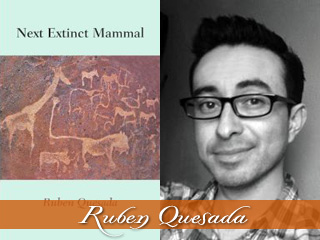
RQ: It depends on what your goals are in terms of writing. There are many wonderful independent publishers that support their writers and have helped get some terrific work out into the world. My first collection, Next Extinct Mammal, was with an independent press and that was a good experience. I’d like to be published by a bigger press as well. What is most important is to publish with people who you are comfortable with and would be proud to say published your work. Never publish with a press just because it’s a publication. Make sure it’s a good fit for both of you.

VAH: Best bit of advice to save another writer some anxiety or heartache?

RQ: Don’t spend too much comparing yourself to other writers in terms of career trajectory. Things happen at a different pace for everyone. Be ambitious; strive for more, work hard, and it will happen. Don’t get discouraged if it doesn’t happen as quickly as you want it to.

VAH: What’s next for you? Do you have a work in progress you can tell us about?

RQ: I’m finishing my second collection of poetry right now. I’m also working on a paper about queer horror movies called “The Horror of Heterosexuality.” I’m excited to have started some new poems that I think are the start of a third collection. I’m also working on video poems. My video poem “Dark Matter” was recently released by Poetryseen.com.  RubenQuesada w book cover

Leave a comment

Filed under writing life

Ruben Quesada Part II, Three by Five Author Interviews

ruben 3Welcome to Part II of the three segment interview with Poet Ruben Quesada.

VAH: Ruben, do you have a favorite conference or writing event and what makes that event a favorite?

RQ: Just one? Vermont Studio Center was a great experience because you are given so much time and space to write. I also enjoy that it’s not just writers in residence at VSC. I had the chance to meet visual artists as well. Being able to speak with them about how they approached their work let me have new perspective on my process.

VAH: The opportunity to speak with others about how one’s “art” develops is also one of the draws for me when attending conferences or retreats. So often gems are traded from that experience of sharing the process of creation.

You write and teach writing – are you a full time writer or full time teacher?

RQ: I’d say if you are serious about writing, you are a full-time writer regardless of what else you do in life to make money. I’m also an assistant professor. I teach poetry, digital storytelling, playwriting, queer studies, composition, and screenwriting. Both teaching and writing are my occupations. Sometimes they compete for my time, but I make the time required for both because that what I want to do.

VAH: When you are the reader, What books or authors keep you up at night because you can’t put them down?

RQ: The Clerk’s Tale by Spencer Reece; Space, in Chains by Laura Kasischke; When My Brother Was an Aztec by Natalie Diaz; Hustle by David Tomas Martinez; Bad Feminist by Roxane Gay.

VAH:  What book or series of books would you want if stranded on a deserted island and why?

RQ: Obviously they would have to books I would return to again and again, so I’d want some Ovid, Gabriela Mistral, Thomas Hardy, and W.H. Auden. I’m a fan of the quotidian and high art and these writers offer me insight into the high, the low, and everything in-between. I want to feel alive and be reminded of it when I read and that’s why I’d choose these writers.

VAH: That has to be one of my favorite questions in Three by Five as each author gives such interesting responses.

If there was a movie about your life and times, who would play you? What would the theme song be, and why?

RQ: Some friends and I were actually had a conversation about who would play us in movies and it was really difficult to come up with someone for me. There are not enough Latino actors working today. Perhaps an unknown actor would be best.

VAH: Ahh, an opportunity is out there then. Ruben, thank you for contributing your insights and comments with this second installment of Three by Five.

Read some of Ruben’s work at poetry blog The The Poetry.

The third interview installment will publish September 23rd. More from Ruben Quesada then!

Ruben Quesada is the author of Next Extinct Mammal (2011) and Luis Cernuda: Exiled from the Throne of Night (2008). He is Poetry Editor for Cobalt Review, Codex Journal and The Cossack Review. His writing has appeared in The  American Poetry Review, Cimarron Review, The Rumpus, and Superstition Review. He teaches English and creative
writing for the performing arts at Eastern Illinois University.

Leave a comment

Filed under writing life

Dr. Ruben Quesda @ Three by Five Part I

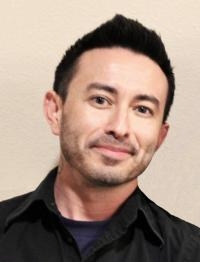
rubenThis month, Three by Five is happy to host Dr. Ruben Quesda, Ph.D. He is a Poet as well as an Assistant Professor of English and Creative Writing for the Performing Arts at Eastern Illinois University.


VAH: Ruben, Three by Five always starts with the inquiry why do you write?

RQ: I write because art and poetry are meant to push boundaries and discuss issues in the community that might be uncomfortable or that people might not want to discuss. The goal of my poetry is to cause conversation about race, queerness, death, and our human experience. We deal with big issues everyday, so writing is a way for me to process and try to understand them.

VAH: Some challenging topics to address. What do you do when the blank page stares back at you?

RQ: Art is a big inspiration for me, so when I’m feeling blocked I turn to the works of art that might have inspired others. Usually something new will strike me about the painting and I’ll be able to start working. Music is helpful too. Anything from Mariah Carey to the Beach Boys to Wagner can provide inspiration.

VAH: What inspired you to become a writer?

RQ: I published a poem anonymously in my high school paper during my freshman year and it caused quite a stir. I knew then that there was power in my writing. It was exciting. I continued writing and in my senior I won a high school writing competition sponsored by the Los Angeles Times. And it was that moment that I knew writing was all I wanted to do for a living.

VAH: What is your best advice for emerging writers who are discovering that writing is what they want to do for a living?

RQ: Read. Write. Repeat. It’s common advice, but it’s that way because it’s true. Write as much as you can. Read as much as you can. If you are interested in a particular style read all that you can about it and become an expert on it. I think it’s important to know the history of the style you are writing in, so that you know how you fit into the tradition, but also that you know how you are contributing something new to it as well.

VAH: Knowing and understanding the style of writing a writer is growing into is an important facet of the writer’s education. What are your thoughts on studying writing? You’ve an MFA – has the degree helped your career progress or development?

RQ: I do have an MFA. It was helpful in that it allowed me to explore poetry more closely and see what it excited in me as a writer. The MFA as a studio degree is about the creation of work, which is, of course, very useful. However, it doesn’t usually allow a lot of time for the consideration of theory and how your work fits in among a particular theory or historical moment. My time at Texas Tech for my Ph.D allowed me to make such considerations.

Leave a comment

Filed under writing life

Introducing Ruben Quesada @ Three by Five in September

rubenRuben Quesada – Poet and Assistant Professor of English and Creative Writing for the Performing Arts at Eastern Illinois University

Dr. Ruben Quesada is founder and publisher of Codex Journal, poetry editor at The Cossack Review and Cobalt Review, and poetry editor at Luna Luna Magazine.

Founder of Stories & Queer, a non profit, traveling reading series whose mission is to create safe storytelling spaces for poets & writers of color in underrepresented areas of the country, he now serves as its creative consultant.

A Pushcart Prize nominee in poetry, his writing has appeared in The American Poetry Review, The California Journal of Poetics, Superstition Review, Guernica, Cimarron Review, and elsewhere.

Ruben has been a fellow and resident at CantoMundo, Napa Valley Writers’ Conference, Vermont Studio Center, Squaw Valley Community of Writers, Santa Fe Art Institute, Lambda Literary Foundation Writer’s Retreat, and Idyllwild Arts Program.

Visit his webpage for info on a current call for submissions for Latin@ poets at any stage in their careers.

More about and from Dr. Ruben Quesada this month on days with a three.


Leave a comment

Filed under writing life

Diane Lockward Part II on Three by Five

diane 4VAH: Diane, when did you begin to think of yourself as a writer and how did you come to this awareness?

DL: Years ago I wanted to write novels. I had what seemed like good ideas; what I lacked was the patience to sit at the desk for hours and hours pounding out the words. I then tried short stories and had a few published, but I finally admitted that I wasn’t crazy about the genre so it didn’t make sense to want to pursue it. When I volunteered to write poems for Stafford’s textbook-in-progress, I knew I’d found my genre. I made a conscious decision that I would pursue poetry and not give up. I began taking workshops and courses. I went to summer conferences. I read all kinds of craft books and poetry anthologies and books of poems by individual poets. I learned the craft, began submitting, and just kept on going.

VAH: Imagine you’re striking up a conversation with someone who wants to be a writer, or someone just starting out. What is your best advice for emerging writers?

DL: Learn the craft. It’s essential to have a heart and a brain, but you must also learn the craft and know what you’re doing and why. Be patient and persistent; it won’t happen overnight. Learning the craft takes years. Writing the poems takes weeks, months, even years. Sending them out is time-consuming and the responses are slow in coming back. Here’s my daily mantra: Go forth boldly.

VAH: How have you gone about studying writing? Did you consider the MFA?

DL: I do not have an MFA. I came late to the party. By the time I found poetry, I had three children in school and was teaching full-time. I did manage over a period of four years to get an MA in English Literature and then Supervisor’s certification. But I was tapped out at that point and an MFA seemed impossible. Nevertheless, I very much wanted to devour poetry, to learn the craft, and to become part of the poetry world, so I studied independently. I read books, journals, and craft books. I took local courses and workshops. In the summers I went away to conferences for a week or two while my husband took over the household.

VAH: Those conferences were opportunities to immerse yourself in writing. Do you have a favorite conference, writing retreat or seminar and why?

DL: The Frost Place in Franconia, New Hampshire, was hugely important to me. It was the first week-long conference I attended shortly after I began writing poetry. I went there nervous as a cat, but soon realized that I’d found my right place, that I fit in, and that, yes, I belonged there among other aspiring poets. I learned how to critique and be critiqued. I met other poets. I became part of a community of poets. I went back for seven summers. Two of those summers I also attended the Advanced Poetry Seminar there, run by Baron Wormser. One of the high points of my life occurred in 2005 when I was invited back to The Frost Place as a guest poet for the Conference on Poetry and Teaching. A perfect circle.

VAH: That must have been very validating. Diane, what is your writing life like currently?

DL: I am doing exactly what I want to be doing right now. After teaching high school English for twenty-five years, I decided to leave so I could spend more time with writing, so I could live as a writer, a poet. I now get to spend my days immersed in poetry. While I don’t write many more poems now than I did when I was teaching, I have time for other poetry-related activities. I keep a website. I also keep a blog, “Blogalicious,” where I post about once a week. I put out a monthly Poetry Newsletter that I started three years ago. Much of the material in my new craft book, The Crafty Poet: A Portable Workshop, came from my blog and my newsletter. I’m sure that this book would not exist if I were still teaching. Nor, most likely, would my three poetry books, all of them published after I left teaching.

I also run two local events. One is a poetry festival that I began ten years ago. It’s called “Poetry Festival: A Celebration of Literary Journals.” It brings together a dozen journals and their editors for a day of poetry. Each editor invites two poets to read for his or her journal. While the journals are on display and the editors are talking with visitors—around 200—readings take place in another area of the library. The second event I run is called “Girl Talk: A Celebration of Women’s History Month.” For that, I invite 24-30 women poets to each read a poem on a woman-related subject. I’ve been doing this event for six years.

VAH: Later this month a review of The Crafty Poet: A Portable Workshop will post here on the site. The twitter size review would be simply Get this book! Be a better Poet! More with Diane Lockward on the 23rd. You’ll find links to a sampling of your work below:

Original Sin,” first place winner of the 2012 Naugatuck River Review contest.

The Third Egg” in Waccamaw: A Journal of Contemporary Literature.

Sinkholes” in Valparaiso Poetry Review .

Leave a comment

Filed under writing life

Sarah Blum Part III

sarah 4VAH: If you had a super power, what would it be and why that one?

SB: I would fly because I have always dreamed of doing that and was in love with superman/superboy.

VAH: Are you a finish the book once you’ve started kind of reader or leave it for another if don’t like the book sort of reader?

SB: More finish but if it is really bad I will leave it.

VAH: The blank page stares back at you, what gets you over writers block?

SB:I have never had it.

VAH: How keep up with what you send out and results of your submissions?

SB: I make a list of what I sent and to whom and dates and if I don’t get a response or get a no, I move on and keep moving on. I hold a deep faith that I am doing what I am being asked to do and will have the support of the universe even when it doesn’t look or feel like I do.

VAH: What little known fact about you will amaze and/or amuse?

SB: I was afraid of everything when I was a child.

VAH: What about now?

SB: When I am fearful of anything I have many options to deal with it. I use EFT, emotional freedom technique (tapping) or I consciously release it. This summer I suddenly became fearful of going out into the world to talk about the culture of abuse toward women in the military. I saw the Senate Armed Services Committee Hearing with three full rows of the highest level of military men from all the services staring at the two lone women survivors who came to testify and I realized I would be facing them as well. Fortunately for me I had my women’s community retreat in July and we do many different types of lodges/ceremonies and I chose to do a specific one led by two women I trust and value and in that ceremony I literally and actually released all the fear I had and sent it into a fire and into the earth. I have not been afraid since.

Sarah is the author of the book Women Under Fire: Abuse in the Military.

Visit here for a compilation of resources for women veterans Sarah has put together.

Three by Five interviews Sarah Blum Part I, Part II.

And that concludes this month’s Three by Five interview with author Sarah Blum.

Leave a comment

Filed under writing life