Tag Archives: writing life

Introducing John Byrne Barry at Three by Five in October

October’s Three by Five author is John Byrne Barry.

John Byrne Barry wrote his first book length project in fifth grade at Kilmer School in Chicago — a 140-page book on dinosaurs. One dinosaur per page. Lots of white space. He’s been writing ever since — newspaper and magazine stories, plays and skits, reports and tweets. He’s even written “advice columns” — “Question the Authority” about environmental issues, and “Lazy Organic Gardener.”

In, 2013, he published his first novel, Bones in the Wash: Politics is Tough. Family is Tougher. Set in New Mexico during the 2008 presidential campaign, it’s one part political thriller, one part family soap, and one part murder mystery. Coming out later this fall is Wasted, a “green noir” mystery set in the world of garbage and recycling in Berkeley.

He lives in Mill Valley, California with his wife and family. For more about John, return on days that have a 3 in them! in the mean time – here’s the first page of his current work in progress:

Edgewater

by John Byrne Barry

Chapter 1: Dry Run

CHICAGO. JANUARY 2014.

Lamar huddled in the janitor’s closet between the fifth and sixth floor for two hours and thirty minutes. The wind howled outside, whipping across Lake Michigan and rattling the small window above the empty gray metal shelving unit on the back wall. The closet reminded him of a jail cell, though he’d only been in one once, to visit a client.

The small room had a pleasant smell of lemon verbena, from some cleaning products, but underneath that was a dank odor of a wet rug rolled up and jammed against a wall.

In the corner was a rolling cart stacked with folding chairs, and when he got tired of standing, he unfolded a chair and sat. A month earlier, when he did his reconnaissance, the closet had been bulging with Christmas decorations. Ornaments for the trees, stockings, wreaths, tree stands, strings of lights. Now they were on display at the nurses’ station, in the bingo room, by the elevators, and in the first floor lobby.

He had picked the lock of the closet. Easy even for an amateur like him. No one would guess that was something he could do.

At 1:30 am, he walked up seventeen steps. Didn’t make a sound. Nudged open the door with his shoulder. Two hours and thirty minutes earlier, he had slipped a folded postcard between the strike plate and the latch bolt. The photo on the card was of the lakefront and the Chicago skyline gleaming in the summer sun.

As he slipped inside the room, he stepped on something that crunched, like a potato chip. He froze. It didn’t appear to disturb anyone. He shuffled past the roommate, then stood in the shadows behind the curtain separating the two beds. Standing ramrod still, he felt the weight of his shoulder bag, heavy with the nitrogen tank. He could see the light of the corridor through the curtain, but knew that no one passing could see him. Not that there were likely to be any passersby in the middle of this cold night.

Robert Rose lay on his back, his hands open and crossing his chest. Peaceful. Lamar aspired to be peaceful, and may have appeared so on the outside. That was not what he was experiencing on the inside.
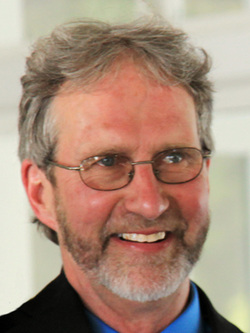
JB headshot

Leave a comment

Filed under writing life

Ruben Quesada Part II, Three by Five Author Interviews

ruben 3Welcome to Part II of the three segment interview with Poet Ruben Quesada.

VAH: Ruben, do you have a favorite conference or writing event and what makes that event a favorite?

RQ: Just one? Vermont Studio Center was a great experience because you are given so much time and space to write. I also enjoy that it’s not just writers in residence at VSC. I had the chance to meet visual artists as well. Being able to speak with them about how they approached their work let me have new perspective on my process.

VAH: The opportunity to speak with others about how one’s “art” develops is also one of the draws for me when attending conferences or retreats. So often gems are traded from that experience of sharing the process of creation.

You write and teach writing – are you a full time writer or full time teacher?

RQ: I’d say if you are serious about writing, you are a full-time writer regardless of what else you do in life to make money. I’m also an assistant professor. I teach poetry, digital storytelling, playwriting, queer studies, composition, and screenwriting. Both teaching and writing are my occupations. Sometimes they compete for my time, but I make the time required for both because that what I want to do.

VAH: When you are the reader, What books or authors keep you up at night because you can’t put them down?

RQ: The Clerk’s Tale by Spencer Reece; Space, in Chains by Laura Kasischke; When My Brother Was an Aztec by Natalie Diaz; Hustle by David Tomas Martinez; Bad Feminist by Roxane Gay.

VAH:  What book or series of books would you want if stranded on a deserted island and why?

RQ: Obviously they would have to books I would return to again and again, so I’d want some Ovid, Gabriela Mistral, Thomas Hardy, and W.H. Auden. I’m a fan of the quotidian and high art and these writers offer me insight into the high, the low, and everything in-between. I want to feel alive and be reminded of it when I read and that’s why I’d choose these writers.

VAH: That has to be one of my favorite questions in Three by Five as each author gives such interesting responses.

If there was a movie about your life and times, who would play you? What would the theme song be, and why?

RQ: Some friends and I were actually had a conversation about who would play us in movies and it was really difficult to come up with someone for me. There are not enough Latino actors working today. Perhaps an unknown actor would be best.

VAH: Ahh, an opportunity is out there then. Ruben, thank you for contributing your insights and comments with this second installment of Three by Five.

Read some of Ruben’s work at poetry blog The The Poetry.

The third interview installment will publish September 23rd. More from Ruben Quesada then!

Ruben Quesada is the author of Next Extinct Mammal (2011) and Luis Cernuda: Exiled from the Throne of Night (2008). He is Poetry Editor for Cobalt Review, Codex Journal and The Cossack Review. His writing has appeared in The  American Poetry Review, Cimarron Review, The Rumpus, and Superstition Review. He teaches English and creative
writing for the performing arts at Eastern Illinois University.

Leave a comment

Filed under writing life

Calls for submission, emerging writers and Three by Five

Thanks for surfing by and visiting. I’ve been on a bit of a break and am gearing back up writing. Please note the calls for submission and if one or more speak to you, I hope you will send in some work for consideration. Three by Five, the author and other interesting people interview series is looking for the next interviewee – so do get in contact if you’d like to be the featured interviewee during an upcoming month. The San Francisco Writers Conference is approaching in about 6 months – and this year I’ll be sponsoring the 8th annual emerging writer prize that provides one emerging writer with registration to attend the conference. If you qualify, please enter between September 8 and December 1.

More to follow –

Regards,

Vicki

Leave a comment

Filed under writing life

Poet Diane Lockward – Part III

Three by Five presents Part III and the conclusion to an interview with Poet Diane Lockward.

VAH: The blank page stares back at you, what gets you over writers block?

diane 1DL: I don’t wait for inspiration—I pursue it. That means showing up at the desk and being willing to write badly. Of course, there are days when I don’t feel like doing that, but I know that if I’m willing to do it anyhow eventually a poem will show up. I write on yellow legal pads, churning out pages and pages of garbage. Every few weeks I go over those pages and invariably find something worth saving and working on. I should probably mention that I’m not an everyday kind of writer. I know myself and my particular writing process well enough to know that I’m just not going to do that. I regard the non-writing days as gathering time. I do, however, spend a good deal of time each day doing something related to poetry.

VAH:  Brass tacks of the writing life – how do you keep up with what you send out and results of your submissions?

DL: I have a form where I list journals, poem titles, and dates as I send out submissions. As responses come in, I indicate the results on the form, circling the Acceptances, crossing out the Rejections. It’s a primitive system, but it works. I also indicate the length of time it took a journal to respond.

VAH: Diane, Do you have a favorite, inspiring quote and why it works for you?

DL: Anton Chekov said, “Don’t tell me the moon is shining; show me the glint of light on broken glass.” That’s an important craft tip, beautifully said. It’s the old “show, don’t tell” advice, but in giving it, Chekov demonstrates what he means. Although Chekov was a prose writer, I keep his words in my head when I’m writing poems.

VAH: What does the typical Diane Lockward writing day include?

DL: I read poetry with breakfast—journals, books, anthologies. Then I check my email. I do some non-taxing exercises in front of the TV and watch the news. I get dressed. If it’s a writing day, I sit at my kitchen table with another cup of ginger tea, and I read some poems, steal an idea, an image, or a line and run away with it, free writing for 10-20 minutes. Then I devote some time to revising poems in progress. If there’s time, I run a few errands. Late afternoon I spend reading a novel or memoir. After dinner reading is usually a literary biography or a craft book.

VAH: I like the balance and informal structure to your work day. Writers are often working in isolation. What are your thoughts on the writing community – writing or author organizations you belong to or where online you frequent for community, online conversing, networking or commiserating? Do you have any favorite online sites?

DL: I strongly believe that we poets need to support each other’s work. We make up the majority of the audience for each other’s work. If we want people to buy and read our books, we need to do that for other poets. As the Poet Laureate of my town, I feel a responsibility to bring poetry into the community. Thus I run the two events I mentioned before—Girl Talk and the Poetry Festival. Both of these events give poets an opportunity to read in front of a packed room and to sell some books. These events also give area residents an opportunity to listen to some poetry.

I have also worked as a poet-in-the-schools and am on the roster of the Geraldine R. Dodge Foundation. I have worked at every Dodge Poetry Festival since 2002 and I read at the one in 2006. Both my blog and my Poetry Newsletter are efforts to spread the word about poetry. I also put out a weekly Gazette for the women poets’ listserv I belong to—Wompos.

Right now I’m reading manuscripts for a book contest. And for the second time I’m a guest editor for Adanna, a literary journal which is putting out a special issue on Women and Food, so I’m reading submissions for that.

Although I know that social media gobbles up time, I’m on Facebook, Twitter, and Google +. I don’t spend much time on either Twitter or Google +, but I like the poetry community that has become part of Facebook and have made good contacts there.

VAH: Social media can seem like a consuming job all by itself. Now for a couple bonus questions – what are three random non-writing related facts about you?

DL: My favorite dessert is Boccone Dolce. And I can make it. Three layers of meringue, each topped with melted chocolate, a layer of whipped cream, and sliced strawberries.

My favorite exercise is walking which I do with an iPod.

I feed goldfinches all summer. They have occasionally flown into a poem, for example, “April at the Arboretum.”

VAH: Boccone Dolce sounds tasty! How about a little known fact about you that will amaze or amuse?

DL: When I was a child, I would routinely eat an entire jar of dill pickles in one sitting. Then I drank the juice. A pickle juice cocktail.

VAH: Thank you Diane Lockward for taking some time with Three by Five. Coming on the 30th, a review of Diane Lockward’s The Crafty Poet: A Portable Workshop (Wind Publications, 2013). diane 3

Leave a comment

Filed under writing life

Diane Lockward Part II on Three by Five

diane 4VAH: Diane, when did you begin to think of yourself as a writer and how did you come to this awareness?

DL: Years ago I wanted to write novels. I had what seemed like good ideas; what I lacked was the patience to sit at the desk for hours and hours pounding out the words. I then tried short stories and had a few published, but I finally admitted that I wasn’t crazy about the genre so it didn’t make sense to want to pursue it. When I volunteered to write poems for Stafford’s textbook-in-progress, I knew I’d found my genre. I made a conscious decision that I would pursue poetry and not give up. I began taking workshops and courses. I went to summer conferences. I read all kinds of craft books and poetry anthologies and books of poems by individual poets. I learned the craft, began submitting, and just kept on going.

VAH: Imagine you’re striking up a conversation with someone who wants to be a writer, or someone just starting out. What is your best advice for emerging writers?

DL: Learn the craft. It’s essential to have a heart and a brain, but you must also learn the craft and know what you’re doing and why. Be patient and persistent; it won’t happen overnight. Learning the craft takes years. Writing the poems takes weeks, months, even years. Sending them out is time-consuming and the responses are slow in coming back. Here’s my daily mantra: Go forth boldly.

VAH: How have you gone about studying writing? Did you consider the MFA?

DL: I do not have an MFA. I came late to the party. By the time I found poetry, I had three children in school and was teaching full-time. I did manage over a period of four years to get an MA in English Literature and then Supervisor’s certification. But I was tapped out at that point and an MFA seemed impossible. Nevertheless, I very much wanted to devour poetry, to learn the craft, and to become part of the poetry world, so I studied independently. I read books, journals, and craft books. I took local courses and workshops. In the summers I went away to conferences for a week or two while my husband took over the household.

VAH: Those conferences were opportunities to immerse yourself in writing. Do you have a favorite conference, writing retreat or seminar and why?

DL: The Frost Place in Franconia, New Hampshire, was hugely important to me. It was the first week-long conference I attended shortly after I began writing poetry. I went there nervous as a cat, but soon realized that I’d found my right place, that I fit in, and that, yes, I belonged there among other aspiring poets. I learned how to critique and be critiqued. I met other poets. I became part of a community of poets. I went back for seven summers. Two of those summers I also attended the Advanced Poetry Seminar there, run by Baron Wormser. One of the high points of my life occurred in 2005 when I was invited back to The Frost Place as a guest poet for the Conference on Poetry and Teaching. A perfect circle.

VAH: That must have been very validating. Diane, what is your writing life like currently?

DL: I am doing exactly what I want to be doing right now. After teaching high school English for twenty-five years, I decided to leave so I could spend more time with writing, so I could live as a writer, a poet. I now get to spend my days immersed in poetry. While I don’t write many more poems now than I did when I was teaching, I have time for other poetry-related activities. I keep a website. I also keep a blog, “Blogalicious,” where I post about once a week. I put out a monthly Poetry Newsletter that I started three years ago. Much of the material in my new craft book, The Crafty Poet: A Portable Workshop, came from my blog and my newsletter. I’m sure that this book would not exist if I were still teaching. Nor, most likely, would my three poetry books, all of them published after I left teaching.

I also run two local events. One is a poetry festival that I began ten years ago. It’s called “Poetry Festival: A Celebration of Literary Journals.” It brings together a dozen journals and their editors for a day of poetry. Each editor invites two poets to read for his or her journal. While the journals are on display and the editors are talking with visitors—around 200—readings take place in another area of the library. The second event I run is called “Girl Talk: A Celebration of Women’s History Month.” For that, I invite 24-30 women poets to each read a poem on a woman-related subject. I’ve been doing this event for six years.

VAH: Later this month a review of The Crafty Poet: A Portable Workshop will post here on the site. The twitter size review would be simply Get this book! Be a better Poet! More with Diane Lockward on the 23rd. You’ll find links to a sampling of your work below:

Original Sin,” first place winner of the 2012 Naugatuck River Review contest.

The Third Egg” in Waccamaw: A Journal of Contemporary Literature.

Sinkholes” in Valparaiso Poetry Review .

Leave a comment

Filed under writing life

Indie Author = Publishing Professional

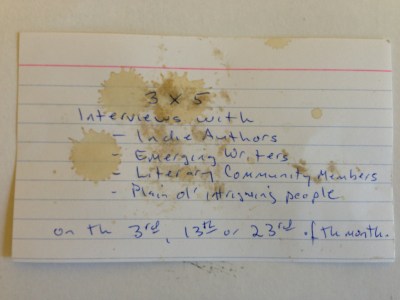
This site is more than just my author website – here you will find information about upcoming events, the Three by Five Interview Series where traditional and indie authors give some back story on themselves, an opportunity to highlight a work in progress with Author First Look and occasional book reviews or trailers. On the Submission Guidelines page find anthology projects open for submissions and the guidelines to submit. Each year I sponsor an Emerging Writer to attend the San Francisco Writers Conference, watch the counter for when submissions will open. The blog space provides a place for my own musings about writing and the writing life, but it also serves as  clearinghouse for other good resources out there – all to help the indie author and emerging writer reach that gold standard of professionalism where they produce and publish something as good as or better than what comes out of the traditional houses. 

One of my favorite things to post here are when I find kick butt blog posts from someone else that really speak to issues in or for the indie community at large or might be a good resource for some individuals that take the time to visit the site. I’ve got one coming up at the end of this post that is right on target with some of the distractions in the indie author community. Stay tuned.

First though –

Three by Five is always looking for more writers, authors and interesting writing community people to interview. Message, email or tweet me for more information. First Look will post your bio and synopsis of your work in progress first chapter with a link back to where you have the chapter posted. Let me know if you want to participate. This year for National Poetry Month, I’m looking for poets to interview about their favorite poem they’ve written and I’ll post the interview and poem during poetry month. There are several call for submissions still open, take a look and please submit for consideration. Submissions for the annual emerging writer prize will open in September – read the results and what has won in the past. Submit your response to the prompt. Maybe you will win your registration to the San Francisco Writers Conference in 2015. Got a book? I’m happy to read and review a copy. And if you’d like a grab bag of literary magazines sent your way and live in the United States, I’ll send you a few free or for a small donation to cover postage.

Can’t say this enough – if you are an indie author, you are in the publishing business. You are a publishing professional. If you have a book that you’ve written, published and are selling – make sure that book was ready when it went out the door or across cyberspace. Meet the standard of the big house published books. Invest in an artist to design your cover. Know the difference between a beta reader, copy editor and proofreader AND EMPLOY them on your book. If you commit to attend an event, attend it! Urban fantasy and paranormal romance author J. M. Gregorie has posted a direct and right on point blog posting on actions that negatively impact the indie author community and degrade our ability to be taken seriously as writing professionals. Read her Open Letter to Indie Authors.

Leave a comment

Filed under writing life

2013 in review

The WordPress.com stats helper monkeys prepared a 2013 annual report for this blog.

Here’s an excerpt:

A New York City subway train holds 1,200 people. This blog was viewed about 5,200 times in 2013. If it were a NYC subway train, it would take about 4 trips to carry that many people.

Click here to see the complete report.

Leave a comment

Filed under writing life

April is National Poetry Month

While the last week of 2013 winds down, I’m looking ahead to April – which is National Poetry Month. During the month of April, I’ll be highlighting different poets on the site. Visit often to discover a poet or find out more about one you love to read. Discover what poem the poet has written that is their favorite and why. All through April – a different poet every few days. Find out more about National Poetry Month from the Academy of American Poets.

Leave a comment

Filed under writing life

Emerging Writer Prize Finalists

The two finalists/runner ups for the 2014 Victoria A. Hudson Emerging Writer Prize are Gretchen Hayduk Wroblewski and Merriam Saunders. Both wrote outstanding responses to the Why I Write prompt. In the next few days, their essays will be posted here. Both were original in presentation and exceptional in quality. Each finalist will receive signed copy of No Red Pen: Writers, Writing Groups & Critique.

Tomorrow, the 2014 Emerging Writer Prize Winner!

Leave a comment

Filed under writing life

Breadcrumbs to Blogs

There is so much to read on the web! Think of these as breadcrumbs, leading to a banquet of selections for your plate of experiences here in the wild internet.

First up – Molly Greene: Writer.

Molly has two previous books  and launching now, her latest mystery novel Rapunzel. Find out more about her books on her site. She blogs on writing and the writing life several times a week. Check out her post Self-Publishing: 6 Valuable Lessons I Learned Between Book #1 & #2 for some helpful hints post publishing that first book. The one that really stood out for me? Number 3 – “Confidence and experience strengthened my personal filter.” The key take away: There is a great deal of information out there, use other opinions on what to do as a guide but do what is best for you as long as you cover the basics – “You must have a well-written, well-edited, well-proofed and well-formatted book with a professional-looking cover.”

Second – O-Dark-Thirty.

O-Dark-Thirty is the literary journal for the Veterans Writing Project. The Veterans Writing Project provides no cost writing workshops and conferences for veterans, service members and military family members. Combining both print (O Dark Thirty) and online (The Report), the site offers opportunity for members of the military community to publish their work and for those without military experience to gain insight and perspective on what our service members and their families go through. The print journal publishes 4 times a year. The Report updates often with new work. Make this one of your must read stops when surfing the net and order a print subscription. For a sample read, Kevin Neirbo’s Later explores a Marine’s coming of age.

Third – Beyond The Margins.

Truly a smorgasbord of writerly edification options. “Think literary magazine run amok,” is how the site describes itself. A dozen contributing writers plus guest posters present diverse voices and experiences on the craft of writing and business of publishing. A recent post by Randy Sue Myers entitled Manners for Writers has some useful hints about writer behavior in the literary community. A key point not enough bloggers and tweeters understand – “Most readers…don’t want to hear complaints about how tired you are, how much you hate writing, and what a grind it is to revise. It’s better not to show how the sausage is made.” Yep,  and I’ve done this too, it’s easy when it’s time to log on and make a new post to fall back to what isn’t working. I see more than a few updates that are complaints and there is nothing in a complaint that encourages me to keep writing. If you can take that complaint and turn it into a useful piece of reflection, well, that’s another story.

Three breadcrumbs to follow, and each will lead you to other resources and readings. Enjoy.

Leave a comment

Filed under writing life