Tag Archives: interview

Jered W. Alexander – Part I

jerad 4VAH: Jerad, welcome to Three by Five, where emerging writers, authors and other interesting people share a little about their writing, work and lives. First up, please tell us why you write?

JWA:  I write because I have no choice. I don’t mean that in any forced-upon way, I just really feel like I must write. If I don’t, after a day or two I begin to feel unproductive and maybe even a little depressed or otherwise despondent. It’s almost weird… after a heavy writing jaunt I tend to feel a little tired, but really great, much like after a good workout. Aside from that, I write because I like a really good sentence and want to come up with the best I can. There is a positive challenge aspect to writing that gets overlooked a lot, I feel. It’s a personal challenge for me to come up with the best, most honest sentence possible. I think there is something about the creative written word that when done well can really put a hook in you and alter your worldview better than any television show or film or piece of artwork.

VAH: The power of the written word! Sounds like its intrinsic, a force within. What was that first expression of your drive to write? Your first story…?

JWA: My first story was about Joshua Lawrence Chamberlain that I wrote in high school for a history class. Chamberlain was a Maine rhetoric and world religions professor who went off to serve for the Union in the Civil War. All I basically did was write a fictionalized account of his actions at Gettysburg. I’d always play around with paragraphs or short stories that I never finished, but I managed to pull that off on somehow. Though I received an A for the work, I couldn’t tell you if it was good or not… likely not.

VAH: What about literary characters? Do you have a favorite?

JWE: Some of my favorite literary characters include Nick Adams from Hemingway, Raoul Duke (which is more alter-ego than fictional) from Hunter Thompson, Henry Chinaski from the Bukowski novels, Robert E. Lee Prewitt and Milton Warden from From Here To Eternity, Sam Spade from The Maltese Falcon. I’m sure I’m missing a couple hundred here…

VAH: Robert E. Lee Prewitt is a great example of a complex character. He’s one of my favorites and From Here to Eternity is one of my favorite novels (and movies). But if you were stranded on a deserted island, or snowed in at a deserted cabin with no power, what would you want to have with you?

JWE: Easy. I’d take the entire Twilight series and the entire Fifty Shades series. I figure there are at least three, if not four thousand pages of text between those two series. I can use a page or two a day as kindling to start a fire. Between the fire and the hot, nose-thumbing disregard and hatred I have for that brand of cheap, dubious literature I should be kept warm for days on end.

VAH: Well, there you go! A practical choice. Let’s be a little serious now, what was would you say has had the biggest influence on your development as a writer?

JWE: There are a couple of authors who’ve made an impact on my work. James Jones, Norman Mailer, and of course Hemingway are all big players, but I like 60’s and 70’s-era New Journalists as well. Journalists and memoirists like Hunter S. Thompson, Tom Wolfe, Gay Talese, Joan Didion and others really put their hook in me when I was younger. I’m also a big fan of James Ellroy.

VAH: Thanks Jerad! Our readers are invited to return on the 23rd for more and a bonus day post on the 30th.


Jerad W. Alexander is a writer and the associate editor of the upcoming literary journal The Blue Falcon Review, an annual collection of military fiction. His novella, The Life of Ling Ling, was a finalist in the 2012 Serena McDonald Kennedy Prize for Fiction. His essay “On Our Next Stop in Modern War” was a finalist is the Narrative Magazine Spring 2013 Contest. From 1998 to 2006 he served as a U.S. Marine infantryman and combat correspondent, deploying to the Mediterranean, the Horn of Africa, and Iraq. Since leaving the U.S. Marines he has earned a BA in English Literature from American Military University and is pursuing a Masters of Professional Studies in Strategic Public Relations at The George Washington University. He currently lives in Atlanta, Ga. His novella, The Life of Ling Ling, A Novella about Iraq, is available on Amazon.com. He can be found on Twitter and Facebook.

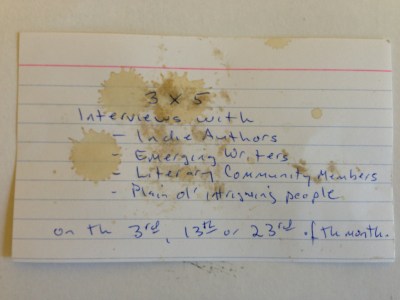
Three by Five – Five questions answered by authors, artists and interesting people published on days that end in three.
Leave a comment

Filed under writing life

Linda Simone Part IV

linda 5Welcome back for Part IV with Linda Simone

This month Three by Five hosted Poet Linda Simone. Linda lives in New York City with her husband. She predominantly writes poetry, but has also published essays. She is working on a novel in the Southern Gothic tradition. Her essays have appeared in Cezanne’s Carrot, Italian Americana, Journal of the Imagination in Language Learning, The Journal News, The New York Times, and on pursestories.com. Valparaiso Review published her review of poet Kevin Pilkington’s work. Her poems appear in numerous journals including Assisi, Cyclamens and Swords, and have been nominated for a Pushcart Prize. She has been published in a number of anthologies, including: the award-winning, Cradle Songs: An Anthology of Poems on Motherhood; Lavanderia; and Wait a Minute: I Have to Take Off My Bra. Her chapbook, Cow Tippers, won the Shadow Poetry Chapbook Competition.


Two bonus questions with Linda
VAH: Three random non-writing related facts about you?
LS: I’m an amateur watercolor painter…still trying to find my visual voice.
I had a childhood imaginary friend—Anne of Green Gables.
I love bluegrass and rock-a-billy music.
VAH: If about to have your last meal, what would that be and why?
LS: Last meal: Cavatelli with Broccoli, a bottle of red, followed by Red Velvet Cake, vanilla ice cream, and a cup of Earl Grey tea with milk—and it better be Twinnings!
Why? Because in my next life, I may come back as a dog, hopefully a well-loved one, so I’ll probably be eating Kibble and Bits.

Below find a sampling of her work:

Berkeley Pond,” essay in Cezanne’s Carrot.
Five poems in Border Hopping.
Sample poem from the chapbook, Cow Tippers. 

Linda on the web:

Twitter. ‎ Facebook.  LinkedIn.  


Introducing Linda Simone. Linda Simone Part I. Part II. Part III.

Thank you Linda Simone for visiting Three by Five this month. linda 4

3 Comments

Filed under writing life

Linda Simone Part III

linda 3Welcome back for Part III with Linda Simone

VAH: Linda, there are two kinds of readers – The finish-the-book-once-you’ve-started kind and the leave-it and move on-if-don’t-like-the-book sort – which kind are you?

LS: My Catholic school background (and Ms. Nora Claire Sharkey) taught me to give the author the courtesy of reading the whole book.  However, I’ve rebelled over the past few years.  If the book doesn’t grab me in 50 pages, you lose me…so many books, and so little time.

VAH: Every writer faces this at some time or another – the blank page stares back at you, what gets you over writers block?

LS: Reading to those who don’t usually get the chance to connect to poetry – their reactions are fresh, honest, and often inspiring. Also, writing in a journal – I used to do it almost every day…I’m afraid it is now only sporadic.  I always seem to unearth things that sound like they could blossom into an idea for a poem or essay. Another source for inspiration: reading titles of articles in women’s magazines –they form rich prompts. And finally, viewing a painting or other piece of art and choosing a point of view from inside the tableau.

VAH: An example prompted by an article in a magazine?

LS:  I wrote a poem called “Simple Storage Solutions” that was instigated from an article in Family Circle).

VAH: Brass tacks of the writing life – what do you do in order to keep up with what you send out and results of your submissions?

LS: This is hard.  I used to keep paper copies in a manila folder.  Then I created a spreadsheet. But really, I wish someone would do it for me.  Every year on the 31st of December, I spend time sending out work so that there is always hope and possibility for the New Year.

VAH: Totally get that! Sometimes December is my most productive month of the whole year! What is an interesting little known fact about you?

LS: My middle name is Ann Ann.  No, that’s not a typo.  The reason is that Linda is not a saint’s name, so my parents had to select a middle name that was.  I was Christened Linda Ann.  Being the feisty, stubborn 4th grader that I was, when it came time to choose a Confirmation name, I decided that I didn’t want 4 names – I wanted to stick with a trinity of names.  So I picked Ann again.  Linda Ann squared.

VAH: What is your favorite, inspiring quote?

LS: I like this by Leonard Cohen, because it says it’s okay to make mistakes, in fact, maybe it’s preferable:

Ring the bells that still can ring

Forget your perfect offering

There is a crack in everything–

That’s how the light gets in.

VAH: Thanks Linda! That’s a good concept to end upon  – that it’s okay to make mistakes.


Linda on the web:

Twitter. ‎ Facebook.  LinkedIn.  


Introducing Linda Simone. Linda Simone Part I. Part II.

Linda Simone on Three by Five in the month of September on the 3rd, 13th, 23rd and 30th.

1 Comment

Filed under writing life

Linda Simone Part II

The second installment of this month’s Three by Five interview with Linda Simone


Linda 1VAH: Linda, what’s your best advice for emerging writers?

LS: I was lucky to be nurtured along the way, so nurturing writers and passing it forward is one of my favorite things.  This is want I did for over four years, as Assistant Director of the Masters of Arts in Writing program at Manhattanville College.  Students were always tenuous in their confidence as writers.  Whenever I advised or taught students, I’d ask them to trust me and to trust themselves because their writing was always better than they thought. So to emerging writers I say: self-doubt is your own worst enemy.  You need to go with your gut and trust your ear.  Be honest.  Be brave.  Read it out loud.  You’ll know when a line or a paragraph rings true and the real you shines through. That’s your tuning fork.

VAH: That is a terrific validation – “You’ll know when a line or a paragraph rings true…” When did you know you were a writer and how did that manifest for you?

LS: I realized that I wasn’t a Major Medical contract writer (actually I was but was dying a small slow death from lack of a creative outlet). When the job was downsized and I got a generous bonus and severance, it was a blessing in disguise. I used that money to start my own freelance editorial business to earn a living, and then joined the National Writers Union to nourish my more creative, personal writing.  In the mid-1980s, the Writers Union gave me the community of writers I needed.

I came to the Writers Union member via my first Writers’ Conference sponsored by the Union’s Westchester Chapter.  I was so pumped by what I learned from the teaching writers, and so enthused by the collegiality I felt from fellow attendees, that I felt like Columbus discovering America.  I had no idea what was out there—a sea of writers struggling with the same things I was struggling with.  It was the beginning of learning the “how tos” of improving my writing, and marketing it.

I eventually joined the Chapter and formed friendships that I cherish to this day.  It’s where I met my Sapphires. From Sarah, the Chapter’s charismatic President, I learned more about real leadership than from any corporate job I’ve ever held.  For the past dozen or so years, we venture to Ann’s Vermont home for an annual “writing and acting silly” retreat. Before we leave, we discuss each other’s writing and what our plans and dreams are for the coming months.

VAH: And formal writing education, such as the MFA? Is it worthwhile?

LS: I have a Masters of Arts in Creative Writing from Manhattanville College.  The school has since gone to an MFA, but my work schedule and a move to Manhattan made it impossible to take advantage of upgrading my degree.  Has it helped my career or development?  I’d have to say it has in these ways:  it connects you with teachers of writing, some better than others, but you learn from both.  It provides a community of writers—who see your work develop and whose work you see develop.  Perhaps its biggest value to me is validation– it validated me in my own mind as a writer. This, of course, is not necessary, but a lot of people, like me, need the diploma to feel “legitimate.”  Do I think the degree is necessary? Absolutely, if you want to teach.  Relatively, if you think it is.  But really, to be a writer doesn’t require a degree.  It requires writing, reading, rewriting, and interacting with your own community of writers—even if that is just one other person you trust who also writes and with whom you can share your work and give and get constructive critique.

For me, it’s been a worthwhile experience.  I’m glad I did it.  It energized my work and exposed me to writers and poets I probably never would have read. It helped in recognizing my voice.  And let’s not forget the benefit of a deadline – when you have an assignment due, you sit your butt down and write.  No procrastination allowed.

VAH: That structure of the formal academic setting and demand of weekly workshop certainly teaches skills for keeping procrastination at bay. Your statement though that “to be a writer doesn’t require a degree” I think is vitally important. The community of writers is there be that in formal study or not. With community of writers in mind, do you have a favorite conference or writing retreat or seminar?

LS: I do love Manhattanville College’s Summer Writer’s Week.  I’ve always found it to be a wonderfully energizing, soul-feeding and exhausting 4-1/2-day immersion into writing.  I went as a writer and I also ran it for four years as an administrator and loved it from both perspectives.

VAH: Writing as occupation – how is that for you? And if you weren’t writing, what would your work be instead?

LS: I am a full-time writer of corporate communications.  It’s hectic, but I love it because it allows me to make sure that our 2500+ employees at all levels within our organization–as well as external stakeholders–get the messages and news they need.  I take this job very seriously. When the message is clear and engaging, there’s more action, less dissatisfaction, and less time wasted.  That said, if I had to choose any occupation other than a writer, I’d want to be a visual artist.  I guess I’m just destined to a life of rejection and starvation.


Linda on the web:

Twitter. ‎ Facebook.  LinkedIn.  


Introducing Linda Simone. Linda Simone Part I.

Linda Simone on Three by Five in the month of September on the 3rd, 13th, 23rd and 30th.

2 Comments

Filed under writing life

Linda Simone Part I

linda 4VAH: Linda welcome to Three by Five. Let’s start with what was your first story?

LS: I wrote a science fiction story as a kid, and all I can remember is that the main character was named Jason Ramses and my English teacher said it was very good. Later, in my twenties, I worked on an autobiographical (of course) non-fiction manuscript about my love/hate relationship with nuns.  Immersed in Catholic Schools throughout the 50s and 60s, I experienced all those crazy things you may have read about, but can’t imagine to be true.  I assure you, being told not to wear patent leather shoes because they can reflect your underwear happened to me – and it wasn’t the worst of it.  The manuscript, which patiently awaits my return from its hallowed spot in my file cabinet, was titled Class Trips.

The branch of Catholicism I subscribe to is “lapsed.”  But my Catholic school experiences remain to this day a recurring theme in both my prose and poetry.

VAH: Let’s expand on that a bit with the question why do you write?

LS: Ah, that’s the question I’ve been trying to figure out longer than I want to admit.  To simply say, because I have to, while it’s true, seems trite and clichéd. I’ve spent scores of years trying to sort out who I am and writing, particularly poetry, figures in that quest in a big way.

As a 9-year-old, I discovered that poetry, to paraphrase Emily Dickinson, blew off the top of my head. I remember the experience well–The First Snowfall by James Russell Lowell. It captured my attention like nothing had ever done before.  From the first stanza–The snow had begun in the gloaming / and busily through the night / had been heaping field and highway / with a silence deep and white – to the last line, I was hooked.  The rhythm, rhyme, and diction blew me away.  And ever since, whenever  anyone asked me what I wanted to be when I grew up, I answered: a writer.  But, it’s been a circuitous road

Writing in general, and poetry in particular, was my golden fleece throughout grammar school (poems by Frost, Dickinson, Lear, Yeats; also the usual Nancy Drew & Bobsey Twins fare).  I loved having a summer reading list for school.

In high school, I learned by reading Ferlinghetti, Ginsburg, Kunitz, and others. Enter Shakespeare and the discovery that one could use poetry to tell a long, complex story within a play.

Through those years I wrote (pretty bad) poetry and (mediocre) stories that I would not share with anyone, because to me, writing was personal, like a diary.

So why do I write? Because I love words. Because writing is the way I think and work out problems.  Because writing is the way I get in touch with feelings, and it’s how I explore possibilities that I might never actualize.  I write because writing is in my DNA. It’s what I do best.

VAH: Do you have a favorite literary character?

LS: As an adult, I’ve utterly fallen in love with the unlikely anti-hero, Ignatius J. Riley, from John Kennedy Toole’s Confederacy of Dunces. Which brings up the other recurring theme in my prose and poetry—misfits, particularly those portrayed in the Southern Gothic tradition.  I’m obsessed with them, perhaps because like me, “everyman” is in them.  It’s impossible not to rattle off a long list, but some of my favorites include: any character from Carson McCullers’ body of work including Ms. Amelia Evans and Cousin Lymon in The Ballad of the Sad Café; Flannery O’Connor’s Enoch Emery in Wise Blood; and Nathaniel West’s Lemuel Pitkin in A Cool Million as well as the title character in Miss Lonelyhearts. I can read these books tirelessly because of the rich character-driven stories, eccentricities, and incredibly poetic language.

Melba McIntyre, the main character in my novel-in-progress (tentatively titled Preacher Girl), is a humble attempt at characterization in that tradition.

VAH: Linda, what would you say has been the biggest influence on your development as a writer?

LS: I’ve learned different things from a wide range of people, so it’s impossible to name one person.  If you really pushed, I’d have to say Thomas Lux, who made me understand that a good poem has to morph through 25 drafts.  A summer session I took with him was writing-life-changing.  Others who influenced me: Eamon Grennan, who taught me a poem’s opening is often just scaffolding and needs to be knocked down; Kevin Pilkington, who showed me that beauty worthy of a poem can come not only from the bucolic countryside, but also from gritty, cityscapes and experiences. Emily Dickinson’s poetry is a master class in rhythm, music, and brevity.  And from Robert Frost, I learned that nature is like a bible from which the poet can cite chapter and verse.

I also learned from three friends. Together call ourselves The Sapphires. Ann Cefola, Terry Dugan, and Sarah Bracey White generously offer laser critique, and demonstrate bravery and fearlessness in their writing – and infinite patience.  (Sarah’s memoir, Primary Lessons, is coming out in September 2013 from CavanKerry Press—let’s just say she’s paid her dues).

And having a supportive family is really a blessing.  My son, Justin, has a poet’s sensibilities and always helps me make my poems better. My daughter-in-law, Nicole, who’s an avid reader and an artist, has included my writing in her paintings. And my toughest, most honest critic is my husband, Joe.  Like El Exigente, when Joe says a poem is good, I do a happy dance because his opinion holds weight.

VAH: You spread the credit around. I enjoy this question as it almost always generates authors to investigate that I’m not familiar with and have influenced the writers interviewed here at Three by Five. Sarah Bracey White was here July and is a terrific storyteller.

Now let’s take you away and strand you on a deserted island. What would you be reading that you just happened to be able to take with you?

LS: Since I live in a tight NYC apartment, my bookshelf is already “bare essentials” and holds: poetry collections by Thomas Lux, Kevin Pilkington, Mary Oliver, Eamon Grennan, Robert Frost, and Emily Dickinson; Pablo Neruda’s Odes to Common Things; The Curious Incident of the Dog in the Night-time by Mark Haddon; a 50-page gem about translation called 19 Ways of Looking at Wang Wei by Eliot Weinberger and Octavio Paz; and my friend, Ann Cefola’s chapbook, Sugaring. Would this deserted island have WiFi by any chance?  Then I’d have a ton of ebooks.

VAH: (Laugh) And there you have it – Linda Simone thanks for the visit with Three by Five. More Linda coming over this month, on days that have a three in them.

Linda Simone is a poet who also writes essay and is working on a novel in the Southern Gothic tradition. Her essays have appeared in Cezanne’s Carrot, Italian Americana, Journal of the Imagination in Language Learning, The Journal News, The New York Times, and on Purse Stories. Valparaiso Review published her review of poet Kevin Pilkington’s work. Find her poems in numerous journals including Assisi, Cyclamens and Swords.  Her work is in a number of anthologies, including: the award-winning, Cradle Songs: An Anthology of Poems on Motherhood; Lavanderia; and Wait a Minute: I Have to Take Off My Bra. Her chapbook, Cow Tippers, won the Shadow Poetry Chapbook Competition. Linda’s 15-poem sequence, “The Stations of the Cross,” was nominated for a Pushcart Prize by Martin Willitts, Jr., editor of the 2007 anthology, Alternatives to Surrender. The anthology included works by 61 poets from around the globe, dealing with cancer, survival from cancer, death from cancer, and with loss and recovery. Linda and her husband live in New York City.


Linda on the web:

Twitter. ‎ Facebook.  LinkedIn.  


Linda reads her poem Grapefruit  as part o fAlimentum’s Menupoems 2010:

Linda Simone on Three by Five in the month of September on the 3rd, 13th, 23rd and 30th.

5 Comments

Filed under writing life

Introducing Poet Linda Simone

Three by Five presents Poet Linda Simone –

Linda Simone is a poet who also writes essay and is working on a novel in the Southern Gothic tradition. Her essays have appeared in Cezanne’s Carrot, Italian Americana, Journal of the Imagination in Language Learning, The Journal News, The New York Times, and on Purse Stories. Valparaiso Review published her review of poet Kevin Pilkington’s work. Find her poems in numerous journals including Assisi, Cyclamens and Swords.  Her work is in a number of anthologies, including: the award-winning, Cradle Songs: An Anthology of Poems on Motherhood; Lavanderia; and Wait a Minute: I Have to Take Off My Bra. Her chapbook, Cow Tippers, won the Shadow Poetry Chapbook Competition. Linda’s 15-poem sequence, “The Stations of the Cross,” was nominated for a Pushcart Prize by Martin Willitts, Jr., editor of the 2007 anthology, Alternatives to Surrender. The anthology included works by 61 poets from around the globe, dealing with cancer, survival from cancer, death from cancer, and with loss and recovery. Linda and her husband live in New York City.


Linda on the web:

Twitter. ‎ Facebook.  LinkedIn.  


Linda reads her poem Grapefruit  as part o fAlimentum’s Menupoems 2010:

Linda Simone on Three by Five in the month of September on the 3rd, 13th, 23rd and 30th.

3 Comments

Filed under writing life

Paul Dorset Interviews Vicki Hudson

Recently Paul Dorset and I discussed writing and publishing. Check out the conversation over at his site.

Leave a comment

Filed under writing life

Joleene Naylor Part II

joleene naylor 2VAH – Some writers have a definite point when they knew they were writers.  When did you know you were a writer and how did you come to this awareness?

JN – My mother was a writer and an artist, she used to read her poems to us for critique even when I was a toddler, so it was just a part of my life from birth. I remember the shock when I learned that not everyone could draw or make up stories. But I gave it up for a few years – from 2000 to 2004 – then picked it up again thanks to an online Role Play group, and I guess that’s when I discovered that I actually *enjoyed* it – I wasn’t just doing it because I was “supposed to”.

VAH – What is your best advice for emerging writers?

JN – Learn to take criticism. I know, it’s the same thing everyone says, but you have to do it. The first time I got critiqued – really critiqued – I got mad. Now, I still think “Hrmph! They don’t know what they’re talking about!” Only instead of stopping there, I let their comments percolate and most of the time discover they were right. You really need more than one perspective on order to have a good book, because no two people think alike, and no two people notice the same plot holes or artifices or overused words or typos or…

VAH – Do you have a favorite conference or writing retreat, seminar or workshop?

JN – Alas I have never been to one of these either. I keep thinking one day I will work up the courage, but… well, I won’t lie. After reading some self pubbed author’s experiences I’ve shied away. I understand the climate has changed in the last four years, but…

VAH – If a full time writer – what would you be doing if not writing as an occupation? If not a full time writer – what is the day (or night job) that sustains you so you may write?

JN – I do book covers for other authors, as well as random freelance graphic work and some formatting and things like that. Most of the time I do more of that than writing, sadly.

VAH –  What books or authors keep you up at night (because you can’t put them down)?

This is where I have to admit that I don’t have much time to read. The last book I stayed up all night for were the second and third of the Hunger Games books. It took me awhile to get into them because of the distracting fragmented, first person style, but after I moved past it they were quite engaging.

Here is Part I.

Find Joleene on the web:

author blog

FB author page

twitter

website

goodreads

facebook profile

3 Comments

Filed under writing life

Three by Five Presents Daniel Shapiro, Part II

“Write Only What you Can Write.”

dan at fallingwater 3.28.13 (1)

VAH – Daniel, when did you know you were a writer and what got you there?

DAS – I have known I was a writer since high school, but I didn’t start writing poetry seriously until about 15 years later. I had considered myself a music critic; I wanted to be the next Lester Bangs or Robert Christgau. Eventually, I wrote professionally as a journalist and advertising copywriter, and my experiences in those media have informed my poetry. When I was writing advertising blurbs for a catalog company, a couple of my co-workers were poets, and they would exchange poems with each other across cubicles. It was a sort of bonding experience, so I started participating in that and haven’t stopped writing poems since.

VAH – You have several chapbooks and a book – what is your best advice for emerging writers?

DAS – The only advice I can think of is that the best way to fit in is to acknowledge that you don’t fit in. Write what only you can write. Don’t tell people what you think they want to hear. If you’re a reality-show-loving Samoan with a scholarship to play the tuba, write about reality shows, Samoa, and tubas. No one else can do that! If you are that person and you decide to write about trees in autumn, ocean surf, your dying grandmother, and/or a difficult break-up, I will fly to Samoa and smack you with a stick made from the tree you wrote that poem about.

VAH – Many entering writing explore the idea of the Master of Fine Arts degree in writing – any thoughts?

DAS – I do not have an MFA. I am neither for nor against MFAs.

VAH – Writers write, read and seem to travel to where other writers gather – Do you have a favorite conference or writing retreat or seminar and what makes that one worth your while?

DAS – I have attended the AWP conference a couple of times and have loved it. It is a lot of fun to stalk your heroes, meet online friends in person, read poems aloud in places you’ve never been, meet the editors who have accepted your work, and hear poems you’ve admired for years read by their creators. It’s expensive, but it’s hard to put a dollar value on its overall positive effect. I plan to keep going.

VAH – What supports you so you may continue writing?

DAS – I am a special education teacher. When I tell people this, some of them say, “Bless your heart.” My job can be difficult, but it’s not the sort of thing you would see on “American Horror Story.” If any of the work weighs on me, I turn the weight into a poem, but usually I keep my career and writing separate.

Later in the month – Parts III and four of Three by Five’s presentation of Daniel Shapiro.
(Part I – Daniel discusses favorite literary characters, influences, his first creative piece of writing and why he writes.)

Leave a comment

Filed under writing life

Spring Time

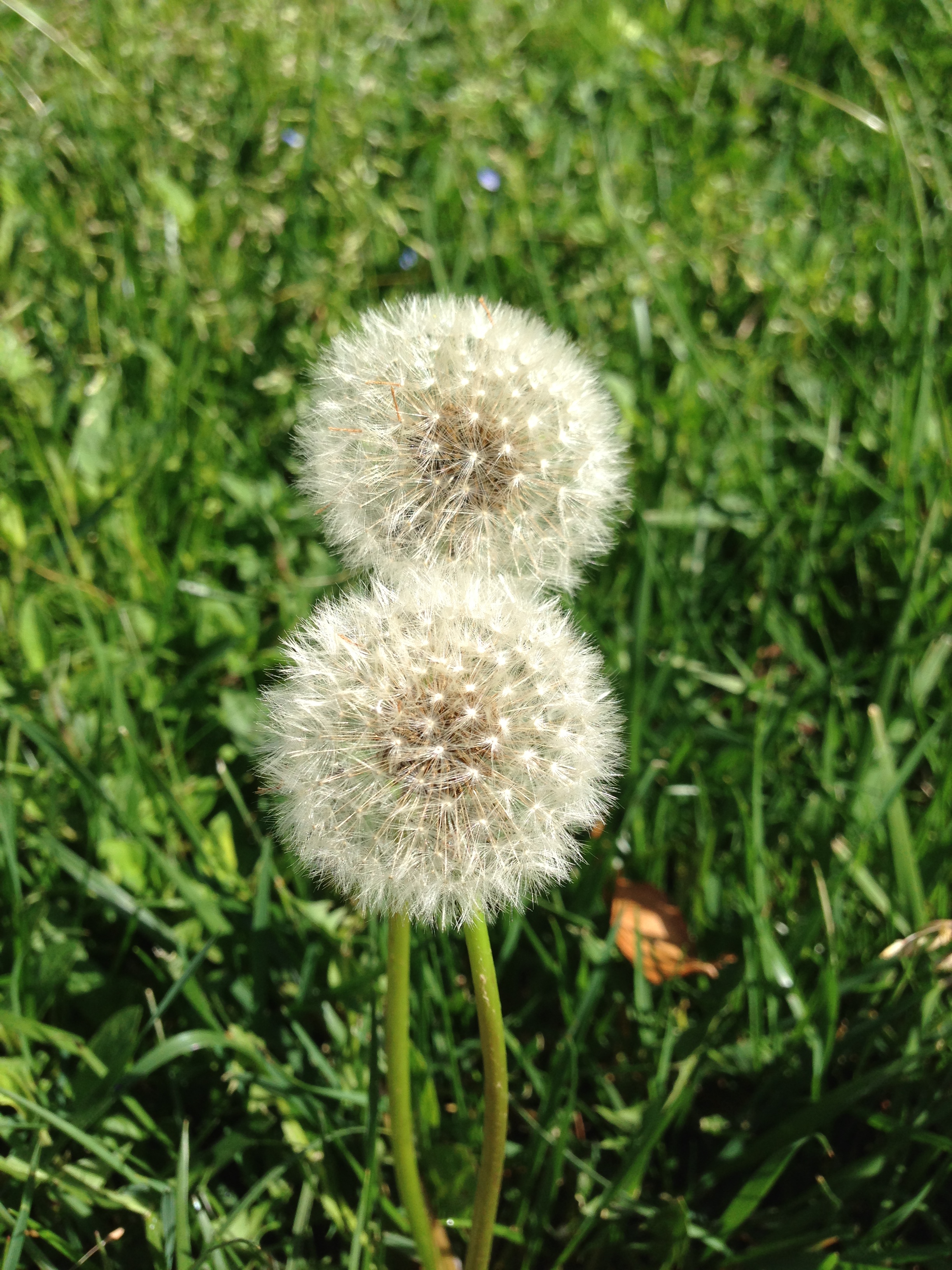
DandelionsSpring has sprung and with it seeds are flowering across the backyard meadow. Some new seeds are planting here with launch of Three by Five, a new interview series that goes live on April 3rd. Over the course of the month, on days of the month with a ‘3’ in them, five questions from interviews of authors, writers, indie artists and other interesting or intriguing people will be posted. Three by Five will continue as a recurring feature with at least one new interview subject a month.

Author First Look – a chance to read the first chapter, or a few poems, by indie authors and writers.

Book + Review will continue with new reviews posted intermittently. You might find your next favorite author or at least, a good read for an upcoming flight, vacation, commute, treadmill walk or just because.

Through the fall, I’ll continue the current calls for submission for two anthologies, Dress Right Dress: The Uniform and its Stories, and Repeal Day: When DADT Became History.

If you’re part of the writing community, and interested in a guest posting here just send me a message.

And there will be the occasional blog tour where you will find other indie authors tagged for you to discover.

Coming tomorrow – the first Pulitzer Remix posting – found poems from each of the Pulitzer Prize winning fiction books. Eighty-five poets writing thirty poems, posting one each day of the month of April in honor of National Poetry Month. You’ll find mine posted here along with a link for the main site where you’ll be able to visit the other 84 poets and their found poems (and mine).

Links: Three by Five,     Author First Look,     Book + Review,     Dress Right Dress: The Uniform and its Stories Info and Call For Submissions,     Repeal Day: When DADT Became History Info and Call for Submissions,     Pulitzer Remix,     National Poetry Month,     Random Spring.

Leave a comment

Filed under writing life