Tag Archives: interview

Poet Martin Elwell – Three by Five Interview Part 2

elwell 2Today Three by Five welcomes back Martin Elwell.

VAH: What’s your full time job – writing, or something else that sustains you so you can write?

ME: I worked in the insurance industry for 13 years before recently leaving to start my own business as a fitness and wellness coach. While I was working in insurance, I had a lot of professional success juxtaposed with a lot of personal unhappiness. The most fulfilling part of my job was watching my employees succeed. The least fulfilling part of my job was the amount of time and creative energy required to do it well and navigate the politics. The pay was nice, but I found myself in an endless cycle of earning and consuming. I hit bottom at a depressed 320 pounds in September of 2009.

Between 2009 and 2011, I embarked on a weight loss journey that totally flipped my life upside-down. I started running and strength training, I moved back to New Hampshire from Illinois, I got divorced and I lost half of my body-weight. 160 pounds later, I was still working in Insurance leading a team of analysts in Portsmouth, NH, but I had my eye on a new life.

I married my wife, Jenn, in May of 2011, and we downsized and simplified our lives to make room for the things we wanted most. In 2012, I left my insurance career. After a lot of travel and exploration, Jenn and I founded Destination Fitness (http://myfitnessdestination.com). Our goal is to make a modest living by helping others find fitness, prioritize themselves and their health and enjoy life a little bit more.

VAH: Thanks for sharing your story of transformation. Stories like that give hope that life can be so much more than drudgery of work.

One of my least favorite aspects of the work of writing is when I can’t get the words out to the page. When the blank page stares back at you, what gets you past writer’s block?

ME:   In my experience, the best way to get past writer’s block is to give up on quality for a little while. For me, writer’s block comes out of the desire to write something excellent on the first pass. Obsessing over the words will only slow down and possibly hinder your writing. Good or bad, you can always change, improve or delete a passage later. I think it’s best to just let yourself free-write without judgment. There’s usually some gem to be mined through that process.

VAH: Brass tacks of the writing life – what do you do so you can keep up with what you send out and results of your submissions?

ME: Two words – Microsoft Excel. Once an analyst, always an analyst. It’s actually a pretty simple document. I have a tab for open submissions, a tab for accepted submissions and a tab for rejected submissions. If I really wanted to geek-out and chart my progress, I would put them all on the same tab so that I could pivot the data, but it’s really not that complex. I submit sporadically. Sometimes I have a good feeling about a press or magazine where my work will fit well, and sometimes I shoot for the moon. So far, shooting for the moon typically means rejection. When I’ve gotten lucky, it’s come in the form of serendipitous timing and saying ‘yes’ to a chance opportunity.

VAH: That’s a pretty simple question on the surface but it’s become interesting to me the variety of methods writers use to keep track of what they send out.

Let’s talk a moment about what you’re your favorites. Do you have a favorite poem or story?

ME:  I think I’d have to go with The Sunflower Sutra by Allen Ginsberg. I have an audio track of him reading it, and it is a poem that elevates me beyond whatever troubles or worries may be going on in my day-to-day life. I especially love the last stanza, the “sermon.” You can read the entire poem at the poetry foundation’s site.

VAH: Do you have a favorite author and why?

ME: Definitely Jack Kerouac. I love to travel, and I love road trips. I also love the way that Kerouac saw the world around him, digested it and put it down into words. I don’t love everything Kerouac has ever done. I can do without his drunken ramblings and the posthumous pieces dug out of the attic by someone looking to take advantage of his persistent fame. I’ll take the lost, introspective, self-conscious, Buddhist Kerouac of The Dharma Bums any day.

Thanks Martin! The conclusion to a conversation with Martin Elwell on Three by Five will post on November 23rd. Until then, enjoy this poem by Martin Elwell – Excel Poem.

Martin Elwell’s Twitter.

Blog: Words Per Gallon.
Leave a comment

Filed under writing life

3 x 5 Hosts Martin Elwell Part I

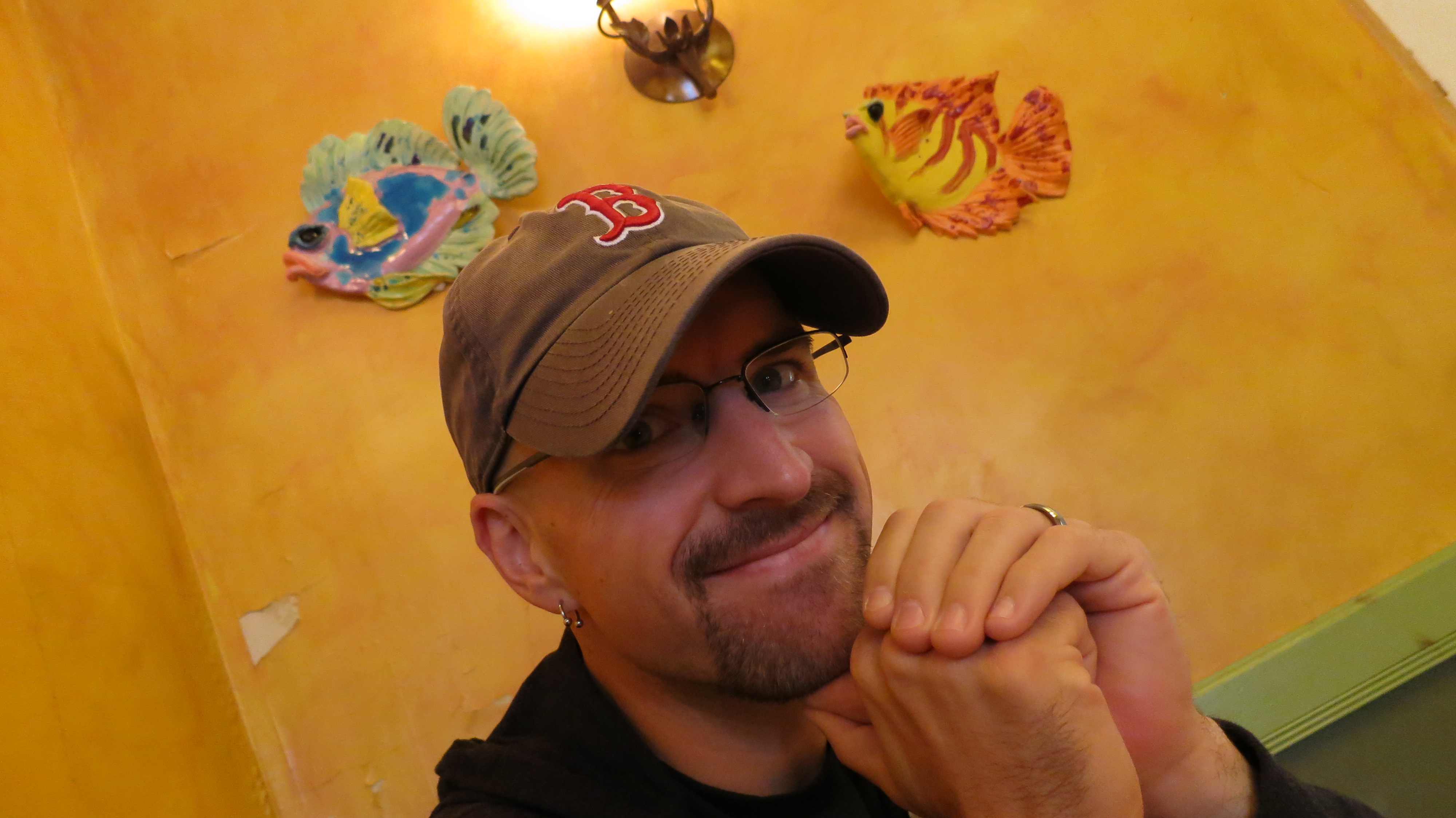
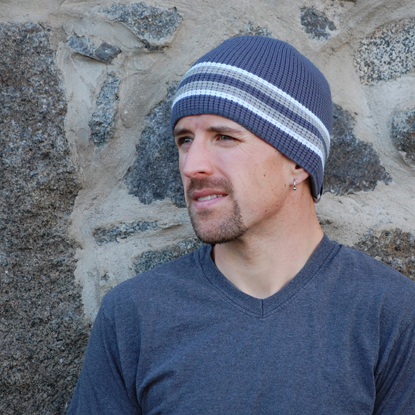
Welcome Martin Elwell, a New Hampshire based poet and editor to November’s edition of Three by Five.martin elwell headshot

VAH:  Martin, what would you say has been the biggest influence on your development as a writer?

ME: I’ve had a few people who really helped me develop, and I’ve read several books that put me on a new or improved path in writing, but I’m going to go out on a limb and say that Twitter was the number one influence on my development as a writer. By connecting with a variety of writers, literary magazines and institutions on Twitter, I’ve seen more of what my peers are doing in the art world. I’ve been challenged to think about where I fit in, and I’ve been pushed to participate in a more active way. Every day, someone shares a blog post, article, poem or image that spins my wheels in a new direction. For example, just following someone like Don Share on Twitter for a week is an educational experience. More tangibly, I learned about The Found Poetry Review on Twitter. They published one of my poems, I participated in their Pulitzer Remix project for National Poetry Month in 2013, and now I’m their News & Resources editor. You don’t need to live in New York City to get in touch with people doing exciting things in poetry. Twitter is the new New York City for poets.

VAH: That’s an interesting way to think about Twitter. Making it so much more than a social media keep in touch tool.

Martin, as a writer, when did you know that was you?

ME: I spent a lot of time trying to make up short stories as a child. Fortunately, I didn’t save any of them. When I got to college, I took a class titled 16th Century Verse, and I started writing formal poetry from there. After a class on the Beat Generation my senior year, I started writing more personal poetry. After graduation, poetry stuck with me, and I found myself writing fairly regularly. I realized that it would be a lifelong pursuit in my early 20s when I started looking forward to getting home from work so that I could write.

VAH:  What is your best advice for emerging writers?

ME: Build relationships with people doing things that you like, admire, envy, enjoy, can relate to, etc. The writing world is crowded, and everybody wants a bit of success. You can learn a lot from how others navigate their own projects, publications, readings, etc. On top of being crowded, the writing world can be lonely. Having a community whether online or local, will keep you engaged, motivated and fueled to move your own work forward.

VAH: In reference to moving your work forward – what are your thoughts on studying writing? How has a MFA contributed to your progress or development? Do you recommend the MFA as worthwhile?

ME: I have an MFA in from Lesley University. My experience was slightly different, in that the Lesley program is low-residency, and I worked full time throughout the program. Outside of the residency period, the majority of work is done on your own with a mentor. I had three different mentors at Lesley: Thomas Sayers Ellis, Don Share and Janet Sylvester. If you know any of these folks, you may know that they are vastly different from each other in craft and teaching style. My experiences at Lesley pushed me out of my comfort zone and into new and different territories based on each of my mentor’s personalities, likes, dislikes, beliefs and assignments. I didn’t learn a formula for writing, as some believe the MFA experience provides. Instead, I was challenged to define myself as a writer among the different priorities of my mentors.

Most importantly, at Lesley, I learned how to think about my writing critically. Before getting my MFA, I was finished with a poem when I stopped writing the first or second draft. I had very little understanding of the potential for poems beyond the initial stages. I learned how to build upon and bring forward the best moments in my work, while cutting away the unnecessary material surrounding those moments. Poems that I would have previously discarded found themselves at the top of the pile once I honed my approach to revision. I believe revision is the hardest part of writing, and learning new approaches to critiquing and refining your own work is a huge benefit of the MFA environment.

Do you need an MFA to succeed? No. Did it help me improve? Absolutely.

VAH: Your comment on revision is an excellent metric for the difference between someone that writes poetry and one that is a poet. I think when emerging writers understand the value of revision and its necessity, they’ve turned an important corner in the development of their writing careers.

You mentioned writing can be lonely, do you have a favorite writing conference, retreat, or seminar?

ME: I’m a bit of an introvert, so the idea of large seminars or conferences is a somewhat stressful for me. I’ve been to the Mass Poetry Festival once and AWP once, and I enjoyed both. My favorite parts are the readings and the book fairs. I get a lot of energy to write when I read and hear what others have done. My favorite retreats and seminars are small workshops with friends where the environment is casual and the candor is high.

Thank you Martin Elwell for your participation in Three by Five. More from Martin on days that end in three in November. Enjoy a few of his poems in the online journal Convergence. Follow Martin on twitter.

Leave a comment

Filed under writing life

In November – Poet Martin Elwell

elwell 3In November, Three by Five will host New Hampshire based Poet and Editor Martin Elwell. His poems have appeared in Extract(s), The Found Poetry Review, Empty Mirror Magazine of the Arts and other places. He co-edited Bearers of Distance, an anthology of poems by runners from Eastern Point Press, and he is News & Resources Editor for The Found Poetry Review.

Enjoy a sampling of his work to whet your poetry whistle at Empty Mirror.

Find Martin on Twitter @MartyElwell.

Read more of his work and  follow his travels at Words Per Gallon.

Leave a comment

Filed under writing life

John Byrne Barry Part 3 at Three by Five

Today is part three of the author interview with John Byrne Barry.

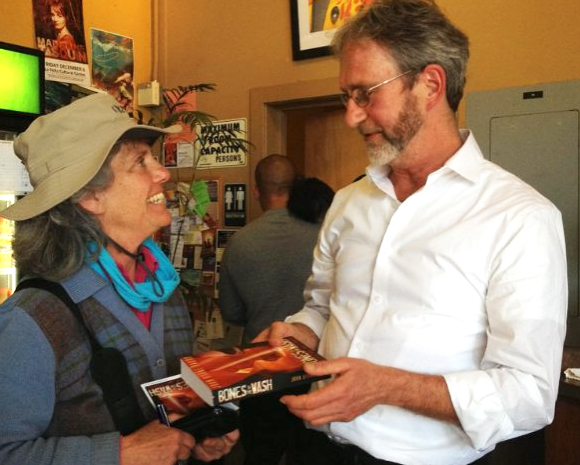
VAH: John, what books or authors keep you up at night (because you can’t put them down)?JB at book reading

JBB: What I love the most is finding a book that races along like, say the Da Vinci Code or the Firm, which both kept my up past my bedtime, but is populated by three-dimensional characters and is reality-based. (They weren’t.) The sweet spot where literary novels and plot-driven beach books overlap. I mentioned John LeCarre as my desert island author, though he can be ponderous. I like Scott Turow for the compelling plots combined with complex characters. Other authors I enjoy are David Mitchell, Barbara Kingsolver, Pat Conroy, Jeffrey Eugenides.

VAH: Are you a finish the book once you’ve started kind of reader or leave it for another if don’t like the book sort of reader?

JBB: I put books down all the time. If it doesn’t grab me, I find another one. Unfortunately that sometimes means that the books I finish are those plot-driven beach-reading best-seller types, which sometimes don’t leave me with much to ponder. And sometimes I won’t finish books that I know are important and profound. Here’s a partial list of books I never finished: Anna Karanena, Gravity’s Rainbow, Poisonwood Bible. And those are only the ones I can think of off the top of my head. Earlier this year, I started Michael Chabon’s Telegraph Avenue, but couldn’t get into it. A friend said he loved it. So sometimes I’m too impatient for things to get moving. Hopefully that helps me as a writer get to the heart of things faster.

VAH: The blank page stares back at you, what gets you over writers block?

JBB: I don’t get writer’s block anymore. If I don’t have a clear direction of what I should be writing, I talk to myself. On the page. “OK, I’ve finished a pretty good draft of Chapter 2, and Lamar’s dilemma is clear. So now I have to figure out how to introduce his sister Andrea. The reader is not going to like her at first — she’s surly, self-absorbed, and impatient with everyone else. So how do I get the reader to care about her?”

I participated in NaNoWriMo (National Novel Writing Month) in 2007 and “won” in the sense that I wrote more than 50,000 words that November. (No prize except that sense of accomplishment.) I wrote the first draft of what I then called Turquoise Trail, and which turned into Bones in the Wash. With a goal of 50,000 words in a month, I didn’t have time to map out where I was going, so I would write a scene or two, then if I didn’t know where I was going, I would talk to myself, essentially making the narrator of the novel, the furiously typing me, part of the novel. I included the talking to myself part. So I’ve gotten used to that. Many days at work, instead of making a list, I would open up a document and start talking to myself until that turned into the equivalent of a list. A game plan for the day, the week, the project. It’s what the author John Barth used to call “tuning his piano.” You don’t just sit down and play. You have to warm up first.

The downside of not having writer’s block is there’s a lot of chaff to separate from the wheat.

My experience, however, has been that once I’m warmed up and I know what I’m doing, I am capable, now and then, of writing a page or two or even three of solid, almost final draft prose. Sometimes the editing is as simple as cutting the first couple paragraphs or pages, the tuning part.

VAH: I’ve done something similar when I’m not sure where to go by asking myself what comes next or what could happen next and then balancing that with is that believable or how would that be possible? Then working through the details of an action the character is doing – almost like storyboarding in my head before it goes on the page.

VAH: How about some brass tacks of the writing life – what do you do in order to keep up with what you send out and results of your submissions?

JBB: I’ve tried all the organizational systems, from index cards to google spreadsheets to those big fat daily calendars. I’m not good at that part of things, but I do make a lot of lists and build in a lot of redundancy, so I do stay on track of the important things.

Probably the most effective system I have is I open a google doc each month for notes. My current one is called September 2014. And sometimes I’ll also have additional ones like Bones September 2014. At the top I make lists, and I try to track them every day or two. And then at the end of the month, I copy that list into the next month, right at the top. When I do accomplish something, I don’t delete it right away. I add a strikethrough to it. More satisfying to see a list of items crossed off than deleted.

VAH: I’ve used a similar system using a highlighter. Bright yellow bands of accomplishment on the to do list. John, tell us, What little known fact about you will amaze and/or amuse Three by Five’s readers?

JBB: I have exercised every day for the past 44 months (as of September 2014). Most days, I walk, but I also bicycle or lift weights. You can read about that on my blog.

VAH: Do you have a favorite, inspiring quote and why it works for you?

JBB: “In the midst of winter, I found within me an invincible summer.” Albert Camus.

I like it because I aspire not only to find that invincible summer, but to seek it. The world we live in is an amazing place, and there are all sorts of horrible things going on every day, so it’s a challenge to look to the light instead of the dark.

VAH: Finally, Three random non-writing related facts about you?

JBB: I once performed on the same stage as the Grateful Dead. At one time, I had two consecutive girlfriends whose previous boyfriend had become a woman. I was an altar boy, a paper boy, and a patrol boy.

VAH: Thank you John Byrne Barry, for participating with Three by Five! We’ll end this month’s interview with a couple bonus questions at the end of the month.

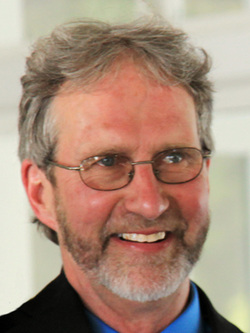
JB headshot

johnbyrnebarry.com

bonesinthewash.com

https://twitter.com/johnbyrnebarry

https://www.facebook.com/bonesinthewash

John Byrne Barry wrote his first book length project in fifth grade at Kilmer School in Chicago — a 140-page book on dinosaurs. One dinosaur per page. Lots of white space. He’s been writing ever since — newspaper and magazine stories, plays and skits, reports and tweets. He’s even written “advice columns” — “Question the Authority” about environmental issues, and “Lazy Organic Gardener.”

In, 2013, he published his first novel, Bones in the Wash: Politics is Tough. Family is Tougher. Set in New Mexico during the 2008 presidential campaign, it’s one part political thriller, one part family soap, and one part murder mystery. Coming out later this fall is Wasted, a “green noir” mystery set in the world of garbage and recycling in Berkeley.

He lives in Mill Valley, California with his wife and family.

Introducing John Byrne BarryPart I. Part II.


Leave a comment

Filed under writing life

Ruben Quesada Three by Five Part III

ruben 3Finishing up Three by Five’s interview with Poet Ruben Quesada.


VAH: The blank page stares back at you, what gets you over writers block?

RQ: Art is a big inspiration for me, so when I’m feeling blocked I turn to the works of art that might have inspired others. Usually something new will strike me about the painting and I’ll be able to start working. Music is helpful too. Anything from Mariah Carey to the Beach Boys to Wagner can provide inspiration.

VAH: What does your typical writing day include?

RQ: Right now, it includes a lot of revision since I’m getting my next manuscript ready. It includes reading, listening to music, or if I’m in the mood, having a movie playing in the background as I work.

VAH: What are your thoughts on the writing community – are there writing or author organizations you belong to or online sites ou frequent for community, conversing, networking or commiserating? And do you have some favorites?

RQ: I’m very active on Twitter, which has really given me the opportunity to connect with other writers and maintain friendships I’ve made with writers at AWP or Canto Mundo. Twitter is a great platform to talk about writing or just share about the work of other writers that I enjoy.

VAH:  Traditional or independent publishing? Or a little of both? What choices have you made and why did you go the way you have?

RQ: It depends on what your goals are in terms of writing. There are many wonderful independent publishers that support their writers and have helped get some terrific work out into the world. My first collection, Next Extinct Mammal, was with an independent press and that was a good experience. I’d like to be published by a bigger press as well. What is most important is to publish with people who you are comfortable with and would be proud to say published your work. Never publish with a press just because it’s a publication. Make sure it’s a good fit for both of you.

VAH: Best bit of advice to save another writer some anxiety or heartache?

RQ: Don’t spend too much comparing yourself to other writers in terms of career trajectory. Things happen at a different pace for everyone. Be ambitious; strive for more, work hard, and it will happen. Don’t get discouraged if it doesn’t happen as quickly as you want it to.

VAH: What’s next for you? Do you have a work in progress you can tell us about?

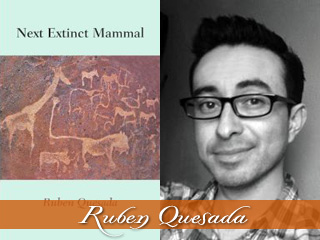
RQ: I’m finishing my second collection of poetry right now. I’m also working on a paper about queer horror movies called “The Horror of Heterosexuality.” I’m excited to have started some new poems that I think are the start of a third collection. I’m also working on video poems. My video poem “Dark Matter” was recently released by Poetryseen.com.  RubenQuesada w book cover

Leave a comment

Filed under writing life

Ruben Quesada Part II, Three by Five Author Interviews

ruben 3Welcome to Part II of the three segment interview with Poet Ruben Quesada.

VAH: Ruben, do you have a favorite conference or writing event and what makes that event a favorite?

RQ: Just one? Vermont Studio Center was a great experience because you are given so much time and space to write. I also enjoy that it’s not just writers in residence at VSC. I had the chance to meet visual artists as well. Being able to speak with them about how they approached their work let me have new perspective on my process.

VAH: The opportunity to speak with others about how one’s “art” develops is also one of the draws for me when attending conferences or retreats. So often gems are traded from that experience of sharing the process of creation.

You write and teach writing – are you a full time writer or full time teacher?

RQ: I’d say if you are serious about writing, you are a full-time writer regardless of what else you do in life to make money. I’m also an assistant professor. I teach poetry, digital storytelling, playwriting, queer studies, composition, and screenwriting. Both teaching and writing are my occupations. Sometimes they compete for my time, but I make the time required for both because that what I want to do.

VAH: When you are the reader, What books or authors keep you up at night because you can’t put them down?

RQ: The Clerk’s Tale by Spencer Reece; Space, in Chains by Laura Kasischke; When My Brother Was an Aztec by Natalie Diaz; Hustle by David Tomas Martinez; Bad Feminist by Roxane Gay.

VAH:  What book or series of books would you want if stranded on a deserted island and why?

RQ: Obviously they would have to books I would return to again and again, so I’d want some Ovid, Gabriela Mistral, Thomas Hardy, and W.H. Auden. I’m a fan of the quotidian and high art and these writers offer me insight into the high, the low, and everything in-between. I want to feel alive and be reminded of it when I read and that’s why I’d choose these writers.

VAH: That has to be one of my favorite questions in Three by Five as each author gives such interesting responses.

If there was a movie about your life and times, who would play you? What would the theme song be, and why?

RQ: Some friends and I were actually had a conversation about who would play us in movies and it was really difficult to come up with someone for me. There are not enough Latino actors working today. Perhaps an unknown actor would be best.

VAH: Ahh, an opportunity is out there then. Ruben, thank you for contributing your insights and comments with this second installment of Three by Five.

Read some of Ruben’s work at poetry blog The The Poetry.

The third interview installment will publish September 23rd. More from Ruben Quesada then!

Ruben Quesada is the author of Next Extinct Mammal (2011) and Luis Cernuda: Exiled from the Throne of Night (2008). He is Poetry Editor for Cobalt Review, Codex Journal and The Cossack Review. His writing has appeared in The  American Poetry Review, Cimarron Review, The Rumpus, and Superstition Review. He teaches English and creative
writing for the performing arts at Eastern Illinois University.

Leave a comment

Filed under writing life

Poet Diane Lockward – Part III

Three by Five presents Part III and the conclusion to an interview with Poet Diane Lockward.

VAH: The blank page stares back at you, what gets you over writers block?

diane 1DL: I don’t wait for inspiration—I pursue it. That means showing up at the desk and being willing to write badly. Of course, there are days when I don’t feel like doing that, but I know that if I’m willing to do it anyhow eventually a poem will show up. I write on yellow legal pads, churning out pages and pages of garbage. Every few weeks I go over those pages and invariably find something worth saving and working on. I should probably mention that I’m not an everyday kind of writer. I know myself and my particular writing process well enough to know that I’m just not going to do that. I regard the non-writing days as gathering time. I do, however, spend a good deal of time each day doing something related to poetry.

VAH:  Brass tacks of the writing life – how do you keep up with what you send out and results of your submissions?

DL: I have a form where I list journals, poem titles, and dates as I send out submissions. As responses come in, I indicate the results on the form, circling the Acceptances, crossing out the Rejections. It’s a primitive system, but it works. I also indicate the length of time it took a journal to respond.

VAH: Diane, Do you have a favorite, inspiring quote and why it works for you?

DL: Anton Chekov said, “Don’t tell me the moon is shining; show me the glint of light on broken glass.” That’s an important craft tip, beautifully said. It’s the old “show, don’t tell” advice, but in giving it, Chekov demonstrates what he means. Although Chekov was a prose writer, I keep his words in my head when I’m writing poems.

VAH: What does the typical Diane Lockward writing day include?

DL: I read poetry with breakfast—journals, books, anthologies. Then I check my email. I do some non-taxing exercises in front of the TV and watch the news. I get dressed. If it’s a writing day, I sit at my kitchen table with another cup of ginger tea, and I read some poems, steal an idea, an image, or a line and run away with it, free writing for 10-20 minutes. Then I devote some time to revising poems in progress. If there’s time, I run a few errands. Late afternoon I spend reading a novel or memoir. After dinner reading is usually a literary biography or a craft book.

VAH: I like the balance and informal structure to your work day. Writers are often working in isolation. What are your thoughts on the writing community – writing or author organizations you belong to or where online you frequent for community, online conversing, networking or commiserating? Do you have any favorite online sites?

DL: I strongly believe that we poets need to support each other’s work. We make up the majority of the audience for each other’s work. If we want people to buy and read our books, we need to do that for other poets. As the Poet Laureate of my town, I feel a responsibility to bring poetry into the community. Thus I run the two events I mentioned before—Girl Talk and the Poetry Festival. Both of these events give poets an opportunity to read in front of a packed room and to sell some books. These events also give area residents an opportunity to listen to some poetry.

I have also worked as a poet-in-the-schools and am on the roster of the Geraldine R. Dodge Foundation. I have worked at every Dodge Poetry Festival since 2002 and I read at the one in 2006. Both my blog and my Poetry Newsletter are efforts to spread the word about poetry. I also put out a weekly Gazette for the women poets’ listserv I belong to—Wompos.

Right now I’m reading manuscripts for a book contest. And for the second time I’m a guest editor for Adanna, a literary journal which is putting out a special issue on Women and Food, so I’m reading submissions for that.

Although I know that social media gobbles up time, I’m on Facebook, Twitter, and Google +. I don’t spend much time on either Twitter or Google +, but I like the poetry community that has become part of Facebook and have made good contacts there.

VAH: Social media can seem like a consuming job all by itself. Now for a couple bonus questions – what are three random non-writing related facts about you?

DL: My favorite dessert is Boccone Dolce. And I can make it. Three layers of meringue, each topped with melted chocolate, a layer of whipped cream, and sliced strawberries.

My favorite exercise is walking which I do with an iPod.

I feed goldfinches all summer. They have occasionally flown into a poem, for example, “April at the Arboretum.”

VAH: Boccone Dolce sounds tasty! How about a little known fact about you that will amaze or amuse?

DL: When I was a child, I would routinely eat an entire jar of dill pickles in one sitting. Then I drank the juice. A pickle juice cocktail.

VAH: Thank you Diane Lockward for taking some time with Three by Five. Coming on the 30th, a review of Diane Lockward’s The Crafty Poet: A Portable Workshop (Wind Publications, 2013). diane 3

Leave a comment

Filed under writing life

Sarah Blum Part II

sarah 3VAH: Welcome back to Three by Five and Sarah Blum, a story teller and story listener. Sarah – When did you know you were a writer and what brought this about for you?

SB: I did not know until I became aware of my mission to write about the need for justice for women in the military. I heard the call from inside and said, “OK then show me I can write.” I sat down at the computer and asked to write an introduction and within seconds my fingers were flying across the keyboard and I produced in introduction that was so powerful it blew me away, figuratively and I said, “OK let’s do this!” and the rest is history because my first book, Women Under Fire: Abuse in the Military was released January 2014.

VAH: Do you have any advice for emerging writers?

SB: Don’t give up. Write what is in your heart.

VAH: Do you have a favorite conference or writing retreat/seminar and why?

SB: I like going to Barbara Turner Vessalago’s writing workshops because not only do I get to write for three hours at a time whatever comes up, but I get to listen to it read aloud and see others responses. I also get to hear fabulous writing by others and enjoy myself with them and nature at the same time.

VAH: Are you a full time writer?

SB: I am a nurse psychotherapist.

VAH: You must use stories then in your practice.

SB: I use stories a lot in my psychotherapy to illustrate concepts, ideas, and as examples. One such story that comes up a lot is the one about the  Zen monks who are walking back to their monastery together when they come to the river. There is a woman looking at the river and in distress about crossing it. One young monk takes off his cloak and wraps it around the woman from behind and then picks her up and carries her across the river. He then puts her down and continues his journey back to the monastery. When he catches up to the other two monks they are in heated discussion about him and the woman.  As they reach the top, the young monk says to the other two, “I left the woman on the other side of the river and you two are still carrying her.”

VAH: Wow, that’s powerful and illustrates well how we hang onto stories we experience. Sarah, what would you be reading late into the night? Perhaps give an example?

SB: Either science fiction or spiritual books. The Faithful Gardener by Clarissa Pincola Estes. I found it very healing and go back to if whenever I need to. She weaves  many stories through it and brings the reader/listener through the worst of devastation to new growth.   “To bring new growth you leave the land bare and hospitable. First you put out water -God has already done that for us-God calls this rain-what a great host is God. Next you put out sun and some shade-oh clouds and sun-God has taken care of this also-what a great host is God. Lastly you leave the ground fallow-turned but unsown, it means you send it through the fire to prepare it for it’s new life. This is the part God does not do alone-God likes a partnership. It is up to us to help what God has begun. No one wants this kind of burning-we want the field as it once was in its pristine beauty, just as we want life to remain as it once was. But believe me fire comes though we are afraid, it come anyway. Sometimes by accident, sometimes with purpose and sometimes for reasons no one can understand, reasons that are God’s business. But the fire can also turn everything to a new direction a new and different life one that has its own strength and ways to shape the world.”

“In every fallow place a new life is waiting to be born-I am certain, I am positive. And more astonishing than that, new life comes whether one wills it or not. New seed flies in on the wind and it will keep arriving, giving many chances for change of heart, mending of heart,  and for choosing life again at long last. Of all of this I am certain. What is that which can never die, it is that Faithful Force that is born into us, that One that is greater than us, that calls new seed to the open and barren places, so that we can be resown.  It is this Force in its most often mysterious ways that are far greater, far more majestic, and far more ancient than any heretofore ever known. Remember new seed is faithful, it roots deepest in the places that are most empty.”

Sarah Blum is the author of Women Under Fire: Abuse in the MilitaryWomenUnderFireForWebFolks-200x300

1 Comment

Filed under writing life

Jered W. Alexander – Part III

jerad 5Welcome back to Three by Five for the third and final installment of an interview with Jerad Alexander.

VAH: Jerad, when the blank page stares back at you, what gets you over writers block?

JWA: I rarely have a moment when I’m at a loss of words when writing. If I do get to that point, however, I’ll typically stop and go right to work on something else, and then take another look at what has jammed me up and see if I have unraveled any of it. Considering my need to be writing… if that piece doesn’t want to cooperate, then another piece will.

VAH: That’s a very effective redirection. Not giving in to the blank page but working on something else. How do you then track what you send out for consideration and keep up with the results of your submissions?

JWA: Along with sites that use Submittable, I track everything with Excel spreadsheets. It seems to work great!

VAH: Jerad, what little known fact about you will amaze and or amuse?

JWA:     When Anthrax was delivered to the Capitol Hill mail facility and Longworth Hall just down from Congress, I was a sample gatherer and decontamination team member. While in Longworth Hall, which was a ghost town akin to The Andromeda Strain, a friend of mine smuggled out individually wrapped cigars from a senator aide’s office. We decontaminated them and my friends and I shared them in the shade of the capitol building.

JWE:     Following a horrible fad at the time, I did the “Harlem Shake” with a full car of friends at a stoplight here in Atlanta at around 2:30 am. Drinks may or may not have been involved. The only regret I have is I did not have my horse mask at the time. Anything to expand on the already-stunned and horrified expressions on the older couple in the car next to us…

VAH: Jerad, thank you for your service and welcome home.

Do you have a favorite, inspiring quotation?

JWA: I’ll give you two that have struck me of late:

“As things stand now, I am going to be a writer. I’m not sure that I’m going to be a good one or even a self-supporting one, but until the dark thumb of fate presses me to the dust and says ‘you are nothing’, I will be a writer.”  – Hunter Thompson

“All you have to do is write the one true sentence. Write the truest sentence you know.” – Ernest Hemingway

VAH: Both excellent touchstones for any writer. Now, drawing our conversation to a close, what are three random non-writing related facts about you?

JWE: I love German cars, specifically Audi and older-model BMW’s and Mercedes. I’d love to one day own a late 80’s 560SL.

While I like spring and summer, autumn is my favorite time of year. It feels like I come alive more in the fall than any time of the year.

I have a huge love and respect for the art and craft of standup comedy. It is a jealous craft, and if I could devote more time and energy to it, I’d love to give that a serious go. But… writing is jealous enough.

Jerad W. Alexander – thanks for the insights and words of encouragement and spending a little with with Three by Five.

Jerad W. Alexander is a writer and the associate editor of the upcoming literary journal The Blue Falcon Review, an annual collection of military fiction. His novella, The Life of Ling Ling, was a finalist in the 2012 Serena McDonald Kennedy Prize for Fiction. His essay “On Our Next Stop in Modern War” was a finalist is the Narrative Magazine Spring 2013 Contest. From 1998 to 2006 he served as a U.S. Marine infantryman and combat correspondent, deploying to the Mediterranean, the Horn of Africa, and Iraq. Since leaving the U.S. Marines he has earned a BA in English Literature from American Military University and is pursuing a Masters of Professional Studies in Strategic Public Relations at The George Washington University. He currently lives in Atlanta, Ga. His novella, The Life of Ling Ling, A Novella about Iraq, is available on Amazon.com. He can be found on Twitter and Facebook.

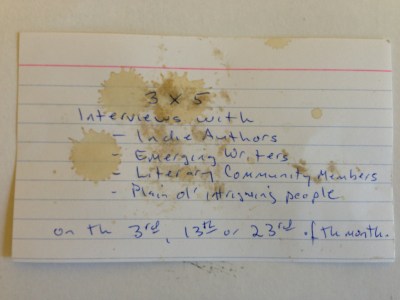
Three by Five – Five questions answered by authors, artists and interesting people published on days that end in three.

Leave a comment

Filed under writing life

Jered W. Alexander – Part II

jerad 3VAH: Jerad, What got you to the point where you knew you were a writer?

JWA: I’m not sure I ever had an “awaking” of sorts. I’ve always written in one capacity or another. Up until the past decade I’ve always treated it like an appendage.

VAH: Best advice for emerging writers?

JWA: Write. Every. Day.

Ready. Good. Works.

There is no other way.

VAH:  What are your thoughts on the Master of Fine Arts in writing?

JWA: I do not have an MFA. While I can’t speak to the networking/work shopping side of an MFA program, and at the risk of criticizing something I don’t fully understand, I’m wondering if perhaps one could simply read and write on their own and get a good grip on the craft without laying out the cash for something that will more likely not guarantee a return, given the marketplace. That isn’t a slam on MFA programs specifically, but I suspect a lot of the work can be done off campus.

VAH: Jerad, I have a MFA and I’d agree with you. There’s something to be said about a couple dedicated years with a small cohort and I think you are right about doing some dedicated reading, writing and I’ll add, having a good writing group or community. Do you have a favorite conference or writing retreat or seminar.

JWA: Admittedly, I have not attended any writing conferences, retreats, or seminars. This is something I need to rectify.

VAH: Writers tend to also be readers – What books or authors keep you up at night because you don’t want to put them down?

JWA: Without a doubt, Cormac McCarthy.

VAH: That’s some good reading. Jerad, thanks for joining us here at Three by Five. The final installment of an interview with Jerad Alexander will publish here on the 30th.

Jerad W. Alexander is a writer and the associate editor of the upcoming literary journal The Blue Falcon Review, an annual collection of military fiction. His novella, The Life of Ling Ling, was a finalist in the 2012 Serena McDonald Kennedy Prize for Fiction. His essay “On Our Next Stop in Modern War” was a finalist is the Narrative Magazine Spring 2013 Contest. From 1998 to 2006 he served as a U.S. Marine infantryman and combat correspondent, deploying to the Mediterranean, the Horn of Africa, and Iraq. Since leaving the U.S. Marines he has earned a BA in English Literature from American Military University and is pursuing a Masters of Professional Studies in Strategic Public Relations at The George Washington University. He currently lives in Atlanta, Ga. His novella, The Life of Ling Ling, A Novella about Iraq, is available on Amazon.com. He can be found on Twitter and Facebook.

Three by Five – Five questions answered by authors, artists and interesting people published on days that end in three.

Leave a comment

Filed under writing life