Tag Archives: 3×5

Indie Author J.M. Gregoire

Indie author J.M. Gregoire is featured in this month’s Three by Five interview series.

 Author Pic 4

VAH: Starting off – Why do you write?

JMG: I write because if I don’t, the voices never go away.  LOL!  I have a lot of story ideas, or at least bits of story ideas and characters voices, floating around in my head.  Nothing feels better than getting them out of my head.  Wow….that makes me sound like a bit of a schizo, doesn’t it?  Let me try it from another approach – I read a lot.  Whenever I am reading, I will read a sentence, or even sometimes just one single word, and it triggers something in me.  The idea for the first book in my Demon Legacy series was triggered by a word that I read in a Buffy the Vampire Slayer novel – The Sons of Entropy, Book Three of the Gatekeeper Trilogy by Christopher Golden and Nancy Holder.  The word was ‘entropy’.  Although my book has nothing to do with the content of that book, the one word spun the idea behind what has turned into an entire series for me.  The same thing happens to me when I listen to music.  The Demon Legacy short story Suffering (Demon Legacy #1.5) was inspired by the Seether song Take Me Away.  That song is so morose, and there are four lines in the lyrics which shaped the entire story.  The problem is this happens quite regularly.  I have notebooks all over the place with everything from actual plot ideas to just a simple one-liner of dialog.  My brain doesn’t know when to shut off.

VAH: What about your first story?

JMG: My first story was about witches actually.  When I started writing the first book in the Demon Legacy series, Dez was named Jade, and she was a witch, not a demon hybrid.  I was DEEP into my love of vampire fiction then, and I started writing what was to be a vampire romance with some urban fantasy action.  I made it about 100 pages in and the book got shelved.  When I pulled it back out 5 years later, I about choked.  I hated the story.  It had a few good ideas, but it was so clipped and rushed, and nothing about it felt organic anymore.  I attacked it with a red pen and started a complete and total rewrite.  It was so “bare bones”, the first 4 pages of the original book became the first 25 pages of the new book.  The female lead got a new name and species change, vampires got pushed to the background, and it became an urban fantasy novel with a romantic story line hidden below the surface.  I love what it became, and maybe someday I will go back to writing more focused on witches, but for now, I will stick to my demons.

VAH: Revision makes all the difference. Who is your favorite literary character?
JMG: Oh, really?  I have to choose?  Can I name a few?  I will name a few.  LOL Let’s see…

The Priest from The Count of Monte Cristo.  He was so sweet and clever.  When you hear his back story, and how he ended up in Chateau D’if, you just want to reach into the book and give him a big hug.  The way he coaches Edmond through his own betrayals rather than just saying “I figured it out, here’s the answer,” I kind of loved him for that.  I cried so hard when (spoilers!!!) he died.  So sad!  If you’ve never read it, it’s one of the best revenge stories ever written!

Jericho Barrons from Karen Marie Moning’s Fever series.  Barrons, oh Barrons!  I love this character so much!  He has lines of dialog that literally just give me goose bumps.  He’s cocky to the eleven-thousandth degree, a stone cold killer with a barely-there conscience, and you just know that being in the same room with him would absolutely melt your brain.  Every time I read him (read the series 5 or 6 times, listened to the audiobooks at least 10), I just fall for him all over again.  Karen must have so much fun writing that character.  I can’t even imagine having that personality living in my head.  And he nails the reason I love him so much perfectly in one of the books!  He and Fiona are in an argument about Mac being at BB&B, and he tells Fiona that she made the mistake of falling for the man she thought he could be, his potential, and that was her mistake.  That’s the moment you realize Barrons is not the Bad Good Guy (the good guy who does things that are sometimes a little shady), he’s the Good Bad Guy (the bad guy that slips up once in a while and gives the illusion that he cares).  I knew right then because I was obsessed with finding the moment he would redeem himself and show that he really was a good man.  It felt like he was giving that speech to me, the reader.  I actually fell in love with this character so much that the first time I spoke with Phil Gigante on the phone (the narrator for Barrons in the audiobooks), I was SHAKING and tripping over my own words.  That voice has one image in my mind – Barrons.  Now that Phil and I are friends, it’s easy to talk to him, but MAN did I struggle on that first phone call!  My favorite Barrons’ line of all time:  “God said let there be light.  I said ‘say please.’”  ßThat was a goose bumps moment in the book.

Charley Davidson from the series of the same name by Darynda Jones.  Charley is, by far, one of my favorite female leads.  Darynda has given her this absolutely hilarious personality, complete with a sarcasm coping mechanism in high stress situations.  She’s so much fun to read!

Honestly, I could easily go on and on with this question.  I could never pick just one character as my favorite.  I love too many of them for too many reasons.

VAH: Imagine you are stuck on a deserted island. What book or series of books would you want with you?

JMG: Hmmm, I would need a whole series so I would have plenty to read.  That would probably be a toss-up between the Fever series by Karen Marie Moning and the Night Huntress/Night Huntress World/Night Prince series by Jeaniene Frost.  Urban Fantasy / Paranormal Romance is not only my favorite genre to write, but also my favorite genre to read.  In my eyes, those two ladies are the QUEENS of UF/PNR.  They have both created these great worlds which are both bad ass and terrifying.  Although they are absolutely nothing alike, I feel they are the same caliber of writing.  Just incredible.  I was so sad to see the Night Huntress series come to an end, and I will feel the same way when Karen wraps up the Fever world.

VAH: Let’s wrap up this segment with this – what has been the biggest influence on your development as a writer?

JMG: The biggest influence on my writing is all the authors I love to read.  There are sooooooo many, all for different reasons.  Anne Rice for her romantic style even when there’s no romance involved.  When reading one of her stories, you can tell she loves writing it as much as you love reading it.  Stephen King because he just has this way with words which can scare the crap out of you with nothing more than words on a page.  He’s an unmatched master with his craft.  Jeaniene Frost for her ability to mix urban fantasy with just the right amount of humor to make you laugh out loud while in the middle of reading an on-the-edge-of-your-seat tense situation.  I love and admire all sorts of writers, all for different reasons.  Could you imagine the resulting book if we put them all into some kind of melding machine and made one super-being of a writer?  He or she would take over the world!
Leave a comment

Filed under writing life

December’s Three by Five Author – J. M. Gregoire

Author Pic 1Introducing author  J.M. Gregoire featured in December on Three by Five.

J.M. Gregoire was born and raised in New Hampshire, USA, and despite her abhorrence for any season that dares to drop to a temperature below seventy degrees, she still currently resides there with her two children and her two cats. Always a passionate reader, her love of urban fantasy books eventually morphed into a love of writing them. She is currently working on the Demon Legacy series, and has a spin off series, the Killer Instinct series, coming soon.

Visit J.M. Gregoire’s social media or online: Website / BlogFacebookTwitterGoodreadsPinterestInstagram.

Check out The Demon Legacy Series and The Killer Instinct Series.


Leave a comment

Filed under writing life

Martin Elwell Part 3

elwell readingThree by Five spends a little more time with Poet Martin Elwell, a New Hampshire based poet and editor. His poems have appeared in Extract(s), The Found Poetry Review, Empty Mirror Magazine of the Arts and other places. He co-edited Bearers of Distance, an anthology of poems by runners from Eastern Point Press, and he is News & Resources Editor for The Found Poetry Review.

VAH: We’ve explored a little about your writing and writing life, how about sharing a little known fact about you will amaze or amuse Three by Five’s readers?

ME: My college friends call me The Wall. The nick name came out of an overweight teenager’s inspiring performance on the intramural soccer field. That’s all you need to know.

VAH: Ahh, fortunate for you, no camera phones! How about a favorite, inspiring quote and why it works for you?

ME: I don’t know who said it first, but I’ve seen it used in reference to a lot of modern, postmodern and contemporary art. When someone says, “I could have done that,” in response to a piece of art in a gallery, a poem on a page, a book on the shelf or whatever it may be, the response is, “yeah…but you didn’t.” I think that response is representative of the art world that we live in today. If you’re waiting to make the perfect piece, waiting to make something totally new or waiting for someone to pluck you out of obscurity, you’re going to be waiting a long time. The only way to bring ideas to fruition is to do it yourself. The only way to get positive energy back from the world is to put positive energy into it. Get out there, create stuff, appropriate and change stuff, make connections, take risks…then no one can tell you that you didn’t.

VAH: And who hasn’t said, or thought, “Oh, I could have done that!” Actually creating and taking risks, that’s the hard step forward so many just don’t take.

What are three random non writing related facts about you?

ME: I can juggle. I run marathons. I was once president of the chess club.

VAH: I’m in awe of juggling. I am a horrible juggler. So, imagine for whatever reason, you are about to have your last meal. What would you have?

ME: This is a tough one. I’m a peanut butter addict, but it’s more of a guilty pleasure than a last meal sort of food. I’ve been on a veggie Pad Thai kick lately, so that comes to mind. I love cheese, though, so maybe a nice flatbread pizza with an IPA.

…now I’m hungry.

I grew up in Massachusetts, so my last meal would probably be brought about by an unfortunate situation related to my excellent driving skills.

VAH: Hmmm, let’s not go there. Back to books. Are you a finish the book once you’ve started kind of reader or leave it for another if don’t like the book sort of reader?

ME: I’m a slow reader. I read mostly poetry, philosophy and non-fiction, and many of the books I read require a lot of my focus and attention to fully grasp what is being presented by the author. Also, I tend to read several books at a time. For example, I like to read a book of poetry while reading a prose book. I like the variety of varying genres, and I also like to have the option to read something lighter or heavier depending on my mood. It could take me two years to finish a book by Nietzsche, or two hours to finish a small anthology of erasure poetry. I don’t finish every book I start, but there is a long separation process before I put a book down for good.

VAH: “A long separation process…” If you return to a book put down long ago, was it left or just delayed? A point to ponder.

Martin, thanks for joining us with Three by Five. We’ll finish up the conversation at the end of the month on the 30th.

Leave a comment

Filed under writing life

Poet Martin Elwell – Three by Five Interview Part 2

elwell 2Today Three by Five welcomes back Martin Elwell.

VAH: What’s your full time job – writing, or something else that sustains you so you can write?

ME: I worked in the insurance industry for 13 years before recently leaving to start my own business as a fitness and wellness coach. While I was working in insurance, I had a lot of professional success juxtaposed with a lot of personal unhappiness. The most fulfilling part of my job was watching my employees succeed. The least fulfilling part of my job was the amount of time and creative energy required to do it well and navigate the politics. The pay was nice, but I found myself in an endless cycle of earning and consuming. I hit bottom at a depressed 320 pounds in September of 2009.

Between 2009 and 2011, I embarked on a weight loss journey that totally flipped my life upside-down. I started running and strength training, I moved back to New Hampshire from Illinois, I got divorced and I lost half of my body-weight. 160 pounds later, I was still working in Insurance leading a team of analysts in Portsmouth, NH, but I had my eye on a new life.

I married my wife, Jenn, in May of 2011, and we downsized and simplified our lives to make room for the things we wanted most. In 2012, I left my insurance career. After a lot of travel and exploration, Jenn and I founded Destination Fitness (http://myfitnessdestination.com). Our goal is to make a modest living by helping others find fitness, prioritize themselves and their health and enjoy life a little bit more.

VAH: Thanks for sharing your story of transformation. Stories like that give hope that life can be so much more than drudgery of work.

One of my least favorite aspects of the work of writing is when I can’t get the words out to the page. When the blank page stares back at you, what gets you past writer’s block?

ME:   In my experience, the best way to get past writer’s block is to give up on quality for a little while. For me, writer’s block comes out of the desire to write something excellent on the first pass. Obsessing over the words will only slow down and possibly hinder your writing. Good or bad, you can always change, improve or delete a passage later. I think it’s best to just let yourself free-write without judgment. There’s usually some gem to be mined through that process.

VAH: Brass tacks of the writing life – what do you do so you can keep up with what you send out and results of your submissions?

ME: Two words – Microsoft Excel. Once an analyst, always an analyst. It’s actually a pretty simple document. I have a tab for open submissions, a tab for accepted submissions and a tab for rejected submissions. If I really wanted to geek-out and chart my progress, I would put them all on the same tab so that I could pivot the data, but it’s really not that complex. I submit sporadically. Sometimes I have a good feeling about a press or magazine where my work will fit well, and sometimes I shoot for the moon. So far, shooting for the moon typically means rejection. When I’ve gotten lucky, it’s come in the form of serendipitous timing and saying ‘yes’ to a chance opportunity.

VAH: That’s a pretty simple question on the surface but it’s become interesting to me the variety of methods writers use to keep track of what they send out.

Let’s talk a moment about what you’re your favorites. Do you have a favorite poem or story?

ME:  I think I’d have to go with The Sunflower Sutra by Allen Ginsberg. I have an audio track of him reading it, and it is a poem that elevates me beyond whatever troubles or worries may be going on in my day-to-day life. I especially love the last stanza, the “sermon.” You can read the entire poem at the poetry foundation’s site.

VAH: Do you have a favorite author and why?

ME: Definitely Jack Kerouac. I love to travel, and I love road trips. I also love the way that Kerouac saw the world around him, digested it and put it down into words. I don’t love everything Kerouac has ever done. I can do without his drunken ramblings and the posthumous pieces dug out of the attic by someone looking to take advantage of his persistent fame. I’ll take the lost, introspective, self-conscious, Buddhist Kerouac of The Dharma Bums any day.

Thanks Martin! The conclusion to a conversation with Martin Elwell on Three by Five will post on November 23rd. Until then, enjoy this poem by Martin Elwell – Excel Poem.

Martin Elwell’s Twitter.

Blog: Words Per Gallon.

Leave a comment

Filed under writing life

3 x 5 Hosts Martin Elwell Part I

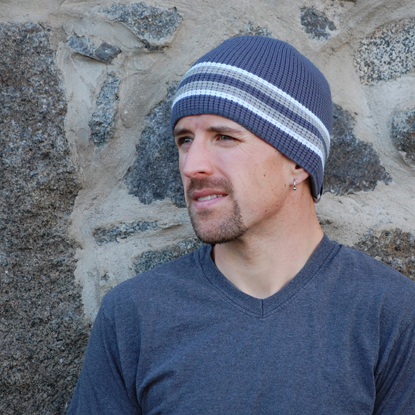
Welcome Martin Elwell, a New Hampshire based poet and editor to November’s edition of Three by Five.martin elwell headshot

VAH:  Martin, what would you say has been the biggest influence on your development as a writer?

ME: I’ve had a few people who really helped me develop, and I’ve read several books that put me on a new or improved path in writing, but I’m going to go out on a limb and say that Twitter was the number one influence on my development as a writer. By connecting with a variety of writers, literary magazines and institutions on Twitter, I’ve seen more of what my peers are doing in the art world. I’ve been challenged to think about where I fit in, and I’ve been pushed to participate in a more active way. Every day, someone shares a blog post, article, poem or image that spins my wheels in a new direction. For example, just following someone like Don Share on Twitter for a week is an educational experience. More tangibly, I learned about The Found Poetry Review on Twitter. They published one of my poems, I participated in their Pulitzer Remix project for National Poetry Month in 2013, and now I’m their News & Resources editor. You don’t need to live in New York City to get in touch with people doing exciting things in poetry. Twitter is the new New York City for poets.

VAH: That’s an interesting way to think about Twitter. Making it so much more than a social media keep in touch tool.

Martin, as a writer, when did you know that was you?

ME: I spent a lot of time trying to make up short stories as a child. Fortunately, I didn’t save any of them. When I got to college, I took a class titled 16th Century Verse, and I started writing formal poetry from there. After a class on the Beat Generation my senior year, I started writing more personal poetry. After graduation, poetry stuck with me, and I found myself writing fairly regularly. I realized that it would be a lifelong pursuit in my early 20s when I started looking forward to getting home from work so that I could write.

VAH:  What is your best advice for emerging writers?

ME: Build relationships with people doing things that you like, admire, envy, enjoy, can relate to, etc. The writing world is crowded, and everybody wants a bit of success. You can learn a lot from how others navigate their own projects, publications, readings, etc. On top of being crowded, the writing world can be lonely. Having a community whether online or local, will keep you engaged, motivated and fueled to move your own work forward.

VAH: In reference to moving your work forward – what are your thoughts on studying writing? How has a MFA contributed to your progress or development? Do you recommend the MFA as worthwhile?

ME: I have an MFA in from Lesley University. My experience was slightly different, in that the Lesley program is low-residency, and I worked full time throughout the program. Outside of the residency period, the majority of work is done on your own with a mentor. I had three different mentors at Lesley: Thomas Sayers Ellis, Don Share and Janet Sylvester. If you know any of these folks, you may know that they are vastly different from each other in craft and teaching style. My experiences at Lesley pushed me out of my comfort zone and into new and different territories based on each of my mentor’s personalities, likes, dislikes, beliefs and assignments. I didn’t learn a formula for writing, as some believe the MFA experience provides. Instead, I was challenged to define myself as a writer among the different priorities of my mentors.

Most importantly, at Lesley, I learned how to think about my writing critically. Before getting my MFA, I was finished with a poem when I stopped writing the first or second draft. I had very little understanding of the potential for poems beyond the initial stages. I learned how to build upon and bring forward the best moments in my work, while cutting away the unnecessary material surrounding those moments. Poems that I would have previously discarded found themselves at the top of the pile once I honed my approach to revision. I believe revision is the hardest part of writing, and learning new approaches to critiquing and refining your own work is a huge benefit of the MFA environment.

Do you need an MFA to succeed? No. Did it help me improve? Absolutely.

VAH: Your comment on revision is an excellent metric for the difference between someone that writes poetry and one that is a poet. I think when emerging writers understand the value of revision and its necessity, they’ve turned an important corner in the development of their writing careers.

You mentioned writing can be lonely, do you have a favorite writing conference, retreat, or seminar?

ME: I’m a bit of an introvert, so the idea of large seminars or conferences is a somewhat stressful for me. I’ve been to the Mass Poetry Festival once and AWP once, and I enjoyed both. My favorite parts are the readings and the book fairs. I get a lot of energy to write when I read and hear what others have done. My favorite retreats and seminars are small workshops with friends where the environment is casual and the candor is high.

Thank you Martin Elwell for your participation in Three by Five. More from Martin on days that end in three in November. Enjoy a few of his poems in the online journal Convergence. Follow Martin on twitter.

Leave a comment

Filed under writing life

In November – Poet Martin Elwell

elwell 3In November, Three by Five will host New Hampshire based Poet and Editor Martin Elwell. His poems have appeared in Extract(s), The Found Poetry Review, Empty Mirror Magazine of the Arts and other places. He co-edited Bearers of Distance, an anthology of poems by runners from Eastern Point Press, and he is News & Resources Editor for The Found Poetry Review.

Enjoy a sampling of his work to whet your poetry whistle at Empty Mirror.

Find Martin on Twitter @MartyElwell.

Read more of his work and  follow his travels at Words Per Gallon.

Leave a comment

Filed under writing life

John Byrne Barry – Mill Valley Author

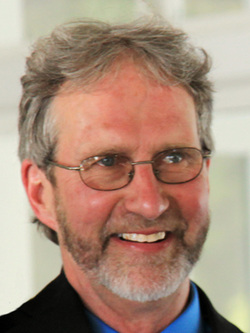
Today we finish up our conversation with John Byrne Barry.JB headshot

VAH: John, what does your typical writing day include?

JBB: For more than a decade, when I commuted from Berkeley to a full-time job in San Francisco, I woke up every workday morning at 6 and wrote for at least an hour before making breakfast and catching the bus to work. I wrote in the evening and now and then took time off and cranked all day or all week. But the norm was first thing in the morning, when dreamland hadn’t yet been buried away for the day. I wrote at least half of Bones in the Wash in those early morning sessions.

Now that I’m working at home and no longer commuting to a full-time job, I’m not as disciplined about my morning habit, but as often as I can, I devote my first hour of the day to writing fiction. For some reason, I am able to tap into my imagination better in the morning than any other time. I can edit or design in the evening, and sometimes I will generate new material, but it doesn’t flow like it does in the morning.

I have recently been going on Wednesday afternoon to a meetup writers drop in at the Mill Valley Library where we write for an hour and then share what we read. I’ve only been about five times, and the first few times, I read something I had written before I showed up, but then the past two times, I wrote some new scenes for my upcoming novel and they weren’t bad. When I’m focused, I can sometimes write two or three pages of good solid prose in an hour. I just can’t sustain that over a day or a week. Maybe someday.

VAH: What are your thoughts on the writing community? Are there any writing or author organizations you belong to or online that you frequent for community, online conversing, networking or commiserating? Any favorite online sites?

JBB: I had the very good fortune of being part of a novel writing group that last for ten years, and was extremely helpful. They read and critiqued my first novel and my second, and they were insightful and tough without being discouraging. (Well, sometimes they were.)

They were tough enough that I was at first surprised by the positive responses to my novel from new readers. Because these new readers were looking to enjoy the book, not critique it. Or because I fixed enough of the problems that the book really was a good deal better.

I was part of a theater group in the 1980s — the Plutonium Players, a.k.a. Ladies Against Women — and I wrote or co-wrote a lot of our skits and plays and monologues. We were young and talented and full of ego (present company not excepted) — when others critiqued my work, I felt like I was being put down. It wasn’t “here’s how you can make this better,” it was “you suck, why did you come to us with this crap?” That’s an exaggeration, but let’s just say that the novel writing group of the 21st  Century was better at giving me feedback that would help make my book better without denigrating me.

I have been exploring Meetups and various other critique groups, including one called 16 Eyes that grew out of the Berkeley Writers Club, but I’ve only been a handful of times yet. There’s also a Writers’ Drop In at the Mill Valley Library that I’ve been going to. Usually, there are three or four of us. We write for an hour and then some of us share what we’ve written.

I definitely want and need readers. People talk about a community of readers. I don’t really have one, as much as I have a bunch of friends and readers who are not necessarily part of a community.

I don’t know why I’m not participating more in online communities. Too often, it seems like the only thing people are saying is buy my book.

I love going to Why Are There Words, a monthly reading series in an art gallery in Sausalito.

VAH: What are your thoughts on traditional or independent publishing? Or a little of both? What choices have you made and why did you go the way you have?

JBB: I wrote my first novel, Wasted, a “green noir” murder mystery set in the world of garbage and recycling in Berkeley, and I tried to get it published in the traditional way. I rewrote it a dozen times, and in 2003 and 2004, submitted it to about 60 agents. I got about eight nibbles, two wanted to see the whole manuscript, and one, I was convinced was going to take it. But she didn’t.

Once I was far enough along in my second novel, I decided I needed to self-publish, partly because I was concerned that once again, I wouldn’t find an agent, but also because I had this delusion that the book, which is set during the 2008 presidential election, would be ready in time for the 2012 election. It wasn’t, but by then I had committed myself to self-publishing.

The process was time-consuming, but I ended up with a product I was proud of, and response has been heartening. I have 24 positive reviews and plenty more readers who told me they liked it, but I haven’t been able to get them to write a review. Sales have been disappointing. I know I need to do more marketing, but even when I have done a flurry of it, it hasn’t resulted in many sales. That hasn’t stopped me from writing a new book or reworking Wasted to independently publish this fall.

VAH: Best bit of advice to save another writer some anxiety or heartache?

JBB: If you’re not comfortable with solitude, find something else to do. Or else make sure you build in social connections into your schedule. There are days I have nothing scheduled but writing, and I don’t care for those days. But if I have a walk with a friend as part of the day, or a meeting, then I’m more comfortable with the solitude.

VAH: What’s next for you? Do you have a work in progress you can tell us about? (Include any links related you’d like to share.)

JBB: I am working on two projects. One is publishing Wasted, which is now in the home stretch. I have advance reader copies available in trade paperback and ebook format and I will happily send them to anyone who promises to write an honest review. You can contact me at johnbyrnebarry@gmail.com. You can also find out more on my website.

The other project is a new novel, working title Edgewater, about a man whose father has cancer and dementia and demands his son help him end his life. I’ve written about a third of my first draft and I’ve excited about where it’s going, but I haven’t mapped it all out yet. You can read the first chapter.

VAH: Thank you John for an interesting conversation this month!

Thank you for joining us for another month of author interviews, this month with John Byrne Barry.

Leave a comment

Filed under writing life

John Byrne Barry Part 3 at Three by Five

Today is part three of the author interview with John Byrne Barry.

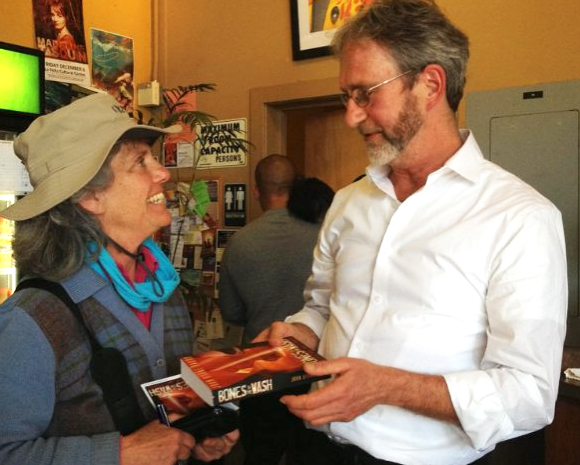
VAH: John, what books or authors keep you up at night (because you can’t put them down)?JB at book reading

JBB: What I love the most is finding a book that races along like, say the Da Vinci Code or the Firm, which both kept my up past my bedtime, but is populated by three-dimensional characters and is reality-based. (They weren’t.) The sweet spot where literary novels and plot-driven beach books overlap. I mentioned John LeCarre as my desert island author, though he can be ponderous. I like Scott Turow for the compelling plots combined with complex characters. Other authors I enjoy are David Mitchell, Barbara Kingsolver, Pat Conroy, Jeffrey Eugenides.

VAH: Are you a finish the book once you’ve started kind of reader or leave it for another if don’t like the book sort of reader?

JBB: I put books down all the time. If it doesn’t grab me, I find another one. Unfortunately that sometimes means that the books I finish are those plot-driven beach-reading best-seller types, which sometimes don’t leave me with much to ponder. And sometimes I won’t finish books that I know are important and profound. Here’s a partial list of books I never finished: Anna Karanena, Gravity’s Rainbow, Poisonwood Bible. And those are only the ones I can think of off the top of my head. Earlier this year, I started Michael Chabon’s Telegraph Avenue, but couldn’t get into it. A friend said he loved it. So sometimes I’m too impatient for things to get moving. Hopefully that helps me as a writer get to the heart of things faster.

VAH: The blank page stares back at you, what gets you over writers block?

JBB: I don’t get writer’s block anymore. If I don’t have a clear direction of what I should be writing, I talk to myself. On the page. “OK, I’ve finished a pretty good draft of Chapter 2, and Lamar’s dilemma is clear. So now I have to figure out how to introduce his sister Andrea. The reader is not going to like her at first — she’s surly, self-absorbed, and impatient with everyone else. So how do I get the reader to care about her?”

I participated in NaNoWriMo (National Novel Writing Month) in 2007 and “won” in the sense that I wrote more than 50,000 words that November. (No prize except that sense of accomplishment.) I wrote the first draft of what I then called Turquoise Trail, and which turned into Bones in the Wash. With a goal of 50,000 words in a month, I didn’t have time to map out where I was going, so I would write a scene or two, then if I didn’t know where I was going, I would talk to myself, essentially making the narrator of the novel, the furiously typing me, part of the novel. I included the talking to myself part. So I’ve gotten used to that. Many days at work, instead of making a list, I would open up a document and start talking to myself until that turned into the equivalent of a list. A game plan for the day, the week, the project. It’s what the author John Barth used to call “tuning his piano.” You don’t just sit down and play. You have to warm up first.

The downside of not having writer’s block is there’s a lot of chaff to separate from the wheat.

My experience, however, has been that once I’m warmed up and I know what I’m doing, I am capable, now and then, of writing a page or two or even three of solid, almost final draft prose. Sometimes the editing is as simple as cutting the first couple paragraphs or pages, the tuning part.

VAH: I’ve done something similar when I’m not sure where to go by asking myself what comes next or what could happen next and then balancing that with is that believable or how would that be possible? Then working through the details of an action the character is doing – almost like storyboarding in my head before it goes on the page.

VAH: How about some brass tacks of the writing life – what do you do in order to keep up with what you send out and results of your submissions?

JBB: I’ve tried all the organizational systems, from index cards to google spreadsheets to those big fat daily calendars. I’m not good at that part of things, but I do make a lot of lists and build in a lot of redundancy, so I do stay on track of the important things.

Probably the most effective system I have is I open a google doc each month for notes. My current one is called September 2014. And sometimes I’ll also have additional ones like Bones September 2014. At the top I make lists, and I try to track them every day or two. And then at the end of the month, I copy that list into the next month, right at the top. When I do accomplish something, I don’t delete it right away. I add a strikethrough to it. More satisfying to see a list of items crossed off than deleted.

VAH: I’ve used a similar system using a highlighter. Bright yellow bands of accomplishment on the to do list. John, tell us, What little known fact about you will amaze and/or amuse Three by Five’s readers?

JBB: I have exercised every day for the past 44 months (as of September 2014). Most days, I walk, but I also bicycle or lift weights. You can read about that on my blog.

VAH: Do you have a favorite, inspiring quote and why it works for you?

JBB: “In the midst of winter, I found within me an invincible summer.” Albert Camus.

I like it because I aspire not only to find that invincible summer, but to seek it. The world we live in is an amazing place, and there are all sorts of horrible things going on every day, so it’s a challenge to look to the light instead of the dark.

VAH: Finally, Three random non-writing related facts about you?

JBB: I once performed on the same stage as the Grateful Dead. At one time, I had two consecutive girlfriends whose previous boyfriend had become a woman. I was an altar boy, a paper boy, and a patrol boy.

VAH: Thank you John Byrne Barry, for participating with Three by Five! We’ll end this month’s interview with a couple bonus questions at the end of the month.

JB headshot

johnbyrnebarry.com

bonesinthewash.com

https://twitter.com/johnbyrnebarry

https://www.facebook.com/bonesinthewash

John Byrne Barry wrote his first book length project in fifth grade at Kilmer School in Chicago — a 140-page book on dinosaurs. One dinosaur per page. Lots of white space. He’s been writing ever since — newspaper and magazine stories, plays and skits, reports and tweets. He’s even written “advice columns” — “Question the Authority” about environmental issues, and “Lazy Organic Gardener.”

In, 2013, he published his first novel, Bones in the Wash: Politics is Tough. Family is Tougher. Set in New Mexico during the 2008 presidential campaign, it’s one part political thriller, one part family soap, and one part murder mystery. Coming out later this fall is Wasted, a “green noir” mystery set in the world of garbage and recycling in Berkeley.

He lives in Mill Valley, California with his wife and family.

Introducing John Byrne BarryPart I. Part II.


Leave a comment

Filed under writing life

Three by Five Presents John Byrne Barry Part 2

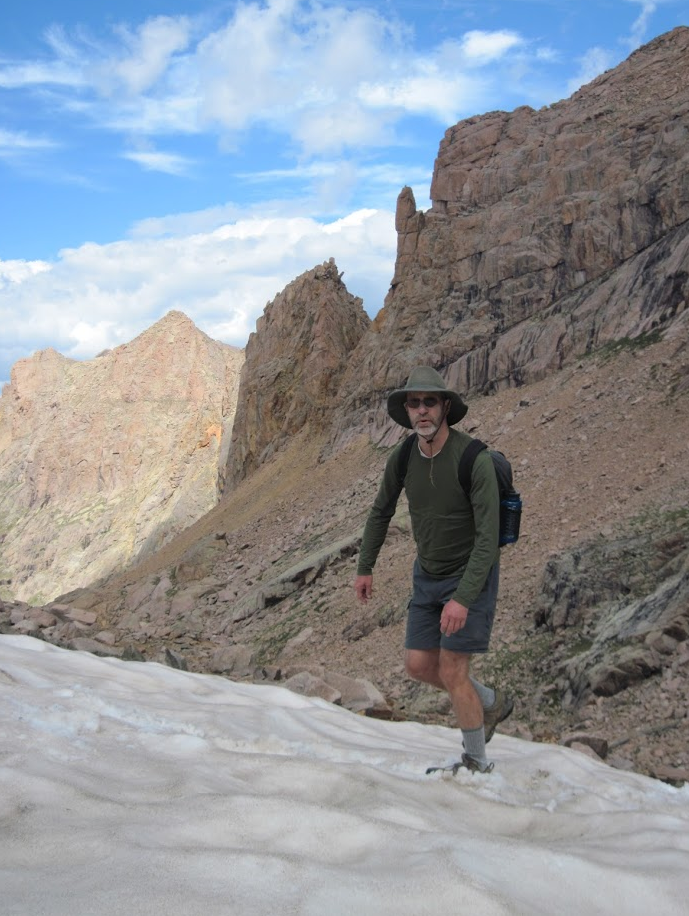
VAH: John, when did you know you were a writer and when did you realize you were?John Barry in Weminche Wilderness, Colorado

JBB: I’ve never just been a writer, so I’m not sure I ever came to that realization — I’ve been a graphic designer for almost as long, and for many years at my Sierra Club job, that was my greatest calling, perhaps because there were so many other who fancied themselves writers, but few who were designers.

When I was married for the first time, I put on my marriage certificate that I was a playwright, which I was at the time, but mostly I said that because it was better than saying I was unemployed.

Now that I’ve written and published a novel, I am more comfortable saying I’m a writer, but there’s still a part of me that thinks I’m an imposter.

VAH: I think that’s a process we all go through, that sense of really, truly being a writer and a small sense that questions the validity of claiming that! Which brings me to ask, what is your best advice for emerging writers?

JBB: I’m not the first to say this, but I can vouch for its veracity. Keep doing it. Keep practicing. There’s this concept popularized by Malcolm Gladwell that you need to put in 10,000 hours to get good at anything that’s difficult, and I have put in the hours. I remember twenty years ago, when I wrote a couple cover stories for the East Bay Express, one on garbage and recycling, another on collectives, how much my early drafts were tangled up like spaghetti because I was trying to weave together so many strands. I pulled out my hair turning those bloated early drafts into a story that was smooth and clear enough to publish. I have an easier time with those kind of structural challenges, and I think I just got better with practice. I only wish I had been more disciplined when I was younger. I wasn’t a bad writer, but I was not as focused as I needed to be, and I didn’t write as much as I do now because it was more like torture. I was lazy.

It’s not that I don’t still struggle. Taming the wild plots of Bones in the Wash was arguably the hardest work I’ve ever done, but it’s more fun now. I have more confidence because I’ve done it. I hope I keep getting better.

VAH: Getting better with practice. What are your thoughts on studying writing?

JBB: I looked into the MFA program at USF and was intrigued, but there are a lot of ways to learn these days. I was part of a novel writing critique group for more than ten years — they read at least two drafts of Bones in the Wash and my first novel, Wasted. I would have had to get five MFAs to equal that level of attention to my work.

VAH: What are you thoughts on writing conferences. Do you have a favorite?

JBB: I’ve only been to one, the San Francisco Writers’ Conference earlier this year, and I quite enjoyed it, especially the craft sessions. There was so much on the publishing and promotion process and I know that’s important, and I need to do more of it, but that part got old fast. It’s not that everyone says the same thing, but it seems that way.

VAH: What about writing full time?

JBB: I have been a writer for decades, but usually more than a writer. Mostly that was because my jobs demanded it. I needed to do design as well, or editing, or training, or leading teams, or managing projects. Mostly, that was a good thing because, even though writing is probably my strongest skill, it’s a solitary venture and that solitude can get old. When I first started writing novels, more than fifteen years ago, while I had a full-time job, I used to joke that if someone said here’s a pot of money, go and write your novel full time, I couldn’t have done it. Wouldn’t have wanted to do it. Now, maybe, but I would prefer to have more variety in my life.

The other thing I learned, by being part of a complicated organization, with thousands of volunteers and hundreds of staff, was that strategic thinking was more valued than writing. It wasn’t enough to write, I had to figure out what needed to be written, and for what audience. For a number of years, I managed other writers and editors, some of whom were pretty good with words, and one thing that happened all too often is that one of them would take a draft that had been handed to us and copy edit it when what needed to be done was to go back to the author and say, what is it you’re trying to do here? If something is ill-conceived in the first place, copy editing is not going to help.

VAH: That seems a good lesson – if the story isn’t well put together, no amount of editing will improve upon the story.

Thanks John! Coming up towards the end for the month – more from John Byrne Barry. Join Three by Five again, on days that end in 3.

Leave a comment

Filed under writing life

John Byrne Barry

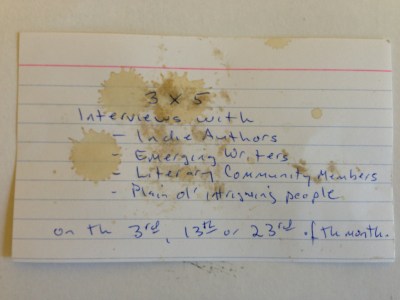
VAH: Welcome Novelist John Byrne Barry to the Three by Five Author and other Interesting People Interview series! The burning first question is always – why do you write?

JBB: I write to answer questions. No, really. Sometimes the question is as simple as “What am I going to do today?” As for why I write novels, well, those questions aren’t that different. More like “What should I do with my life?” “How can I contribute to the world?”

Those are not rhetorical questions. One of the themes that I explore, consciously some of the time, is how to do the right thing. While I wanted “Bones in the Wash” to be a fun fast-paced political thriller and family drama, under all the action, I wanted to answer that question. The protagonist, ambitious Albuquerque Mayor Tomas Zamara, does believe in doing the right thing. But as he says, “politics is like playing football on a muddy field. If you don’t get dirty, you’re not giving your all.”

Does that give you a pass on doing the right thing? No, it doesn’t. It makes it harder.

I’m writing some non-fiction now, a conservation assessment of the Russian Far East, and there too, I’m answering a question. Here we have this vast expanse of pristine ecosystems, home to polar bears, tigers, and six species of Pacific salmon, and there we have a corrupt and undemocratic Russian government. Why should anyone invest time or money to protect these unparalleled natural treasures? (The answer gets more challenging every day that President Putin is in the news for incursions into the Ukraine, even though the Russian Far East is 5,000 miles away.)

I also write to make the world more interesting. Back in 2004, when I first worked on a presidential campaign, going door-to-door and phonebanking for John Kerry in three working-class suburbs south of Milwaukee, I made a commitment to write and post a blog entry every night. The work was tedious. Too many calls. Too many doors. Not enough meaningful interactions. (It was a swing state and so many people were so inundated with ads, mailers, calls, and so on.) But I had to write something every night, so I paid more attention, keeping my eyes and ears peeled for some interesting anecdote or conversation. It added a dimension to what otherwise were long and flat days.

VAH: I’d say that one of the joys of writing is being able to fully explore all the possible answers to the many questions we encounter in our lives.

Do you remember what your first story was about?

JBB: My memory is fuzzy, but I know that sometime in fifth or sixth grade history class, I wrote—probably with others, but I don’t remember—some satirical skits about Betsy Ross and the making of the American flag. At that time, I don’t think I had listened to Stan Freberg, who did comedy records parodying American history, but when I discovered him in college, I realized I had done things in the same vein. I believe the skits were well received, but whether that’s because they were good or because the rest of history class was dull I can’t say.

VAH: What about a favorite literary character?

JBB: One of my favorite books is All the Kings Men, a fictional account of Louisiana’s charismatic governor Huey Long, represented in the book as Willie Stark. He’s a fascinating character, but it is the book’s narrator, his aide Jack Burden, a former newspaper man, who is my favorite character. Perhaps it’s because of what I mentioned above, that the compelling moral question for me, as a reader and a writer, is how to do the right thing. Willy didn’t sweat that question.

Willie knew you never needed to make up lies about opponents. Here’s what he said to Jack as he told him to find dirt on an old family friend, now a judge: “Man is conceived in sin and born in corruption and he passeth from the stink of the didie to the stench of the shroud. There is always something.”

Jack found the something. For better and worse, however, Jack had a moral compass, and so he struggled with indecision, with betrayal, with morality. He was the more tortured soul, and thus more interesting.

 VAH: John, imagine you were stranded on a deserted island, what book or series of books would you want with you and why?

JBB: If I think about that long enough, I won’t be able to answer it, so I’ll just blurt out John LeCarre. I’ve read at least 20 of his books, but I think I would enjoy reading them again. I reread The Spy Who Came in from the Cold a few years ago, and it seemed dated, but just as compelling a drama.

VAH: That first thought is usually the most authentic, before you catch yourself with what “should be” a response. Authors that we can return to again and again, those are the true masters worth reading.

What would you say was the biggest influence on your development as a writer?

JBB: I worked for 25 years at the Sierra Club in a variety of positions, mostly in communications, doing writing, editing, design. Because we were often covering wonky environmental issues, like fuel efficiency in cars or water pollution from factory farms, we had to find stories to make those issues come alive. So I learned and mentored others in how to discover and distill the story. When writing fiction, I can make stuff up, but when doing journalism or writing reports, I have to dig to find the gold.

But even when writing fiction, I have a tendency to “tune my piano,” to borrow a phrase from John Barth, and when I’m in rewrite, I need to cut that tuning out and jump directly to the action. Come to think of it, I might want some John Barth with me on that desert island. Though it’s been a long time since I read any of his books. When I was a younger man, I thought Giles Goat Boy was incredibly brilliant. I might find it ponderous today.

Find out more about John Byrne Barry by visiting his social media sites.

johnbyrnebarry.com

bonesinthewash.com

https://twitter.com/johnbyrnebarry

https://www.facebook.com/bonesinthewash


Leave a comment

Filed under writing life